


‘Thank You India’ Written On Missiles: Iran Calls It A ‘Gift’ As It Launches Fresh Strikes On Israel


Amid the ongoing conflict in the Middle East, Iran has launched a fresh wave of missile strikes towards Israel, drawing global attention not only for the attacks but also for the messages written on the weapons. Visuals circulating on social media show Iranian personnel writing notes of gratitude on missiles, including a message that read, "Thank you to people of India."

AI-generated summary, reviewed by editors
The development comes as tensions between Iran and Israel continue to rise, with repeated exchanges of strikes intensifying the situation.
Messages on Missiles Spark Global Attention
According to videos shared online, personnel from Iran's aerospace unit were seen writing messages on missiles before launching them. Apart from India, similar notes were reportedly addressed to people in Spain, Pakistan, and Germany.
These messages appear to acknowledge public expressions of solidarity from different countries during the conflict. However, the act has also raised concerns and criticism, as it mixes symbolic messaging with military action.
Fresh Wave of Strikes by IRGC
The Islamic Revolutionary Guard Corps (IRGC) confirmed that the latest attack marked the 83rd wave of strikes. The operation involved a combination of long-range and medium-range missiles, along with drones.
Targets reportedly included locations inside Israel as well as military facilities in Gulf countries. Some of these sites are believed to be linked to US forces stationed in the region.
Iranian media claimed that a facility associated with the US Patriot air defence system in Bahrain was among the targets hit during the strikes.
Rising Tensions in the Region
The latest attacks come after months of escalating tensions between Iran and Israel. Ballistic missile launches have become a recurring feature of the conflict, with both sides engaging in retaliatory actions.
Despite the military escalation, Iran has signalled a selective diplomatic gesture by allowing transit through the Strait of Hormuz for what it called "friendly nations," including India. This move is seen as an attempt to maintain certain international relationships even during conflict.
Support for Iran from Parts of India
Amid the conflict, some sections of the Shia community in Jammu and Kashmir have expressed support for Iran. In areas like Ramban and Budgam, people gathered to donate money, jewellery, and essential items for those affected by the crisis.
Reports suggest that contributions included cash, gold, silver ornaments, and even livestock. Children also participated by donating their savings, highlighting the emotional connection felt by some communities.
A Complex Mix of War and Symbolism
The use of messages on missiles reflects a blend of military action and symbolic communication. While Iran appears to be acknowledging international support, the ongoing strikes continue to raise concerns about regional stability and global security.
As the conflict deepens, such developments underline how both narrative and warfare are being used side by side in shaping perceptions and alliances.
The latest missile launches by Iran, combined with unusual messages of gratitude, have added a new dimension to an already tense situation. While symbolic gestures may aim to send a political message, the continued escalation of attacks keeps the region on edge, with far-reaching implications for global peace and security.
-
 Iran Shoots Down Second US F-35 Fighter Jet, Pilot Survival Unlikely
 -
 US Pilot Reportedly Ejects In Southwest Iran Amid Fresh Iranian Claims Of F-35, F-15E Downing
 -
 We’re In War: Donald Trump Says US Aircraft Loss Won’t Derail Iran Talks
 -
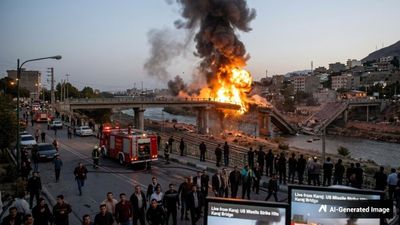 Iran Names 8 Gulf, Jordan Bridges as Possible Targets After Deadly Karaj Strike
 -
 'Behind Enemy Lines' For Real: F15 US Pilot Rescue Unfolds Deep Inside Iran
 -
 ‘Habitual Liars’: PM Targets Congress and Left in Fiery Speech Over Kerala Story, Dhurandhar False Claims
 -
 Has Pakistan Lifted The Ban on Dhurandhar 2? Find Out The Truth
 -
 US-Sanctioned Iranian Tanker Diverts from India to China Mid-Voyage
 -
 How Iran Brought Down US Military A-10 ‘Warthog’: IRGC Releases Video
 -
 Iran Snubs Pakistan’s Peacemaker Pretensions, Refuses To Meet US Officials In Islamabad
 -
 Centre Plans ₹2.5 Lakh Crore Credit Shield for Businesses Facing Iran Conflict Fallout
 -
 We're The Only Country To Lose Mariners At Strait of Hormuz: India At UK-led West Asia Meet On Iran Crisis



 Click it and Unblock the Notifications
 Sign in with Google