


Editorial | Iran’s Lonely War and the Limits of Strategic Friendship With China, Russia


Wars have a strange way of exposing the true depth of international friendships. For decades, Iran has spoken of a strategic triangle - Tehran, Moscow and Beijing - united by a shared desire to counter American dominance.

AI-generated summary, reviewed by editors
Yet the unfolding war between Iran and the United States-Israel combine reveals a stark reality: when the bombs begin to fall, even the closest partnerships often stop short of becoming alliances.
Iran today finds itself largely fighting alone
Russia and China have condemned the strikes. They have called the attacks violations of international law and demanded restraint. Russia's Foreign Minister Sergei Lavrov has says, 'Russia will do everything to create an atmosphere that will make US and Israel operation against Iran impossible'.
But beyond words, the support has been measured, cautious and conspicuously limited. The absence of direct military or material assistance from Tehran's two most powerful partners highlights an uncomfortable truth of global politics - nations rarely fight another country's war.
For Moscow, the limitations are obvious. Russia is already deeply entrenched in its war in Ukraine, draining its military resources and diplomatic bandwidth. Opening another confrontation with Washington in the Middle East would be strategically reckless.
Yet Russia also cannot afford a collapse of the Iranian regime. Tehran remains critical to projects like the International North-South Transport Corridor linking Russia with India and the Persian Gulf - a vital alternative trade route after Western sanctions cut Moscow off from traditional markets.
So Russia offers political backing, diplomatic support at the United Nations, intelligence cooperation perhaps - but not direct confrontation with the United States.
China's calculus is even more cautious. Beijing has strong energy and infrastructure interests in Iran and sees Tehran as an important node in its Belt and Road connectivity network. At the same time, China's economic engine still depends heavily on access to Western markets - especially the United States.
For Beijing, openly backing Iran militarily would risk triggering a larger confrontation with Washington at a moment when trade tensions and Taiwan remain delicate strategic flashpoints.
China's approach therefore follows a familiar pattern: strong words, calls for ceasefire and quiet diplomacy, but no direct intervention.
This is not betrayal. It is geopolitics
Strategic partnerships are not the same as military alliances. NATO obligates members to defend each other. The Russia-China-Iran relationship carries no such treaty commitments. Their cooperation has always been transactional, built on shared opposition to Western dominance rather than a formal security guarantee.
The current war reveals the limits of that arrangement
Iran's leadership may have hoped that a confrontation with the United States would trigger a broader geopolitical pushback from Moscow and Beijing. Instead, Tehran is discovering that even long-standing partners weigh their own national interests first.
History offers many such examples. During conflicts across the Cold War and after, countries often discovered that diplomatic friends are plentiful in times of peace but scarce in times of war.
And yet Iran is not entirely isolated
It retains a network of regional proxies and asymmetric capabilities - from missile forces to allied militias across West Asia. These tools allow Tehran to wage a prolonged war of attrition rather than a conventional military confrontation. If the conflict drags on, it could destabilise the entire region, disrupt energy markets and draw multiple actors into an unpredictable spiral.
In that sense, the war is not merely about Iran
If Iran withstands the assault without regime collapse, it may emerge more deeply aligned with Russia and China in the long run. If it falls, Washington's grip over the strategic heart of the Middle East could tighten dramatically.
For now, however, one reality is clear, despite its strategic partnerships, Iran's war is largely Iran's alone.
And in international politics, that may be the most enduring lesson of all: nations ultimately fight for themselves.
-
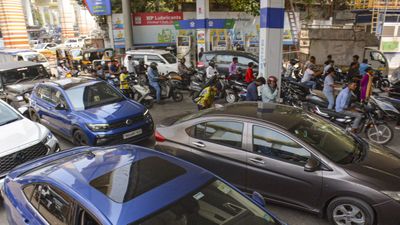 Petrol Price India Vs Pakistan: Why Fuel Is Cheaper In India Than Pak Despite Global Crisis
 -
 New OTT Release This Week In Telugu, Hindi, Tamil, Marathi, Malayalam: 40 Movies & K Dramas To Watch
 -
 Gold Silver Rate Today, 3 April 2026: City-Wise Prices, MCX Gold Down, Silver Slides Amid Global Pullback
 -
 Gold Rate Today 3 April 2026: Latest IBJA Rates, Tanishq, Kalyan Jewellers, Malabar, Joyalukkas 22K Prices
 -
 Earthquake Tremors Felt In Delhi-NCR, Parts Of North India After 5.9-Magnitude Afghanistan Quake
 -
 Baba Vanga Prediction 2026: World War 3, UFOs, Cash Crash, Truth About Nostradamus of the Balkans Claims
 -
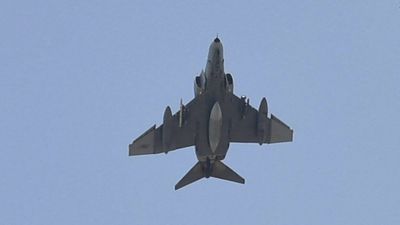 Iran Shoots Down Second US F-35 Fighter Jet, Pilot Survival Unlikely
 -
 Biker Movie Review: What's Good, What's Bad In Sharwanand's Telugu Film?
 -
 Kerala Pre-Poll Survey: Can LDF Retain Power In Keralam? Check This Opinion Poll
 -
 Annamalai Missing from BJP’s List for Candidates For Tamil Nadu Polls - See 27 Names
 -
 US-Iran War: The End of Invisibility? How Iran May Be Seeing the 'Unseeable' F-35
 -
 US Pilot Reportedly Ejects In Southwest Iran Amid Fresh Iranian Claims Of F-35, F-15E Downing



 Click it and Unblock the Notifications
 Sign in with Google