


Petrol Pumps Operating Normally: Centre Dismisses Shortage Fears As Refineries Hit Peak Output


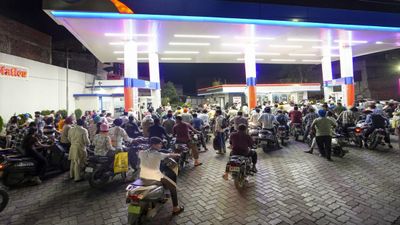
The Centre on Monday reiterated that India has sufficient fuel and supply remains stable, thereby dispelling public anxiety over the fuel stocks.
Sujata Sharma, Joint Secretary (Marketing & Oil Refinery) in the Ministry of Petroleum and Natural Gas, stated that there is no shortage of crude oil in the country and and all refineries are operating at their highest capacity, ANI reported.
AI-generated summary, reviewed by editors

"Crude is available in sufficient quantity. All refineries are operating at the highest capacity. Our petrol pumps are operating normally. No dry out has been reported anywhere," the news agency quoted her as saying.
The Ministry further noted that Oil Marketing Companies (OMCs) are conducting real-time monitoring of retail outlets to prevent any disruption in the petroleum supply chain.
Simultaneously, the Ministry of Shipping provided a detailed update on the status of Indian vessels navigating the Strait of Hormuz-a vital maritime artery for global energy.
Rajesh Kumar Sinha, representing the Shipping Ministry, confirmed that the Indian-flagged LPG carrier Shivalik, arriving from the Persian Gulf, is scheduled to dock at Mundra Port this evening. To ensure a seamless transition, authorities have pre-arranged documentation and priority berthing for the vessel.
"All Indian seafarers in the Persian Gulf area are safe," Sinha added, noting that there are currently 22 Indian-flagged vessels with 611 crew members operating west of the Strait. Additionally, the vessel Jag Laadki, transporting approximately 81,000 tonnes of Murban crude oil from the UAE, is expected to reach Mundra Port by Tuesday.
The stability of these shipments follows high-level diplomatic interventions. External Affairs Minister S. Jaishankar recently confirmed that New Delhi is actively engaging with Iranian authorities to ensure the continued flow of trade through the waterway, which handles nearly 20% of the world's oil.
Speaking to the Financial Times, Jaishankar emphasized the efficacy of India's "reason and coordinate" strategy over disengagement. He cited the successful passage of the Shivalik and Nanda Devi-carrying a combined 92,712 metric tonnes of LPG-as tangible proof of this diplomatic approach.
However, the Minister exercised caution, clarifying that while discussions are yielding results, no "blanket arrangement" for all Indian ships is currently in place. Transit is presently being managed on a case-by-case basis, with continuous dialogue between New Delhi and Tehran to safeguard India's energy security interests.
With inputs from agencies
-
 We’re In War: Donald Trump Says US Aircraft Loss Won’t Derail Iran Talks
 -
 Iran Shoots Down Second US F-35 Fighter Jet, Pilot Survival Unlikely
 -
 Petrol Price India Vs Pakistan: Why Fuel Is Cheaper In India Than Pak Despite Global Crisis
 -
 Strait Of Hormuz Crisis: India Emerges Among Top Countries For Vessel Crossings With 8 Ships
 -
 'Behind Enemy Lines' For Real: F15 US Pilot Rescue Unfolds Deep Inside Iran
 -
 US Pilot Reportedly Ejects In Southwest Iran Amid Fresh Iranian Claims Of F-35, F-15E Downing
 -
 Iran Names 8 Gulf, Jordan Bridges as Possible Targets After Deadly Karaj Strike
 -
 US-Sanctioned Iranian Tanker Diverts from India to China Mid-Voyage
 -
 ‘Habitual Liars’: PM Targets Congress and Left in Fiery Speech Over Kerala Story, Dhurandhar False Claims
 -
 We're The Only Country To Lose Mariners At Strait of Hormuz: India At UK-led West Asia Meet On Iran Crisis
 -
 Centre Plans ₹2.5 Lakh Crore Credit Shield for Businesses Facing Iran Conflict Fallout
 -
 INS Taragiri To Join Indian Navy Fleet, Boosting Maritime Power



 Click it and Unblock the Notifications
 Sign in with Google