


‘Pay Extra Or Cancel’: Hyderabad Commuters Hit By Surge In Cab And Delivery Charges


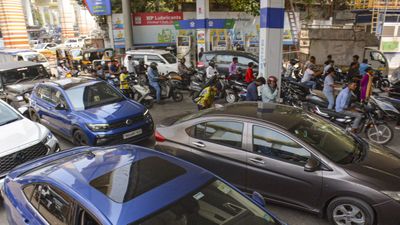
For many residents in Hyderabad, daily travel and food delivery are no longer simple or predictable.

AI-generated summary, reviewed by editors
As the city battles intense summer heat, commuters say they are facing a new challenge - unexpected extra charges from cab drivers and delivery agents. What used to be a smooth, app-based experience is now often turning into a negotiation, leaving users frustrated and uncertain.
'Pay Extra or Cancel': A New Normal for Riders
Booking a ride through platforms like Ola, Uber, or Rapido no longer guarantees a confirmed trip at the displayed fare. Many commuters report that soon after booking, they receive calls from drivers asking for additional payment.
The demand is often straightforward - pay an extra ₹100 to ₹150 or risk having the ride cancelled. In such situations, passengers feel stuck. Cancelling the ride themselves could lead to penalties or long waiting times for another cab, especially during peak hours.
As a result, many end up agreeing to the extra charge just to avoid inconvenience.
Some users say this is no longer an occasional issue but a repeated pattern, with multiple drivers making similar demands in a single day.
Even Basic Comfort Comes at a Cost
The problem becomes more serious in the scorching heat, where air conditioning is not a luxury but a necessity. However, passengers booking AC cabs say that drivers often refuse to switch on the AC unless they are paid extra.
In some cases, drivers ask for additional charges per kilometre, while others demand a fixed amount for the entire trip. There have also been instances where disagreements over AC usage have led to arguments.
One such case involved a woman travelling from Jubilee Hills to the airport, where the driver reportedly refused to turn on the AC without extra payment. The situation escalated, and she later filed a complaint with both the police and the cab service provider.
Such incidents are increasing concerns, particularly among women and elderly passengers who depend on these services for safe and comfortable travel.
Food Delivery Services Also Under Pressure
The issue is not limited to transport services. Customers using food delivery platforms are reporting similar experiences. Delivery agents are allegedly asking for an additional ₹20 to ₹50 at the time of delivery, often citing rising fuel costs or shortages.
Some users claim that if they refuse to pay, their orders are delayed or even cancelled. This creates confusion between what should be a voluntary tip and what is increasingly being perceived as a forced payment.
For many customers, this practice is eroding trust in the convenience that app-based services once promised.
Drivers Point to Rising Costs and Low Earnings
While commuters are frustrated, drivers and delivery agents argue that they are dealing with growing financial pressure. Rising petrol and diesel prices have increased their daily expenses, and some also point to fuel supply issues in certain areas.
At the same time, many claim that the commissions and earnings from aggregator platforms are not enough to cover these rising costs. According to them, the fixed fares set by platforms do not reflect real-world expenses, leaving them with shrinking margins.
From their perspective, asking for extra payment is not exploitation but a way to manage their livelihood in a difficult economic situation.
Lack of Regulation Adds to the Problem
Despite growing complaints on social media and customer forums, many users feel that action from authorities and companies has been limited. While platforms have policies against such practices, enforcement appears inconsistent.
Commuters are now demanding stronger intervention from transport authorities. They are calling for clearer rules, stricter monitoring, and penalties for drivers who demand unauthorised charges.
Without proper regulation, many fear that such practices will become more common and harder to control.
Trust in App-Based Services Takes a Hit
At its core, the issue reflects a breakdown of trust between users, drivers, and service platforms. App-based services were designed to offer transparency, fixed pricing, and convenience. However, the increasing need for negotiation is slowly undoing that promise.
For commuters, the experience is becoming stressful and unpredictable. For drivers, financial pressure continues to grow. And for platforms, the situation raises serious questions about pricing models and accountability.
The situation in Hyderabad highlights a deeper challenge within the gig economy. While technology has made services more accessible, it has not fully addressed the economic realities faced by workers or the expectations of consumers.
Unless a balanced solution is found - one that protects both commuters and service providers - the gap between convenience and reality is likely to widen further.
-
 Petrol Price India Vs Pakistan: Why Fuel Is Cheaper In India Than Pak Despite Global Crisis
 -
 New OTT Release This Week In Telugu, Hindi, Tamil, Marathi, Malayalam: 40 Movies & K Dramas To Watch
 -
 Gold Silver Rate Today, 3 April 2026: City-Wise Prices, MCX Gold Down, Silver Slides Amid Global Pullback
 -
 Gold Rate Today 3 April 2026: Latest IBJA Rates, Tanishq, Kalyan Jewellers, Malabar, Joyalukkas 22K Prices
 -
 Earthquake Tremors Felt In Delhi-NCR, Parts Of North India After 5.9-Magnitude Afghanistan Quake
 -
 Baba Vanga Prediction 2026: World War 3, UFOs, Cash Crash, Truth About Nostradamus of the Balkans Claims
 -
 Iran Shoots Down Second US F-35 Fighter Jet, Pilot Survival Unlikely
 -
 Biker Movie Review: What's Good, What's Bad In Sharwanand's Telugu Film?
 -
 Kerala Pre-Poll Survey: Can LDF Retain Power In Keralam? Check This Opinion Poll
 -
 Annamalai Missing from BJP’s List for Candidates For Tamil Nadu Polls - See 27 Names
 -
 US-Iran War: The End of Invisibility? How Iran May Be Seeing the 'Unseeable' F-35
 -
 US Pilot Reportedly Ejects In Southwest Iran Amid Fresh Iranian Claims Of F-35, F-15E Downing



 Click it and Unblock the Notifications
 Sign in with Google