


Severe malnourished baby from Iraq with rare heart defect treated in India
Six month old baby from Iraq, severely malnourished with several holes in his heart, was surgically operated


New Delhi, Sep 22: A six-month old baby from Iraq, severely malnourished with several holes in his heart, was surgically operated here in a first of its kind procedure in north India, doctors at a major hospital here said.
The child was born with a rare congenital heart defect that had severely damaged his lungs and kidneys, doctors on Thursday said. The child suffered from a condition called Double Outlet Right Ventricle (DORV) with Ventricular Septal Defect (VSD) and an Interrupted Aortic Arch (IAA).

According to doctors, DORV is a rare congenital heart defect and occurs in approximately 4-8 children every 1,00,000 live births. The combination of IAA with DORV is even rarer. Doctors from Max Super Speciality Hospital, Saket performed a hybrid procedure -- surgery and intervention cardiology -- to save the life of the child, the hospital said. The hospital claimed that this was the first time in north India that this procedure was performed.
A multi-disciplinary team of doctors led by Dr Kulbhushan Singh Dagar, Principal Director, Chief Surgeon and Head- Neonatal and Congenital Surgery at Max Super Speciality Hospital in Saket treated the child.
The child had a condition where both, the lung and major artery to the body, aorta, was arising from the right side of the heart (DORV) instead of the right and left respectively, according to the hospital.
The condition was further made critical by the fact that the aorta, which is the main pipeline that carries oxygen-rich blood to the lungs, was not formed completely leading to a condition called 'Interrupted Aortic Arch.’
According to he doctors, a part of the child’s aorta – the biggest artery in human body – was missing, leaving a gap, and preventing blood to flow to other body parts. They said vital body parts in belly and the legs fed by the vessels beyond the gap get damaged if the flow is not restored.
“Before birth these organs are preserved because the aorta beyond the gap is perfused through a normally present temporary blood vessel called the 'ductus arteriosus.’ This normally closes after birth within the first few days or thereafter," said Dagar. He said that the closing of ductus is a critical condition as vital organs like the kidneys, liver, and intestines are deprived of blood, leading to their malfunctioning and eventual death.
"Furthermore, the lungs get flooded due to excessive flow of blood. If diagnosed in time the blood supply is restored by the surgeon by using local tissue to bridge the gap. "However, this is rarely achieved as the diagnosis is often late when the child is extremely ill," he added.
The presence of severe malnutrition, lung Infection, and bleeding along with critically damaged liver and kidneys also made things difficult for the child as well as for the surgeon who operated on him. The team of radiologist, cardiologist, intensive care and surgery decided to perform the hybrid stage I procedure.
The procedure involved accessing the closing duct via lung artery and putting a stent in it. The stenting was done by a team led by Dr Neeraj Awasthy, Principal Consultant and In-charge- Paediatric Cardiology. “The stenting reestablished connection to the aorta and the body’s circulation was reestablished,” Awasthy said.
“The individual pulmonary arteries were banded (narrowed) to restrict the blood flow to the lungs, thereby balancing the circulation to the body and the lungs,” he added. The post-operative period was extremely challenging and the child had to be nurtured for over a month before he could be discharged with normal kidney and liver functions, said doctors.
-
 Gold Silver Rate Today, 30 March 2026: City-Wise Prices, MCX Update On 24K Gold, 22K Gold And Silver
 -
 LPG Crunch: Karnataka Brings New SOPs, Makes PNG Registration Mandatory for Businesses
 -
 Hyderabad Gold Silver Rate Today, 30 March 2026: Check Fresh 24K, 22K, 18K Gold And Silver Prices In City
 -
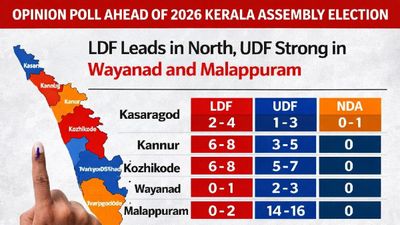 Opinion Poll For Kerala Assembly Election 2026: Ldf Strength In Kannur And Kasaragod
 -
 Tamil Nadu Polls 2026: Vijay Reveals Rs 645 Crore Assets, Rs 266 Crore in Banks; Know All His Declaration
 -
 Mumbai Metro Line 9 Set for April 3 Launch, Dahisar-Mira Bhayandar to Get Direct Boost
 -
 Hyderabad Gold Silver Rate Today, 31 March 2026: Gold And Silver See Fresh Movement, Check Latest City Rates
 -
 Gold Silver Rate Today, 31 March 2026: City-Wise Prices, MCX Trend As Gold Rises And Silver Slips
 -
 Rahul Arunoday Banerjee Autopsy Report: Actor Was Underwater For Over An Hour, Sand Found In Lungs
 -
 Thunderstorm Warning In Delhi NCR: IMD Issues Orange Alert Amid Sudden Weather Shift
 -
 Trump Hints At Breakthrough With Iran Amid War Escalation, Calls Recent Move A ‘Sign Of Respect’
 -
 UP STF Nabs Maulana Abdullah Salim Over Controversial Comment On CM Yogi's Mother



 Click it and Unblock the Notifications
 Sign in with Google