


Bandra's 135-Year-Old Rail Bridge Over Mithi River To Be Replaced: Here’s What It Means For Train Services


One of the last iron screw-pile rail bridges on Indian Railways, Bridge Number 20 over the Mithi River in Bandra, will soon be replaced with a cement concrete girder, according to the Hindustan Times (HT) report. This bridge, which dates back to 1888, was constructed during the development of Bandra railway station and has been a vital part of the rail network for over a century.
The bridge features eight cast-iron pillars - two on each rail line - supporting the tracks on the Slow and Fast lines connecting Churchgate and Virar. Each pillar, weighing between eight to 10 tonnes, extends 15 to 20 metres into the riverbed to anchor firmly in the bedrock. Measuring 600 mm in diameter with a thickness of 50 mm, these pillars have supported the steel girders and rail lines above for decades.

A Legacy Ending Due To Safety Concerns
"This is the last remaining screw-pile bridge made of cast iron on Indian Railways. However, it is sinking and has weakened over time, posing a safety risk to train operations," explained a Western Railway engineer in the HT report. While efforts were made to strengthen the structure over the years, its condition now necessitates replacement.
The bridge spans 50 to 60 metres across the four rail lines. Its northern end has been reinforced with cement girders, but the southern end still relies on the original iron piers. These piers have been partially covered with cement concrete, leaving only the screw heads visible. Cofferdams have been installed on both sides of the river to block water flow, and high-power pumps are being used to clear accumulated water for the dismantling process.
Planned Rail Blocks In January
To carry out this replacement, Western Railway has scheduled two major rail blocks in January. These will take place overnight from 24 to 25 January and 25 to 26 January, each lasting 9.5 hours.
During these blocks, engineers will remove the steel girders and install new 20-metre-long concrete girders. Once the blocks are complete, a speed restriction of 15 to 20 km/h will be imposed on trains for the first few days as the structure's strength is tested. Gradually, the speed limit will be increased to 40 km/h.
Disruptions Expected Until May
The dismantling of the iron piers and other associated works is expected to continue until May. This process may lead to delays and disruptions in train services on the Fast and Slow lines between Churchgate and Virar. Once the iron piers are fully dismantled, further rail blocks will be needed to construct new concrete pillars, install girders, and realign the tracks.
Passengers should prepare for potential delays and changes in train schedules as this significant infrastructure upgrade progresses.
-
 Thunderstorm Warning In Delhi NCR: IMD Issues Orange Alert Amid Sudden Weather Shift
 -
 UP STF Nabs Maulana Abdullah Salim Over Controversial Comment On CM Yogi's Mother
 -
 Masood Azhar’s Brother Mohammad Tahir Dies In Pakistan Under Mysterious Circumstances, Cause Yet To Be Known
 -
 VerSe Innovation Appoints P.R. Ramesh as Independent Director and Chair of Audit Committee to Strengthen Governance Ahead of Next Phase of Growth
 -
 “Not Going To Be There Too Much Longer”: Trump Signals Endgame In Iran War
 -
 Iran Threatens To Hit US Companies in Region From April 1, Names Microsoft, Apple, Tesla, Boeing
 -
 ‘IPL Official’ Found Dead in Mumbai Hotel, Probe Underway
 -
 Leander Paes To Contest West Bengal Assembly Elections 2026? Tennis Star Joins BJP Ahead of Assembly Polls
 -
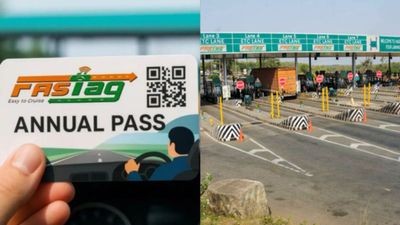 April 1 Rule Changes: PAN, New Tax Law, ATM, FASTag, Cards to Impact Millions, What’s Changing?
 -
 China, Pakistan Call for Immediate Ceasefire in Iran War, Push Peace Talks ‘As Soon As Possible’
 -
 Iran’s New Hormuz Plan Targets Global Shipping with Tolls, What Does It Mean?
 -
 Are Banks Closed or Open Today on Mahavir Jayanti? RBI Issues Special March 31 Instructions



 Click it and Unblock the Notifications
 Sign in with Google