


Zohran Mamdani’s Historic NYC Victory Redefines Urban Politics, Sets Stage for Clash with Trump?


Why Mamdani Won
Mamdani's triumph is in many ways a textbook case of insurgent politics rising at exactly the right moment. A 34-year-old self-described democratic socialist, the Queens-based state assembly member emerged from relative obscurity and built momentum by tapping into two overlapping currents: economic frustration and identity politics.
First, his agenda hit a strong chord with voters facing cost-of-living pressures in New York. His campaign promises-tax the millionaires to fund expanded social programmes, freeze rents on rent-stabilised units, make buses free, universal childcare-spoke directly to the city's affordability crisis. As noted in polling and commentary, Mamdani's campaign "married economic justice with moral clarity" and offered a rare progressive blueprint in US urban politics.
AI-generated summary, reviewed by editors

Second, his identity and narrative mattered. As a Muslim of Indian origin born in Uganda, he stood as a symbol of change in a city whose diversity is both its asset and its challenge. Observers have pointed out that his decision to own his identity-rather than shy away from it-became an asset, particularly in a moment when right-wing populism and anti-immigrant rhetoric were ascendant.

Third, he navigated the mechanics of New York politics effectively: ranked-choice voting, grassroots organising, small-dollar donations, and a clever message of hope and affiliation ("In this moment of darkness, New York will be the light"). By contrast, his opponent, the establishment figure Andrew Cuomo, carried baggage, including legacy scandals, and was portrayed as the candidate of the billionaire class.
Finally, the backdrop of national politics likely helped. In the era of Trump-style nationalism and anti-immigrant sentiment, Mamdani offered a counternarrative: a progressive, immigrant-rooted, inclusive vision of the city. Public commentary suggests that his campaign "answers" the moment of Trump-era politics with an alternative.
The Trump Factor: A clash of visions
The clash between Mamdani and Trump is not merely personal; it's symbolic. At one pole is Trump's nationalism, anti-immigrant rhetoric, his threats to use federal funding as leverage against cities whose leadership he opposes. At the other pole is Mamdani's immigrant background, his progressive agenda, his promise to "stand up for all New Yorkers including immigrants."
Trump inserted himself into the mayoral contest-endorsing Cuomo, warning that if Mamdani won the city might lose federal funds. Thus, Mamdani's win isn't just a local story- it becomes a test of the broader fault lines in American politics: centre-left urbanism vs. right-wing populism; global-city liberalism vs. nationalist retrenchment. Commentary in The Washington Post framed it as "Mamdani's global city clashes with Trump's nationalist project."
Will he have a smooth run? The challenges ahead
Victories often mask the harder task of governing- and being mayor of New York is among the toughest calls in American public service. A number of challenges loom for Mamdani:
Coalition governance. While he surged by energising younger, more progressive, immigrant and working-class voters, some commentary highlighted gaps in his coalition: among Black voters, among women voters, even among Hispanic voters his support was weaker in some polls. Governing will require reaching beyond his base and managing competing interests in the city's complex mosaic.
Budgetary and policy realism. His promised policies-free buses, universal childcare, large affordable-housing targets, higher taxes on the wealthy-will test the limits of municipal budgets and state/federal cooperation. Some critics are already pushing back: for example, an editorial criticized his free-bus plan as naïve and potentially costly. That pressure will be real.
Federal stage and funding risks. Here we come to the heart of the Trump dimension: if Trump pursues the threat to cut federal funds to a city governed by an ideological opponent, Mamdani will face constrained resources. According to Reuters coverage, New York receives approximately $7.4 billion a year in federal support-or about 6.4 % of its budget. A reduction would force hard trade-offs.
External hostility & identity dynamics. The post-primary surge in Islamophobic and anti-immigrant posts pointed to a hostile environment. Managing and combating bigotry while trying to govern effectively will be part of the job.
Internal party tensions and public expectations. Some Democrats themselves are cautious about his brand of politics- wondering whether his win signals the future of the party or a one-off. He will need to show that his movement can govern, not just protest.
Will Trump release the money?
This is the litmus test. On one side, Trump's threats to withhold federal support if Mamdani won were explicit. He described that "it would be highly unlikely" the city would receive more than the "very minimum as required." On the other side, practical considerations may constrain total federal-funding cuts: cities rely on federal programs, public-safety grants, infrastructure funds; wholesale withholding could provoke legal, political and economic blow-back.
But the risk is clear: even a partial withholding or delay in funds would limit the leeway Mamdani will have in implementing his agenda. Given his ambitious policy proposals, he may find himself constrained and forced to make trade-offs earlier than expected. If Trump uses federal funding as leverage, Mamdani's claim that "the city that gave rise to him [Trump] can defeat him" will be tested in harsh fiscal reality.
The Bottom Line
Zohran Mamdani's victory is historic- on multiple fronts. It shows how a progressive, immigrant-rooted candidate in the world's largest city can harness grassroots momentum and challenge both local establishment power and national populist currents. But history is in the past; governance is now. Whether Mamdani can turn bold ideas into effective policy, navigate fiscal constraints, build broad coalitions, and withstand federal pressure (perhaps from Trump) will determine whether this win becomes a lasting shift or a partial flashpoint.
In many ways, his ascendancy signals a new phase in American urban politics-one that embraces diversity, bold redistributive ideas, and resistance to nationalist retrenchment. But the coming months will test whether vision meets the hard grind of city hall.
-
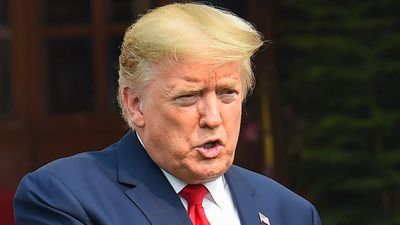 Trump Says Iran Is ‘Incapable’ Of Building Nuclear Weapon, US Will Be Out ‘Pretty Quickly’
 -
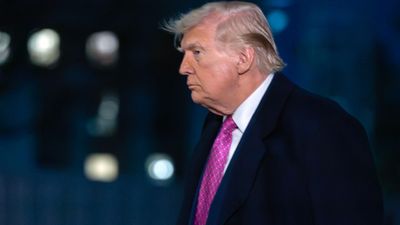 Trump's Address To Nation: Key Pointers From US President's Speech
 -
 NASA Successfully Launches Artemis II: Know All About First Crewed Moon Mission In 50 Years
 -
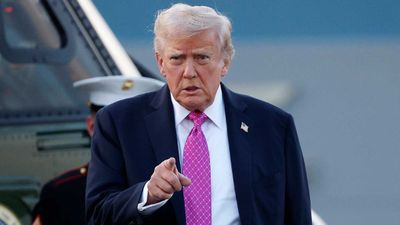 What Is The ‘Stone Age’ Warning Donald Trump Issued To Iran? Says ‘No Deal, No Mercy’
 -
 Gold Rate Today 2 April 2026: Latest IBJA Gold Rates, Tanishq, Kalyan, Malabar, Joyalukkas 22K Prices
 -
 Gold Rate Today 1 April 2026: Latest IBJA Gold Rates, Tanishq, Kalyan, Malabar, Joyalukkas Prices
 -
 RCB Vs CSK IPL 2026 Tickets At Chinnaswamy: Official Sale, Metro Perks, And Entry Guidelines
 -
 Tamil Nadu Election Predictions: AIADMK Fails To Unseat Stalin's DMK, Says Pre Poll Survey
 -
 Hyderabad Gold Silver Rate Today, 1 April 2026: Check 18K, 22K, 24K Gold And Silver Prices In Nizam City
 -
 Bangalore Gold Rate Today, 1 April 2026: Latest IBJA Gold Rates, Bhima, Abharan, Jos Alukkas, GRT Prices
 -
 War Lockdown Notice Goes Viral Over Iran Claims, Sparks Panic Online
 -
 Gold Silver Rate Today, 1 April 2026: City-Wise Prices Rise Sharply, MCX Gold And Silver Surge



 Click it and Unblock the Notifications
 Sign in with Google