


Where Is Iran’s Uranium? Netanyahu Says Israel Has ‘Interesting Intel’ on 60% Enriched Stockpile


The mystery surrounding the Iran uranium stockpile deepened after Israeli Prime Minister Benjamin Netanyahu claimed that Israel possesses "interesting intel" about the whereabouts of Iran's 408 kilograms of uranium enriched to 60% purity.
In a pre-recorded press conference, Netanyahu stopped short of revealing details but stressed that Israel had to act against Iran following Tehran's alleged sprint toward nuclear weaponization - an acceleration he attributed to the assassination of Hezbollah chief Hassan Nasrallah in September 2024.

"I told [President Trump] of our need to act, and he understood it very well. He would do the right thing for America, the free world, and for civilization," Netanyahu said, referencing Israel's coordination with the United States on the recent military strikes.
Uranium Relocated? What We Know So Far
Recent US and Israeli airstrikes on Iran's nuclear sites - Fordow, Natanz, and Isfahan - have raised urgent questions: Is Iran's uranium stockpile destroyed, or was it moved in advance? While US President Trump hailed the operation as having "completely and totally obliterated" key nuclear infrastructure, nuclear experts and insiders suggest otherwise.
A senior Iranian source told the Financial Times that storing uranium at the bombed facilities would have been "naive," implying that the 60% enriched uranium might have been relocated prior to the strikes. If accurate, this move could mean that Iran retains the core of its nuclear capability, despite significant physical damage at the sites.
IAEA Unable to Verify
The International Atomic Energy Agency (IAEA) has not been able to access or inspect the bombed locations since the strikes. IAEA Director General Rafael Grossi acknowledged "significant physical damage" but said without on-ground verification, the survival or destruction of Iran's uranium stockpile remains unknown.
Satellite imagery has shown extensive surface-level damage, especially at Fordow, where 30,000-pound "bunker buster" bombs were deployed. However, the underground depth of the centrifuge halls makes it difficult to confirm damage to the uranium processing units.
Regional Tensions and Hidden Facilities
Ali Shamkhani, a senior adviser in Iran, posted defiantly on X, saying: "Even if nuclear sites are destroyed, [the] game isn't over. Enriched materials, indigenous knowledge, political will remain."
This message, paired with speculation about covert facilities and mobile stockpiling, has alarmed Western intelligence circles. Former Pentagon official Dana Stroul noted that no military campaign can fully eliminate Iran's nuclear programme, while others fear that secrecy and dispersal could increase.
Diplomatic Standoff or Shadow Conflict?
While the US administration remain open to reviving nuclear diplomacy, many experts warn that military escalation could backfire. The uncertain status of Iran's uranium stockpile complicates any future negotiation or verification mechanism.
This growing opacity has raised fears that Iran may take a more confrontational stance. Ali Vaez, director of the Iran Project at the International Crisis Group and a veteran analyst of Tehran's nuclear programme, has warned that Iran could consider withdrawing from the Nuclear Non-Proliferation Treaty (NPT) - a move that would mark a serious setback for global arms control.
The NPT is a cornerstone of international oversight, requiring member countries to allow inspections by the International Atomic Energy Agency (IAEA). If Iran were to exit the treaty, it would drastically reduce transparency around its nuclear activities, further narrowing the window for diplomatic resolution and increasing the risk of long-term instability.
As of now, the location of Iran's enriched uranium remains a high-stakes mystery. With Israel hinting at "interesting intel" and no IAEA inspections post-strike, the Iran uranium stockpile continues to fuel both regional anxiety and global diplomatic efforts aimed at preventing a broader nuclear crisis.
-
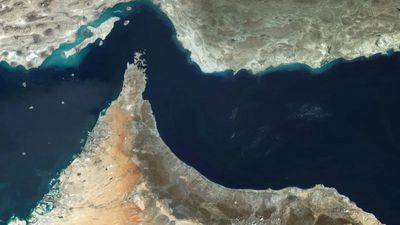 Iran’s New Hormuz Plan Targets Global Shipping with Tolls, What Does It Mean?
 -
 Starmer Warns Iran Conflict Will Impact UK, But Pledges to ‘Weather The Storm’
 -
 Trump Signals US Exit from Iran Within Weeks, Shifts Focus from Diplomacy to Military Goals
 -
 Iran Crisis: Over 5.98 Lakh Indians Have Returned Home, Confirms Govt
 -
 Trump Warns Iran Of Possible Attacks On Energy Sites Amid Israel-Hezbollah Conflict
 -
 Egypt President Sisi To Trump: ‘Please, Help Us To Stop The War’ Amid Escalating Iran Conflict
 -
 Trump Says US In Talks With ‘More Reasonable’ Iran Regime, Warns Of Strikes If Deal Fails
 -
 Trump Claims Iran Has Accepted Most of US 15-Point Peace Plan, Signals Possible Breakthrough
 -
 Trump Says US Could Seize Iran’s Oil, Hints At Targeting Kharg Island Amid Escalating Middle East Conflict
 -
 Trump Hints At Breakthrough With Iran Amid War Escalation, Calls Recent Move A ‘Sign Of Respect’
 -
 Indian Worker Killed In Kuwait After Iranian Strike Hits Power Plant Amid Rising Gulf Tensions
 -
 IPL 2026: Rohit Sharma’s Blazing 78 Powers Mumbai Indians to Big Win Over Kolkata Knight Riders



 Click it and Unblock the Notifications
 Sign in with Google