


US Election 2024: What Issues Are Driving The Indian-American Vote In The 2024 Election?


As the United States gears up for a crucial presidential election on November 5, the Indian-American community has emerged as a significant electoral force. With over 5.2 million eligible voters, this demographic group has the potential to swing the election outcome, especially in the high-stakes contest between Vice President Kamala Harris and former President Donald Trump.
This article delves into the voting preferences of Indian-Americans, the key issues that resonate with them, and the implications for both major political parties.

A Growing Influence
The Indian-American community is now the second-largest immigrant group in the United States, following Mexican-Americans. Historically, this group has shown strong support for the Democratic Party, which has consistently received overwhelming backing from Indian-American voters. However, the Republican Party has recognized the significance of this voting bloc and has adapted its policies to appeal to their interests, particularly in areas such as the economy, social issues, and US-India bilateral relations.
This election cycle is particularly notable because Kamala Harris, the Democratic nominee, is of Indian heritage. Should she win, she would become the first person of Indian descent to hold the presidency, adding another layer of significance to the Indian-American vote.
Survey Insights: Understanding the Sentiment
To better understand the preferences of the Indian-American community, the Carnegie group conducted a comprehensive survey in collaboration with research and analytics firm YouGov. The results of this survey provide valuable insights into how this demographic intends to vote and what issues matter most to them.
Key Findings:
Party Preferences:
-
The survey indicates that a significant majority-approximately 60%-of Indian-Americans favor the Democratic Party, with strong support for Kamala Harris.
-
Conversely, the Republican Party has seen a slight increase in support, with about 33% of Indian-Americans indicating they plan to vote for Trump.
Gender Dynamics:
-
A notable gender gap exists in the voting preferences of Indian-Americans. 67% of Indian-American women intend to vote for Harris, while only 53% of men express the same intention.
-
Among those supporting Trump, 22% are women, compared to 39% of men, highlighting differing priorities between genders within this community.
Shift in Party Identification:
-
The survey reveals a worrying trend for Democrats, as the percentage of Indian-Americans identifying as Democrats has declined from 56% in 2020 to 47% in the current election cycle.
-
Meanwhile, Republican identification has remained steady, and the proportion of independents has increased, suggesting a more fragmented political landscape.
Republican Candidates:
-
Interestingly, Indian-American Republicans such as Nikki Haley, Vivek Ramaswamy, and Usha Vance have received unfavorable ratings among their community, indicating that Indian heritage does not guarantee support.
Top Issues of Concern
The survey identified several pressing issues that Indian-American voters prioritize as they head to the polls:
Inflation and Cost of Living:
-
Ranked as the most significant concern, inflation and the rising cost of living resonate deeply with the community, reflecting broader economic anxieties.
State of the Economy and Jobs:
-
Closely following inflation, the overall state of the economy and job opportunities are paramount, especially in light of recent economic challenges.
Abortion and Reproductive Rights:
-
This issue ranks high on the list of concerns, reflecting the broader national discourse on reproductive rights and healthcare access.
Demographics and Growth
The Indian-American community is experiencing rapid growth and demographic changes:
- Population: There are approximately 5.2 million individuals of Indian origin residing in the United States, with about 3.9 million being 18 years or older. It is estimated that 2.6 million of these individuals are eligible to vote.
- Growth Rate: Between 2010 and 2020, the Indian-American population grew by 50%, making it one of the fastest-growing immigrant communities in the country.
- Economic Status: The median household income for Indian-Americans stands at approximately $153,000, which is more than double the national average, underscoring their economic significance.
Looking Ahead: The Future of the Indian-American Vote
As the 2024 presidential election approaches, the analysis suggests that while the Democratic Party still holds a comfortable lead among Indian-American voters, the Republicans have made notable inroads. The presence of Kamala Harris as the Democratic candidate could bolster support among Indian-Americans, but the shifting dynamics in party identification and support indicate a more competitive landscape.
In particular, the Republicans' increasing efforts to engage this demographic may pose challenges for Democrats in the upcoming elections. The findings highlight that the Indian-American community's electoral influence is growing and evolving, making it a critical group to watch in the future.
As the Indian-American community plays an increasingly important role in shaping the electoral landscape, their voting preferences and key issues will be pivotal in determining the next President of the United States. The outcome of this election could set the stage for how both major parties approach this demographic in the years to come, making the Indian-American vote one of the most significant factors in American politics today.
-
-
-
-
-
-
-
 Gold Silver Rate Today, 30 March 2026: City-Wise Prices, MCX Update On 24K Gold, 22K Gold And Silver
 -
 LPG Crunch: Karnataka Brings New SOPs, Makes PNG Registration Mandatory for Businesses
 -
 Hyderabad Gold Silver Rate Today, 30 March 2026: Check Fresh 24K, 22K, 18K Gold And Silver Prices In City
 -
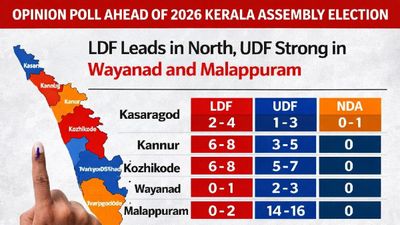 Opinion Poll For Kerala Assembly Election 2026: Ldf Strength In Kannur And Kasaragod
 -
 Tamil Nadu Polls 2026: Vijay Reveals Rs 645 Crore Assets, Rs 266 Crore in Banks; Know All His Declaration
 -
 Mumbai Metro Line 9 Set for April 3 Launch, Dahisar-Mira Bhayandar to Get Direct Boost
 -
 Hyderabad Gold Silver Rate Today, 31 March 2026: Gold And Silver See Fresh Movement, Check Latest City Rates
 -
 Gold Silver Rate Today, 31 March 2026: City-Wise Prices, MCX Trend As Gold Rises And Silver Slips
 -
 Rahul Arunoday Banerjee Autopsy Report: Actor Was Underwater For Over An Hour, Sand Found In Lungs
 -
 Thunderstorm Warning In Delhi NCR: IMD Issues Orange Alert Amid Sudden Weather Shift
 -
 Trump Hints At Breakthrough With Iran Amid War Escalation, Calls Recent Move A ‘Sign Of Respect’
 -
 UP STF Nabs Maulana Abdullah Salim Over Controversial Comment On CM Yogi's Mother



 Click it and Unblock the Notifications
 Sign in with Google