


US Attacks Iran: A historic And Risky Escalation In The Middle East


The United States, in a dramatic escalation of the ongoing conflict with Iran, conducted precision airstrikes on three of Iran's principal nuclear sites-Fordow, Natanz, and Esfahan-on Saturday, June 21. The operation, announced by President Donald Trump, involved U.S. B-2 stealth bombers, which are uniquely capable of delivering massive bunker-busting munitions necessary to destroy underground facilities like Fordow, Iran's main nuclear enrichment site.
President Trump described the attack as "very successful," stating that "a full payload of BOMBS was dropped on the primary site, Fordow," and declared, "Fordow is gone." He emphasised that all U.S. aircraft had safely exited Iranian airspace and assured the public that the mission targeted only nuclear infrastructure, with no intent to pursue regime change. Trump also called on Iran to end the war, warning that failure to do so could result in further military action.

Iranian state media confirmed that part of the Fordow site had been attacked by "enemy airstrikes," though the full extent of the damage remains unclear. The strikes mark a significant escalation after more than a week of intense conflict between Israel and Iran, which began when Israel launched a series of attacks aimed at dismantling Iran's air defenses and nuclear capabilities. The conflict has resulted in hundreds of casualties on both sides, with Iranian officials reporting over 430 killed and 3,500 injured in Iran, and Israeli authorities citing 24 civilian deaths and more than 1,200 injured in Israel.
Israel and the United States maintained close coordination throughout the operation. Israeli officials stated they were "in full coordination" with Washington, and Prime Minister Benjamin Netanyahu publicly praised the U.S. attack, calling it a "bold decision" that would "change history". The White House also confirmed that Trump spoke with Netanyahu following the strikes.
Despite the military success claimed by the U.S. and Israel, the operation has sparked political controversy at home. Some U.S. lawmakers, including Democrats and a handful of Republicans, criticized the decision to strike Iran without explicit congressional authorization, calling it unconstitutional and warning of increased risks to American troops in the region. Meanwhile, diplomatic efforts by Western nations to de-escalate the conflict have so far failed.
The U.S. attack on Iran's nuclear facilities shows a historic and risky escalation in the Middle East, with the potential to reshape regional power dynamics and further destabilize an already volatile situation. The operation underscores the determination of the U.S. and Israel to prevent Iran from acquiring nuclear weapons, but also raises the specter of broader conflict and unpredictable consequences for global security.
-
 Iran Crisis: Over 5.98 Lakh Indians Have Returned Home, Confirms Govt
 -
 Air India Express Bagdogra-Delhi Flight Lands in Lucknow After Pilot Issues Mayday Over Smoke Alert
 -
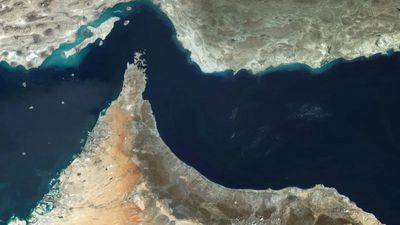 Iran’s New Hormuz Plan Targets Global Shipping with Tolls, What Does It Mean?
 -
 ‘Iran Wants Ceasefire’: Donald Trump Threatens To Send Tehran ‘Back To The Stone Age’
 -
 Trump Signals US Exit from Iran Within Weeks, Shifts Focus from Diplomacy to Military Goals
 -
 Trump Warns Iran Of Possible Attacks On Energy Sites Amid Israel-Hezbollah Conflict
 -
 Starmer Warns Iran Conflict Will Impact UK, But Pledges to ‘Weather The Storm’
 -
 Gold Rate Today 31 March 2026: Latest IBJA Benchmark And Tanishq, Kalyan, Malabar, Joyalukkas Rates
 -
 Hyderabad Gold Silver Rate Today, 31 March 2026: Gold And Silver See Fresh Movement, Check Latest City Rates
 -
 Gold Silver Rate Today, 31 March 2026: City-Wise Prices, MCX Trend As Gold Rises And Silver Slips
 -
 Thunderstorm Warning In Delhi NCR: IMD Issues Orange Alert Amid Sudden Weather Shift
 -
 UP STF Nabs Maulana Abdullah Salim Over Controversial Comment On CM Yogi's Mother



 Click it and Unblock the Notifications
 Sign in with Google