


Trump's Immigration Rule Sets Time Bomb Ticking For NRIs, Their Children's Citizenship Rights


Donald Trump and JD Vance's campaign pledge has stirred major concerns for immigrants, especially among Indian-Americans, as it introduces uncertainty regarding the naturalisation rights of their children in the US.
A naturalised citizen is defined as a person who becomes a citizen of a country by being born there, should they choose to take up that option.

If such a person retains the citizenship of their ethnic homeland, they can later elect to adopt the citizenship of their birth country at any point in their lifetime.
Trump had vowed to restrict naturalised citizenship, making it a core part of his campaign and a promise he and Vance pledged to enforce on "Day 1".
It is anticipated that Trump's and his deputy JD Vance's focus on 'Day 1' will centre on immigration reform.
During the election campaign, at nearly every rally, Trump declared, "On Day 1, I will launch the largest deportation program in American history." His proposed immigration policy overhaul targets not only illegal immigrants but also the legal immigration process.
According to a campaign document available on Trump's website, he intends to sign an executive order on his first day in office to restrict immigration. The order will "Direct federal agencies to require that at least one parent be a US citizen or lawful permanent resident for their future children to become automatic US citizens."
This means that, going forward, children born in the US to parents who are neither citizens nor permanent residents (PRs) might not automatically qualify for citizenship by birth.
Although official figures remain undisclosed, it is estimated that the employment-based green card backlog from India exceeded 1 million as of the first quarter of 2023. The average wait time for a green card (US citizenship) has now extended to over 50 years.
This suggests that more than half a million young immigrants who moved to the US for study or work may not live long enough to secure their citizenship. Additionally, nearly a quarter-million children awaiting citizenship may surpass the legal age of 21, after which they could become illegal immigrants unless they secure another visa, such as a student visa.
Trump's decision to limit naturalised citizenship is expected to face legal challenges, as experts contend that such an executive order would be unconstitutional under the 14th Amendment.
Section 1 of the 14th Amendment of the US Constitution states, "All persons born or naturalised in the United States, and subject to the jurisdiction thereof, are citizens of the United States and of the State wherein they reside. No State shall make or enforce any law which shall abridge the privileges or immunities of citizens of the United States; nor shall any State deprive any person of life, liberty, or property, without due process of law; nor deny to any person within its jurisdiction the equal protection of the laws."
Nonetheless, the draft executive order claims to offer a "correct interpretation" of the 14th Amendment to the US Constitution.
According to an analysis by Pew Research based on the 2022 US census, an estimated 4.8 million Indian-Americans currently reside in the US. Of these, 1.6 million were born and raised in the United States, making them naturalised citizens.
Should Trump proceed with signing the executive order, it will likely be up to the courts to determine whether the action is, in fact, unconstitutional.
-
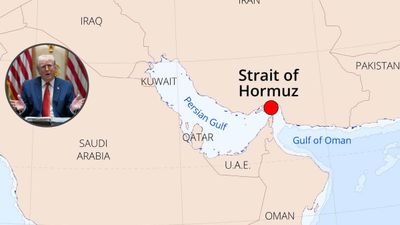 When Will Strait of Hormuz Reopen? Donald Trump’s Iran War Speech Suggests No Quick Relief
 -
 What Is The ‘Stone Age’ Warning Donald Trump Issued To Iran? Says ‘No Deal, No Mercy’
 -
 Donald Trump Offers To Buy Oil From The US, Says “We Have Plenty”; Claims Iran War Will “Finish Very Fast'
 -
 Trump's Address To Nation: Key Pointers From US President's Speech
 -
 ‘Go Get Your Own Oil’: Trump Slams Nations Hit By Hormuz Fuel Crisis For Refusing To Back Iran Strikes
 -
 Will Donald Trump Quit NATO After Iran War Rift? Europe Unites As Alliance Faces Its Biggest Crisis In Decades
 -
 Trump Warns Iran Of Possible Attacks On Energy Sites Amid Israel-Hezbollah Conflict
 -
 Trump Signals US Exit from Iran Within Weeks, Shifts Focus from Diplomacy to Military Goals
 -
 ‘Iran Wants Ceasefire’: Donald Trump Threatens To Send Tehran ‘Back To The Stone Age’
 -
 Trump Says Iran Is ‘Incapable’ Of Building Nuclear Weapon, US Will Be Out ‘Pretty Quickly’
 -
 Iran-US War: Donald Trump’s Missteps And The NATO Paradox
 -
 Gold Rate Today 31 March 2026: Latest IBJA Benchmark And Tanishq, Kalyan, Malabar, Joyalukkas Rates



 Click it and Unblock the Notifications
 Sign in with Google