


Russia's Sarmat Missile Test Blunder: Massive Crater Reveals Catastrophic Failure - IN PICS


Russia appears to have faced a significant setback with its latest test of the Sarmat missile, a crucial element in its nuclear modernization efforts.
Recent satellite imagery from Maxar Technologies reveals a 60-meter-wide crater at the Plesetsk Cosmodrome in northern Russia, indicating extensive damage that was not present in earlier images taken just weeks before the failed test on September 21, as reported by Aljazeera.

Pavel Podvig, an analyst and director of the Russian Nuclear Forces project, described the situation as indicative of a "catastrophic failure." He stated, "By all indications, it was a failed test. It's a big hole in the ground." The RS-28 Sarmat missile, designed to carry nuclear warheads over long distances, has been plagued by delays and complications throughout its development.
Timothy Wright, a research associate at the International Institute for Strategic Studies (IISS) in London, suggested that the damage around the missile silo hinted at a failure soon after ignition. "One possible cause is that the first stage (booster) either failed to ignite properly or suffered from a catastrophic mechanical failure, causing the missile to fall back into or land closely adjacent to the silo and explode," he explained.
James Acton, a nuclear specialist at the Carnegie Endowment for International Peace, echoed these sentiments on social media, stating that the before-and-after satellite images were compelling evidence of a major explosion, leading him to believe that the Sarmat test had indeed failed, as reported by Aljazeera.
The Plesetsk site, previously an open area with visible roads and buildings, now shows dramatic alterations following the test. Roads have disappeared, and only one building remains intact amidst the destruction.
The Kremlin has not publicly addressed the failure, directing inquiries to the Ministry of Defence, which has yet to respond. Meanwhile, the U.S. and its allies are keeping a close watch on Russia's nuclear developments, especially in light of escalating tensions due to the ongoing conflict in Ukraine.
Despite the setback, analysts like Wright caution that a single test failure does not jeopardize the Sarmat program outright. However, this marks the fourth consecutive failure, which could further delay its already postponed introduction into service and raise questions about the program's overall viability.
The damage at the Plesetsk site will likely affect the Sarmat project, as the aging SS-18 missiles it is meant to replace will need to remain operational longer than anticipated, as per media reports.
Former Russian arms control official Nikolai Sokov believes that Moscow will continue with the Sarmat program, as the Russian military aims to maintain competition among missile designers and will be reluctant to rely solely on one manufacturer.
As the world watches closely, the fate of Russia's Sarmat missile program hangs in the balance, reflecting the complexities of modern military technology and international relations.
-
 Gold Silver Rate Today, 30 March 2026: City-Wise Prices, MCX Update On 24K Gold, 22K Gold And Silver
 -
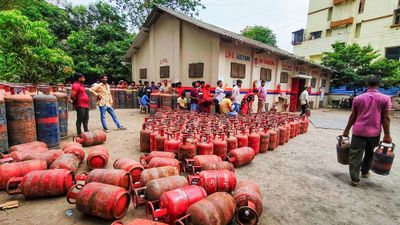 LPG Crunch: Karnataka Brings New SOPs, Makes PNG Registration Mandatory for Businesses
 -
 Hyderabad Gold Silver Rate Today, 30 March 2026: Check Fresh 24K, 22K, 18K Gold And Silver Prices In City
 -
 Opinion Poll For Kerala Assembly Election 2026: Ldf Strength In Kannur And Kasaragod
 -
 Tamil Nadu Polls 2026: Vijay Reveals Rs 645 Crore Assets, Rs 266 Crore in Banks; Know All His Declaration
 -
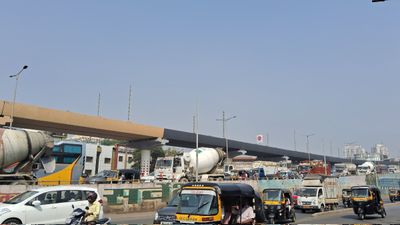 Mumbai Metro Line 9 Set for April 3 Launch, Dahisar-Mira Bhayandar to Get Direct Boost
 -
 Hyderabad Gold Silver Rate Today, 31 March 2026: Gold And Silver See Fresh Movement, Check Latest City Rates
 -
 Gold Silver Rate Today, 31 March 2026: City-Wise Prices, MCX Trend As Gold Rises And Silver Slips
 -
 Rahul Arunoday Banerjee Autopsy Report: Actor Was Underwater For Over An Hour, Sand Found In Lungs
 -
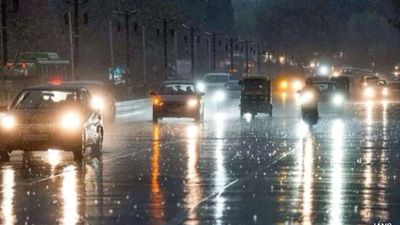 Thunderstorm Warning In Delhi NCR: IMD Issues Orange Alert Amid Sudden Weather Shift
 -
 Trump Hints At Breakthrough With Iran Amid War Escalation, Calls Recent Move A ‘Sign Of Respect’
 -
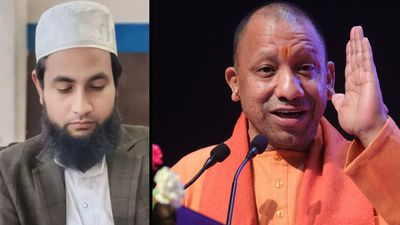 UP STF Nabs Maulana Abdullah Salim Over Controversial Comment On CM Yogi's Mother



 Click it and Unblock the Notifications
 Sign in with Google