


No Indian Economic Zone In Bangladesh, It Exists Only On 'Pen & Paper', Says Dhaka Official Amid Strained Ties


There is no Indian Economic Zone within Bangladesh's Mirsarai Economic Zone and the concept exists solely "on pen and paper," according to Ashik Chowdhury, Chairman of the Bangladesh Industrial Development Authority (BIDA), amid growing tensions between the two nations.
Previously, the Bangladesh Economic Zone Authority (BEZA) had welcomed Indian investment in the proposed Indian Economic Zone project in Mirsarai, a town in Chattogram district.

Back in 2020, India had approved $115 million in principle under its third line of credit to support infrastructure development over 900 acres in the Bangabandhu Sheikh Mujib Industrial City.
"I know there is confusion over whether in the Mirsarai Economic Zone, there is an Indian Economic Zone or not. If you look at the original master plan of the Mirsarai Economic Zone, the plan was for 33,000 acres. We have cut down that in Phase 1 and reduced it to 10,000 to 15,000 acres. I believe that we do not need so much space. We can look at the rest in the second or the third phase," said Chowdhury.
"What is usually said about the Indian Economic Zone, that is only an economic zone on pen and paper. This was there in the original master plan but there was no progress or major work done on this. The area marked in the master plan is a forest area. Practically, there is no progress or set up there, so there is a lot of misconception about this in the public domain. I had clarified earlier and I am clarifying again that there is no activity that has happened there," he added.
Chowdhury also stated that since the Muhammad Yunus-led interim government assumed office in August last year, there had been no progress on the project.
"It is a complete pause or in a postponement position... The Chittagong Port is not just Chittagong's port. It is entire Bangladesh's port, and we are saying it is for the entire South Asia and even the seven sisters and Nepal and Bhutan. For everyone, it is primary," he remarked.
These comments come against the backdrop of deteriorating ties between India and Bangladesh since last year, following Dhaka's failure to prevent attacks on minorities, particularly Hindus.
Relations worsened further after Bangladesh sought China's support concerning Northeast India earlier this year, prompting India to impose a series of restrictions on the country.
In March, Bangladesh's interim Chief Advisor Mohammad Yunus asserted that Dhaka is the "only guardian of the ocean" for landlocked Northeast India-a claim that triggered sharp responses from New Delhi and Indian political leaders.
Subsequently, on 9 April, India revoked the transhipment facility granted to Bangladesh for exporting goods to the Middle East, Europe, and other regions-except for Nepal and Bhutan.
A few days later, on 13 April, yarn exports from India via land ports were halted and Indian consignments began facing heightened scrutiny at Bangladesh's entry points. Then, on 17 May, India introduced port restrictions on importing select Bangladeshi goods such as ready-made garments and processed foods, in retaliation to similar curbs Dhaka had imposed earlier on Indian products.
Responding to Yunus' comments, Assam Chief Minister Himanta Biswa Sarma said: "...No country should be under the impression that it can take over the Chicken's Neck. The World has seen India's military prowess during Operation Sindoor."
The Chicken's Neck, also known as the Siliguri Corridor, is a narrow strip of land-around 22 to 35 kilometres wide-that connects India's northeast to the rest of the country.
"We have one Chicken's Neck. But Bangladesh has two Chicken Necks. If Bangladesh attacks our Chicken's Neck, we will attack both the Chicken Necks of Bangladesh," Sarma warned, referencing a narrow corridor linking the rest of Bangladesh with Chittagong, its largest port.
Chittagong has experienced unrest in the past, and Bangladesh appears to suggest that India's Northeast is heavily reliant on access to the port.
India, however, has already announced a new four-lane highway from Shillong in Meghalaya to Silchar in Assam.
Additionally, the Kaladan Multi-Modal Transit Transport Project in Myanmar is set to link the Kolkata port to the Sittwe port on the Kaladan river in Rakhine state.
The Sittwe port will then be connected to Paletwa via an inland waterway (the Kaladan River), and finally to Zorinpui, located at the southernmost tip of Mizoram, via road. Once Mizoram is connected to Sittwe, the rest of Northeast India will gain improved access to the sea.
-
 Thunderstorm Warning In Delhi NCR: IMD Issues Orange Alert Amid Sudden Weather Shift
 -
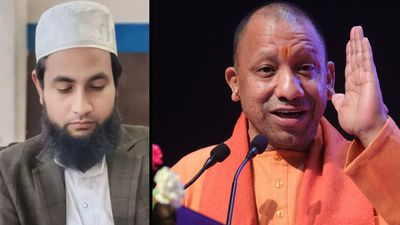 UP STF Nabs Maulana Abdullah Salim Over Controversial Comment On CM Yogi's Mother
 -
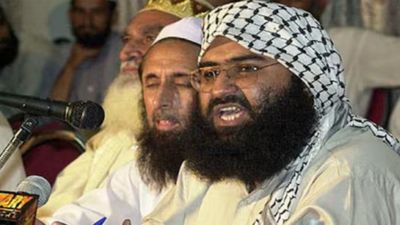 Masood Azhar’s Brother Mohammad Tahir Dies In Pakistan Under Mysterious Circumstances, Cause Yet To Be Known
 -
 VerSe Innovation Appoints P.R. Ramesh as Independent Director and Chair of Audit Committee to Strengthen Governance Ahead of Next Phase of Growth
 -
 “Not Going To Be There Too Much Longer”: Trump Signals Endgame In Iran War
 -
 Iran Threatens To Hit US Companies in Region From April 1, Names Microsoft, Apple, Tesla, Boeing
 -
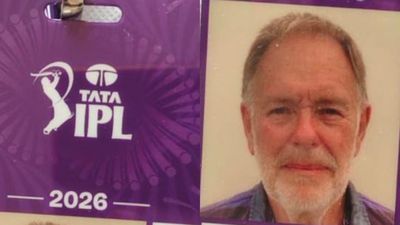 ‘IPL Official’ Found Dead in Mumbai Hotel, Probe Underway
 -
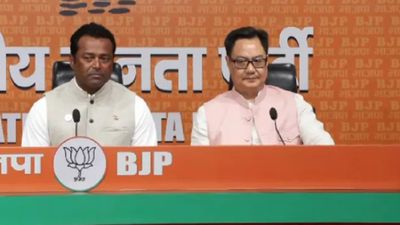 Leander Paes To Contest West Bengal Assembly Elections 2026? Tennis Star Joins BJP Ahead of Assembly Polls
 -
 April 1 Rule Changes: PAN, New Tax Law, ATM, FASTag, Cards to Impact Millions, What’s Changing?
 -
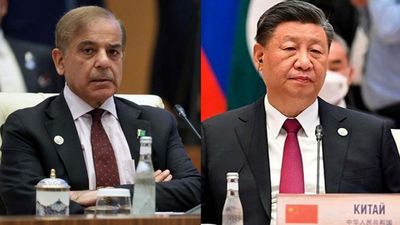 China, Pakistan Call for Immediate Ceasefire in Iran War, Push Peace Talks ‘As Soon As Possible’
 -
 Are Banks Closed or Open Today on Mahavir Jayanti? RBI Issues Special March 31 Instructions
 -
 Iran’s New Hormuz Plan Targets Global Shipping with Tolls, What Does It Mean?



 Click it and Unblock the Notifications
 Sign in with Google