


Modi in Indonesia: What is Indonesia’s Global Maritime Fulcrum policy?


As Prime Minister Narendra Modi embarked on his maiden visit to Indonesia on Tuesday, May 29, a lot is being said and written about the archipelago country's "global maritime fulcrum" (GMF) policy.

What is this policy adopted by the Joko Widodo government of Indonesia?
Widodo's GMF policy has five core pillars - maritime culture; maritime infrastructure and connectivity; protection of maritime resources; maritime diplomacy and maritime defence and two added pillars - maritime governance and maritime environment. The Widodo government unveiled the maritime policy at the 2014 East Asia Summit in Nay Pyi Taw in Myanmar and formally introduced at through Sea Policy presidential regulation in 2017, said a report published by the Centre for Strategic & International Studies (CSIS).
What GMF serves?
The policy looks to improve inter-island connectivity through better infrastructure and to protect maritime resources while internationally, it aims to make Indonesia a bridge between various regional initiatives - the Belt and Road Initiative, Indian Ocean Rim Association, Regional Comprehensive Economic Partnership and the Comprehensive and Progressive Agreement for Trans-Pacific partnership, the CSIS report added. The GMF aims to make a better use of Indonesia's strategic location on an important global waterway.
Besides, the GMF also eyes a better defence capability and make Indonesia a formidable maritime power.
The Widodo government, through the GMF, has brought back Indonesia's national emphasis on its maritime issues after a period when it stressed on the continental aspects more than the waters. Widodo's vision is more in compliance with the Archipelagic Outlook of the late 1950s which was propagated by former Indonesian prime minister Djuanda Kartawidjaja which emphasised on the inter-island seas, the CSIS report said.
The GMF is not exactly a scheme to assert maritime nationalism, as it apparently looks. A report by Stockholm International Peace Research Institute, Indonesia's defence expenditure has been below 1 per cent of its GDP and even though it saw a big increase by $710 million in 2015, it cut its defence budget for the next two years owing to economic stagnation.
There was a rise again in the wake of Indonesia's confrontation with China in the Natuna Sea, but it was reduced again in 2017. There was a hike subsequently but Indonesia's defence budget has never made it look like a threatening maritime power and rests more on the land forces for its national security.
Quite a contradiction, isn't it?
-
 Gold Rate Today 31 March 2026: Latest IBJA Benchmark And Tanishq, Kalyan, Malabar, Joyalukkas Rates
 -
 Gold Rate Today 30 March 2026: IBJA Benchmark Rates, Tanishq, Kalyan, Malabar, Joyalukkas Prices
 -
 Gold Silver Rate Today, 30 March 2026: City-Wise Prices, MCX Update On 24K Gold, 22K Gold And Silver
 -
 LPG Crunch: Karnataka Brings New SOPs, Makes PNG Registration Mandatory for Businesses
 -
 Hyderabad Gold Silver Rate Today, 30 March 2026: Check Fresh 24K, 22K, 18K Gold And Silver Prices In City
 -
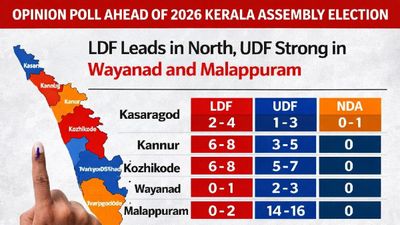 Opinion Poll For Kerala Assembly Election 2026: Ldf Strength In Kannur And Kasaragod
 -
 Tamil Nadu Polls 2026: Vijay Reveals Rs 645 Crore Assets, Rs 266 Crore in Banks; Know All His Declaration
 -
 Mumbai Metro Line 9 Set for April 3 Launch, Dahisar-Mira Bhayandar to Get Direct Boost
 -
 Hyderabad Gold Silver Rate Today, 31 March 2026: Gold And Silver See Fresh Movement, Check Latest City Rates
 -
 Gold Silver Rate Today, 31 March 2026: City-Wise Prices, MCX Trend As Gold Rises And Silver Slips
 -
 Rahul Arunoday Banerjee Autopsy Report: Actor Was Underwater For Over An Hour, Sand Found In Lungs
 -
 Thunderstorm Warning In Delhi NCR: IMD Issues Orange Alert Amid Sudden Weather Shift



 Click it and Unblock the Notifications
 Sign in with Google