


How Pakistan Founder Jinnah's Broken Promise Triggered The Balochistan’s Freedom Struggle


Balochistan, Pakistan's largest yet least populated province, has been a hotbed of insurgency for decades. The region, rich in natural resources, has long been at odds with Islamabad, with Baloch separatists demanding either greater autonomy or outright independence. However, the roots of this conflict trace back to a pivotal moment in history - the betrayal of Baloch aspirations by Muhammad Ali Jinnah in 1948.
The Historical Context
Balochistan's historical lineage is deep, with references in Greek literature dating back to 560 BC. By the time of British India's partition, the region comprised four princely states- Kalat, Kharan, Las Bela, and Makran. Like other princely states, these regions had the choice to join either India or Pakistan or remain independent.

Three of these states- Kharan, Las Bela, and Makran- chose to merge with Pakistan after receiving assurances from Jinnah that they would be treated equally within the new nation. However, the state of Kalat, led by Khan Mir Ahmadyar Khan, chose a different path. He sought to maintain independence, and in August 1947, Kalat declared itself an autonomous state. This decision was initially supported by Jinnah, who had served as Kalat's legal advisor in 1946 and had advocated for its independence before the British Crown.
The Betrayal and Forced Accession
Despite his initial support for Kalat's sovereignty, Jinnah soon changed his stance. With pressure mounting, he insisted that Kalat merge with Pakistan. The British administration, wary of Kalat's ability to sustain itself independently, further complicated matters by casting doubts on its international viability.
The Khan of Kalat resisted Jinnah's demands and reportedly sought support from other princely states, including India. Some reports suggest that Kalat even proposed accession to India, but Prime Minister Jawaharlal Nehru turned down the offer, prioritizing diplomatic stability and favoring a strong Pakistan as a buffer state.

By March 1948, Jinnah took decisive action. The Pakistan Army moved into Balochistan, and on March 27, 1948, the Khan of Kalat was forced to sign the instrument of accession, integrating his state into Pakistan. In his memoir, the Khan later admitted that he had overstepped his mandate in signing the agreement but suggested that failing to do so could have led to a bloody conflict with Pakistan's military forces.
The Birth of the Baloch Resistance
The forced accession of Kalat sowed the seeds of rebellion. The Khan's own brother, Prince Abdul Karim, rejected the decision and launched the first armed insurgency against Pakistan in 1948. Though the rebellion was quickly suppressed, it marked the beginning of Baloch resistance against Pakistani rule.
Over the decades, Balochistan has witnessed several waves of insurgency-in 1958-59, 1962-63, 1973-77, and the latest, ongoing since 2003. The region remains deeply alienated, particularly due to the Pakistani military's heavy-handed approach and the marginalization of Baloch people in national affairs.

The construction of the Gwadar port, initiated in 2002, became a flashpoint, fueling further resentment. The killing of Baloch leader Nawab Akbar Bugti in 2006 and the continued disappearances of Baloch activists have only deepened the crisis. Today, groups like the Baloch Liberation Army (BLA) continue their fight for self- determination, with escalated attacks against Pakistani forces.
Jinnah's decision to forcefully integrate Balochistan into Pakistan has had far-reaching consequences. What could have been a peaceful political resolution turned into a decades-long struggle for autonomy and independence. The betrayal of Baloch aspirations in 1948 laid the foundation for one of the most enduring conflicts in South Asia, a battle that continues to shape the region's political landscape today.
-
 Trump Claims Iran Has Accepted Most of US 15-Point Peace Plan, Signals Possible Breakthrough
 -
 IPL 2026: Rohit Sharma’s Blazing 78 Powers Mumbai Indians to Big Win Over Kolkata Knight Riders
 -
 Gold Rate Today 31 March 2026: Latest IBJA Benchmark And Tanishq, Kalyan, Malabar, Joyalukkas Rates
 -
 Gold Rate Today 30 March 2026: IBJA Benchmark Rates, Tanishq, Kalyan, Malabar, Joyalukkas Prices
 -
 Gold Silver Rate Today, 30 March 2026: City-Wise Prices, MCX Update On 24K Gold, 22K Gold And Silver
 -
 LPG Crunch: Karnataka Brings New SOPs, Makes PNG Registration Mandatory for Businesses
 -
 Hyderabad Gold Silver Rate Today, 30 March 2026: Check Fresh 24K, 22K, 18K Gold And Silver Prices In City
 -
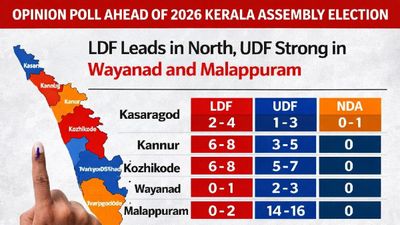 Opinion Poll For Kerala Assembly Election 2026: Ldf Strength In Kannur And Kasaragod
 -
 Tamil Nadu Polls 2026: Vijay Reveals Rs 645 Crore Assets, Rs 266 Crore in Banks; Know All His Declaration
 -
 Mumbai Metro Line 9 Set for April 3 Launch, Dahisar-Mira Bhayandar to Get Direct Boost
 -
 Hyderabad Gold Silver Rate Today, 31 March 2026: Gold And Silver See Fresh Movement, Check Latest City Rates
 -
 Gold Silver Rate Today, 31 March 2026: City-Wise Prices, MCX Trend As Gold Rises And Silver Slips



 Click it and Unblock the Notifications
 Sign in with Google