


Who Stands To Lose If Apple Moves iPhone Manufacturing Unit From India To US & How Much Will iPhone Cost Then?


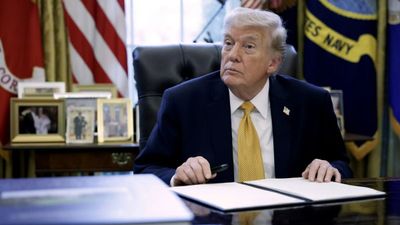
US President Donald Trump has tried to put the brakes on Apple CEO Tim Cook's expansion of the iPhone manufacturing unit in India.
On Thursday, Trump said, "I had a little problem with Tim Cook yesterday. I said to him, 'Tim, you're my friend. I treated you very well. You're coming in with $500 billion (investment). But now I hear you're building all over India. I don't want you building in India."

"We are not interested in you building in India. India can take care of themselves,"Trump said he told Cook. Trump indicated that following their discussion, Apple would increase its manufacturing operations in the United States.
In an alternate scenario where Apple decides to pull its iPhone manufacturing out of India and shift operations to the United States, the global tech landscape would experience significant economic and strategic shifts. At first glance, it might appear to fulfill certain political aspirations, but the ripple effects would be far more complex - impacting costs, jobs, and even Apple's profitability.
Who Stands to Lose the Most?
At the surface level, India would seem to lose out. Nearly 60,000 workers are employed in Apple's Indian assembly lines, mostly in low-wage, entry-level positions. The Indian government has offered generous subsidies through its Production Linked Incentive (PLI) scheme, aimed at attracting large manufacturers like Apple. India also slashed tariffs on several components at Apple's request, compromising on domestic industrial growth to boost exports.
However, in real value terms, India earns just $30 per iPhone - less than 3% of the total retail price of $1,000, according to a report in ANI. Much of this amount is offset by the subsidies Apple receives from the Indian government. In trade data, however, the entire iPhone export value is counted, worsening the U.S. trade deficit.
According to Ajay Srivastava, founder of the Global Trade Research Initiative (GTRI), India's loss is more symbolic than economic. "If Apple's assembly moves out, India will be forced to stop propping up shallow assembly lines and instead invest in deeper manufacturing--chips, displays, batteries, and beyond," says Srivastava.
Apple's Real Dilemma
For Apple, the consequences of a complete shift to U.S.-based manufacturing would be profound. Apple's current global supply chain involves over a dozen countries. Components come from the U.S., South Korea, Japan, Taiwan, and Europe - and are then assembled in high-volume, labor-intensive plants in China or India.
A shift to the U.S. would require building new factories from the ground up, installing precision equipment, and-most critically-finding a workforce with the skills and scale to match Asian factories. That's no easy task.
Tim Cook himself once said, "The tooling skill is very deep in China. In the U.S., you could barely fill a room with such engineers; in China, you could fill multiple football fields."
Also, labor costs in the U.S. are significantly higher. Assembly workers in India earn an average of $290 per month. In the U.S., due to minimum wage laws and living costs, this would jump to $2,900 per month. That means assembly costs per device would rise from $30 to $390, ANI report notes.
In the current model, Apple earns up to $450 profit per iPhone. Moving to the U.S. could slash that margin to just $60, unless Apple raises prices - a risky move in a competitive global market.
What Would an iPhone Cost If Made in India?
While the idea of manufacturing iPhones in India is already being realized to some extent, fully making the devices-including chips, displays, and camera modules-within India is still a long way off. Currently, most high-tech components are imported from Japan, Korea, the U.S., and Taiwan. India's share remains confined to low-end assembly.
If Apple were to fully manufacture iPhones in India, leveraging local component suppliers and achieving scale, analysts estimate that the cost could reduce by about 20-25%, thanks to lower labor costs and government incentives. However, the benefits would depend heavily on India developing a robust component ecosystem.
The Impact
The Trump administration may hope that manufacturing iPhones is a way to generate large-scale employment in the U.S., even if such jobs are low in value addition. But for Apple, moving from India or China to the U.S. is not just a political decision - it's a business calculation.
As Dan Ives of Wedbush Securities told CNN, building iPhones in the U.S. is a "fictional tale." He warned that a U.S.-made iPhone could cost up to $3,500, due to the complexity and cost of replicating Asia's manufacturing ecosystem in the U.S.
If Apple shifts its manufacturing base to the U.S., the biggest loser will likely be Apple itself - in terms of profit, scalability, and innovation speed. India may lose some low-wage jobs, but the exit might force a pivot towards advanced manufacturing. Meanwhile, American consumers will face sticker shock unless Apple absorbs massive costs or automates its plants aggressively - which would, ironically, limit job creation.
Ultimately, whether Apple chooses to "Make in America" or stick with its global strategy, the decision will rest not just on politics - but on profit margins, skills, speed, and long-term scalability.
-
 ‘Go Get Your Own Oil’: Trump Slams Nations Hit By Hormuz Fuel Crisis For Refusing To Back Iran Strikes
 -
 Trump Warns Iran Of Possible Attacks On Energy Sites Amid Israel-Hezbollah Conflict
 -
 Iran-US War: Donald Trump’s Missteps And The NATO Paradox
 -
 Trump Signals US Exit from Iran Within Weeks, Shifts Focus from Diplomacy to Military Goals
 -
 Gold Rate Today 31 March 2026: Latest IBJA Benchmark And Tanishq, Kalyan, Malabar, Joyalukkas Rates
 -
 Hyderabad Gold Silver Rate Today, 31 March 2026: Gold And Silver See Fresh Movement, Check Latest City Rates
 -
 Gold Silver Rate Today, 31 March 2026: City-Wise Prices, MCX Trend As Gold Rises And Silver Slips
 -
 Thunderstorm Warning In Delhi NCR: IMD Issues Orange Alert Amid Sudden Weather Shift
 -
 UP STF Nabs Maulana Abdullah Salim Over Controversial Comment On CM Yogi's Mother
 -
 Masood Azhar’s Brother Mohammad Tahir Dies In Pakistan Under Mysterious Circumstances, Cause Yet To Be Known
 -
 VerSe Innovation Appoints P.R. Ramesh as Independent Director and Chair of Audit Committee to Strengthen Governance Ahead of Next Phase of Growth
 -
 “Not Going To Be There Too Much Longer”: Trump Signals Endgame In Iran War



 Click it and Unblock the Notifications
 Sign in with Google