


Justice Surya Kant Appointed as Next Chief Justice of India, to Assume Office November 24


The Union government on Thursday officially announced the appointment of Justice Surya Kant as the next Chief Justice of India (CJI). This marks a historic first, as he will be the first jurist from Haryana to lead the nation's highest judicial office.

AI-generated summary, reviewed by editors
Justice Kant will take the oath on November 24, a day after CJI Bhushan R. Gavai demits office. He will serve as the 53rd Chief Justice of India and will remain in office until February 9, 2027, giving him a tenure of nearly 14 months.
Appointment and Recommendation
The government's notification followed two days after CJI Gavai recommended Justice Kant, who is currently the senior-most judge of the Supreme Court, for the position.
In a media report, CJI Gavai described his successor as "suited and competent in all aspects to take the helm," adding that Justice Kant's background enables him to "understand the pain and sufferings of those who most need the judiciary to protect their rights."
Early Life and Education
Justice Surya Kant was born on February 10, 1962, in Petwar village in the Narnaud region of Hisar district, Haryana. His father was a Sanskrit teacher, and his mother was a homemaker. He is the youngest among five siblings.
He studied in local schools and graduated from Government Post Graduate College, Hisar, in 1981. He went on to earn his LL.B from Maharshi Dayanand University, Rohtak, in 1984.
Even while serving as a High Court judge, Justice Kant continued to pursue higher education. In 2011, he obtained his LL.M. from Kurukshetra University, securing First Class First. Those who know him say he always believed that education is a lifelong process rather than a milestone.
Legal Career and Recognition
Justice Kant began his legal practice at the Hisar District Court in 1984. A year later, he moved to Chandigarh, where he established a strong practice before the Punjab and Haryana High Court.
He gained expertise in constitutional, service, and civil law and represented several universities, corporations, and public institutions. His sharp reasoning, diligence, and detailed preparation earned him a solid reputation among peers.
In July 2000, at the age of 38, he became the Advocate General of Haryana, one of the youngest ever to hold the position. The following year, he was designated a Senior Advocate by the High Court.
Judicial Journey and Landmark Rulings
Justice Kant was appointed as a judge of the Punjab and Haryana High Court in January 2004. Initially, he was hesitant to accept the judgeship because of his thriving practice and family responsibilities.
It was only after a conversation with then Chief Justice A. B. Saharya, who told him the judiciary needed his contribution, that he agreed. A colleague recalled, "He saw judgeship as a repayment of a moral debt to the institution that shaped him."
During his tenure at the High Court, Justice Kant authored several landmark rulings. He recognized the right of prison inmates to conjugal visits as part of human dignity, ordered the sanitization of Dera Sacha Sauda headquarters after the 2017 violence, and issued directions to coordinate anti-drug campaigns across Punjab, Haryana, and Chandigarh.
In October 2018, he was elevated as the Chief Justice of the Himachal Pradesh High Court, where he was known for administrative clarity and open communication with the Bar. He often stated that "the district judiciary is the true mirror of the justice system."
Outside of his judicial work, Justice Kant is known to enjoy poetry, nature, and the calm of rural life.
Supreme Court Tenure and Leadership Ahead
Justice Surya Kant joined the Supreme Court in May 2019 along with Justice Bhushan R. Gavai. Over the years, he has delivered more than 300 judgments covering constitutional, criminal, and administrative law.
He has been part of several important constitutional benches, including those dealing with Article 370, Section 6A of the Citizenship Act, and Aligarh Muslim University's minority status, where he wrote a significant dissent.
Justice Kant also served on the benches that granted bail to former Delhi Chief Minister Arvind Kejriwal, heard the Governor-President bill assent reference, and will soon participate in the review of the PMLA verdict related to Enforcement Directorate powers.
Focus on Legal Reforms and Public Service
Beyond courtroom proceedings, Justice Kant has played an active role in legal aid and institutional reform. He has served two terms on the National Legal Services Authority (NALSA) and is currently its Executive Chairman.
In July, he launched the Veer Parivar Sahayata Yojana 2025, which provides free legal assistance to soldiers, veterans, and their families. He described this initiative as "a fulfilment of constitutional duty."
Known for his composed demeanor and consensus-building approach, Justice Kant is set to take charge at a time when the judiciary faces major constitutional challenges and rising expectations for transparency and efficiency.
His tenure is expected to emphasize digital transformation, procedural efficiency, and strengthening the district judiciary, continuing the push for modernization and accessibility in India's justice system.
-
 Thunderstorm Warning In Delhi NCR: IMD Issues Orange Alert Amid Sudden Weather Shift
 -
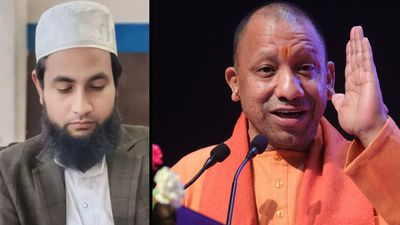 UP STF Nabs Maulana Abdullah Salim Over Controversial Comment On CM Yogi's Mother
 -
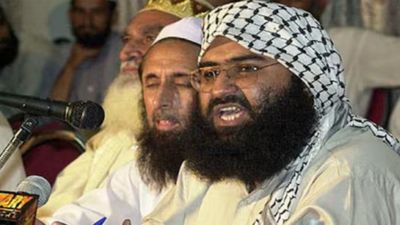 Masood Azhar’s Brother Mohammad Tahir Dies In Pakistan Under Mysterious Circumstances, Cause Yet To Be Known
 -
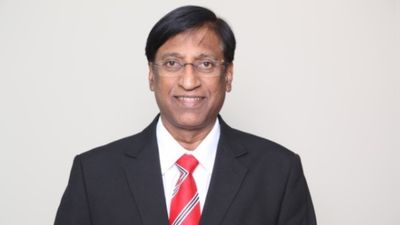 VerSe Innovation Appoints P.R. Ramesh as Independent Director and Chair of Audit Committee to Strengthen Governance Ahead of Next Phase of Growth
 -
 “Not Going To Be There Too Much Longer”: Trump Signals Endgame In Iran War
 -
 Iran Threatens To Hit US Companies in Region From April 1, Names Microsoft, Apple, Tesla, Boeing
 -
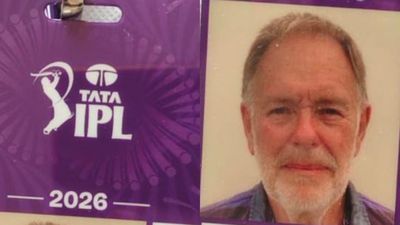 ‘IPL Official’ Found Dead in Mumbai Hotel, Probe Underway
 -
 Leander Paes To Contest West Bengal Assembly Elections 2026? Tennis Star Joins BJP Ahead of Assembly Polls
 -
 April 1 Rule Changes: PAN, New Tax Law, ATM, FASTag, Cards to Impact Millions, What’s Changing?
 -
 China, Pakistan Call for Immediate Ceasefire in Iran War, Push Peace Talks ‘As Soon As Possible’
 -
 Iran’s New Hormuz Plan Targets Global Shipping with Tolls, What Does It Mean?
 -
 Are Banks Closed or Open Today on Mahavir Jayanti? RBI Issues Special March 31 Instructions



 Click it and Unblock the Notifications
 Sign in with Google