


Surprise! Congress 'Opts Out' Of Omar Abdullah’s Cabinet: Political Maneuver Or Cause For Concern?


As Omar Abdullah prepares to be sworn in as the first Chief Minister of Jammu and Kashmir since the abrogation of Article 370, a key development has raised eyebrows-Congress has decided not to be part of his government. Instead, the party has opted to support the National Conference (NC) from the outside. While the move may seem strategic on the surface, it raises questions about the stability of the alliance and the implications for the future of governance in the Union Territory.
Congress' Calculated Move: Strategic Distance or Organisational Pressure?

Oneindia has learnt from its sources, Congress was initially poised to join the government but was sidelined due to internal disagreements. The crux of the issue lies in NC's offer to induct only one Congressman, Tariq Karra, into the cabinet. This was seen as inadequate by Congress leaders, particularly the local unit, which wanted greater representation. The party high command, however, had different priorities.
The high command's dissatisfaction with the Congress' performance in Jammu and Kashmir played a pivotal role in the decision. Rather than joining the NC-led government, the Congress leadership chose to focus on strengthening its organisational base in the region. By keeping its distance, Congress can avoid being overshadowed by NC while still maintaining influence through external support. This tactical retreat could allow Congress to regroup and rebuild its base in a politically complex region, without the burden of direct governance.
NC's Calculations: Comfortable Majority or Hidden Concerns?
On the other hand, the National Conference, buoyed by its victory of 42 out of 90 seats in the maiden assembly elections, appears to be in a comfortable position. With additional support from five Independent MLAs and one AAP legislator, Omar Abdullah's government seems to have a solid foundation. The question, then, is why Congress' inclusion in the cabinet wasn't pursued more aggressively.
While NC has the numbers, its decision to limit Congress' role in the government could be a double-edged sword. On one hand, it reduces the complications of coalition governance, allowing NC to pursue its agenda without the baggage of managing coalition politics. On the other hand, keeping Congress at arm's length could sow seeds of discontent within the alliance, especially if future policy differences emerge.
The Role of Tariq Karra and Congress' Local Dynamics
One of the most telling aspects of this political maneuver is the insistence on having only Tariq Karra from Congress in the cabinet. Karra's inclusion speaks volumes about the NC's intent to pick allies carefully while keeping control of the power structure. His political clout, particularly in regions like Srinagar, makes him a valuable ally. However, this selective inclusion has irked Congress, which views it as an undermining of the local leadership's stature.
The Congress high command's decision to reject this offer, despite its local unit's desire to be part of the government, highlights the internal conflict within the party. The Congress leadership seems intent on sending a message to its Jammu and Kashmir unit: the focus should be on organisational strength, not government perks. This move could, in the long term, either alienate Congress' local leaders or galvanise them into building a stronger political base in the region.
Future Challenges for Omar Abdullah's Government
While Omar Abdullah's government seems to be on solid ground for now, several challenges lie ahead. Governing Jammu and Kashmir post-Article 370 will require deft handling of political, social and security concerns. The absence of Congress from the cabinet, while manageable in the short term, could create hurdles if NC fails to maintain a harmonious working relationship with its external ally.
A Delicate Balancing Act
The Congress' decision to stay out of Omar Abdullah's cabinet is both a strategic move and a potential warning sign. For NC, it allows for more streamlined governance, but it also means that Congress' support is conditional and could waver if not handled delicately. For Congress, the decision reflects a calculated attempt to strengthen its presence in Jammu and Kashmir without being subsumed by the NC.
-
 ‘Naxalism Spread Because of This Leftist Ideology’: Amit Shah Says Congress Failed Bastar
 -
 IPL 2026: Rohit Sharma’s Blazing 78 Powers Mumbai Indians to Big Win Over Kolkata Knight Riders
 -
 Gold Rate Today 31 March 2026: Latest IBJA Benchmark And Tanishq, Kalyan, Malabar, Joyalukkas Rates
 -
 Gold Rate Today 30 March 2026: IBJA Benchmark Rates, Tanishq, Kalyan, Malabar, Joyalukkas Prices
 -
 Gold Silver Rate Today, 30 March 2026: City-Wise Prices, MCX Update On 24K Gold, 22K Gold And Silver
 -
 LPG Crunch: Karnataka Brings New SOPs, Makes PNG Registration Mandatory for Businesses
 -
 Hyderabad Gold Silver Rate Today, 30 March 2026: Check Fresh 24K, 22K, 18K Gold And Silver Prices In City
 -
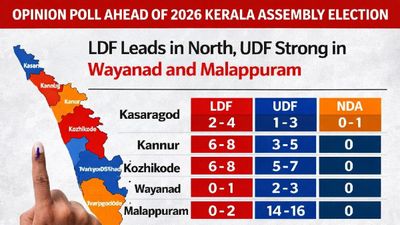 Opinion Poll For Kerala Assembly Election 2026: Ldf Strength In Kannur And Kasaragod
 -
 Tamil Nadu Polls 2026: Vijay Reveals Rs 645 Crore Assets, Rs 266 Crore in Banks; Know All His Declaration
 -
 Mumbai Metro Line 9 Set for April 3 Launch, Dahisar-Mira Bhayandar to Get Direct Boost
 -
 Hyderabad Gold Silver Rate Today, 31 March 2026: Gold And Silver See Fresh Movement, Check Latest City Rates
 -
 Gold Silver Rate Today, 31 March 2026: City-Wise Prices, MCX Trend As Gold Rises And Silver Slips



 Click it and Unblock the Notifications
 Sign in with Google