


Supreme Court Questions GRAP Implementation Amid Missing Pollution Data in Delhi-NCR


The Supreme Court on Monday expressed concern over the ineffective implementation of the Graded Response Action Plan (GRAP) in the Delhi-NCR region, citing missing and unreliable air pollution data during the Diwali period. The issue came to light after it was revealed that only nine of the 37 air quality monitoring stations were functional during the festival, raising serious doubts about the ability to enforce GRAP measures without accurate monitoring.
During the hearing, senior advocate Aparajita Singh, assisting the bench as amicus curiae, highlighted that the lack of real-time data severely hampers efforts to track pollution levels and determine when restrictions should be triggered. "If the stations are not functioning, we won't know when to implement GRAP," she observed, urging the court to direct the Commission for Air Quality Management (CAQM) and the Central Pollution Control Board (CPCB) to take preventive and corrective measures.
AI-generated summary, reviewed by editors

In response, Chief Justice of India B.R. Gavai, heading the bench along with Justice K. Vinod Chandran, directed the CAQM and CPCB to submit a detailed report on the steps being taken to prevent further deterioration of Delhi's air quality. The CPCB was also asked to coordinate with State Pollution Control Boards and regional offices in NCR districts to monitor air quality between October 14 and 25 and provide daily data on pollution levels.
The bench further instructed state pollution control authorities to collect sand and water samples from high-usage areas for scientific analysis as part of comprehensive monitoring.
The court's intervention comes amid escalating air pollution in the national capital, which remained in the 'very poor' category on Monday, recording an AQI of 316. Twenty-eight stations across the city reported readings above 300, marking one of Delhi's worst post-Diwali air quality levels in recent years.
Although the Supreme Court had permitted the use of green crackers between 8 pm and 10 pm on Diwali (October 14), reports indicated widespread violations, with firecracker use continuing late into the night. The resulting pollution surge pushed Delhi's air quality to its worst level in four years, prompting renewed calls for stricter enforcement and data-backed policymaking.
Experts say that without fully functional monitoring stations and reliable data collection, authorities will continue to face challenges in implementing GRAP effectively - putting both public health and accountability at risk.
-
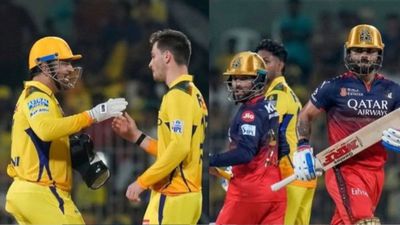 RCB Vs CSK IPL 2026 Tickets At Chinnaswamy: Official Sale, Metro Perks, And Entry Guidelines
 -
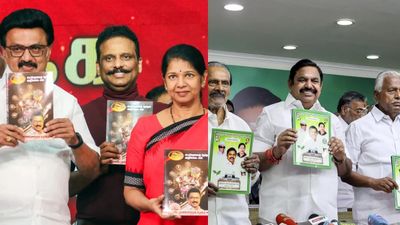 Tamil Nadu Election Predictions: AIADMK Fails To Unseat Stalin's DMK, Says Pre Poll Survey
 -
 Hyderabad Gold Silver Rate Today, 1 April 2026: Check 18K, 22K, 24K Gold And Silver Prices In Nizam City
 -
 Bangalore Gold Rate Today, 1 April 2026: Latest IBJA Gold Rates, Bhima, Abharan, Jos Alukkas, GRT Prices
 -
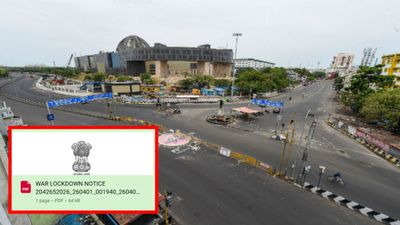 War Lockdown Notice Goes Viral Over Iran Claims, Sparks Panic Online
 -
 Gold Silver Rate Today, 1 April 2026: City-Wise Prices Rise Sharply, MCX Gold And Silver Surge
 -
 Can Raghav Chadha Be The PM? How His Parliament Speeches On Real Issues Won Public Attention
 -
 Who Is Ashok Mittal? The Man Replacing Raghav Chadha In Rajya Sabha, From Sweet Shop Roots to Parliament
 -
 Civil Defence Mock Drill in Delhi At 8 PM Today: Full Schedule of Locations and Timings Released
 -
 Wagah Border Viral Video: BSF Jawan’s Funny Reply To Pakistan Guard Wins Internet
 -
 Hyderabad Gold Silver Rate Today, 2 April 2026: Know Latest Gold and Silver Prices In Nizam City
 -
 Iran-US War: Donald Trump’s Missteps And The NATO Paradox



 Click it and Unblock the Notifications
 Sign in with Google