


LGBTQ Community Not Entitled to Vertical Reservations: Former CJI U U Lalit
Former Chief Justice of India U U Lalit expressed his views on LGBTQ communitys entitlement to reservations. While acknowledging the possibility of horizontal reservation, he argued against vertical reservations due to the distinction between birth-based identities and sexual orientation.


Former Chief Justice of India U U Lalit expressed his views on the reservation rights of the LGBTQ community in India. He stated that while the community may not be entitled to vertical reservations like those provided to Scheduled Castes (SC), Scheduled Tribes (ST), Other Backward Classes (OBC), or Economically Weaker Section (EWS), they could potentially claim horizontal reservations similar to those for women and persons with disabilities.

Horizontal Reservations: A Potential Option
Justice Lalit, who retired as the 49th CJI in November 2022, addressed this issue during a question and answer session following a special lecture on "Affirmative Action and Constitution of India" at the India International University of Legal Education and Research (IIULER) in Panaji. He explained that vertical reservations are meant for specific communities, and an individual cannot belong to multiple categories. However, horizontal reservations cut across these vertical categories, allowing individuals to benefit from both their community-based reservation and the horizontal reservation.
Choice vs. Accident of Birth
Justice Lalit emphasized the distinction between sexual orientation and birth-based identities. He argued that while birth in a community like SC, ST, or OBC is beyond an individual's control, sexual orientation is often a matter of personal choice. He stated, "It is not through my sexual orientation that I am deprived of anything." However, he acknowledged that individuals born as a third gender face discrimination due to an accident of birth, which warrants affirmative action.
Future Considerations
The former CJI did not completely rule out the possibility of the LGBTQ community eventually being included in affirmative action programs. He stated, "Nonetheless, I don't think there would be negation of the idea that perhaps in the future they can also be part of affirmative action to a certain extent." He emphasized that this decision lies with the Parliament and that there is no harm in considering a particular group as a group for the purpose of affirmative action.
Justice Lalit's remarks provide insight into the complex issue of reservation rights for the LGBTQ community in India. While he believes that vertical reservations may not be appropriate, he suggests exploring the possibility of horizontal reservations. Ultimately, the decision rests with the Parliament to consider whether the LGBTQ community should be included in affirmative action programs and how best to ensure their rights and opportunities.
-
 Gold Silver Rate Today, 30 March 2026: City-Wise Prices, MCX Update On 24K Gold, 22K Gold And Silver
 -
 LPG Crunch: Karnataka Brings New SOPs, Makes PNG Registration Mandatory for Businesses
 -
 Hyderabad Gold Silver Rate Today, 30 March 2026: Check Fresh 24K, 22K, 18K Gold And Silver Prices In City
 -
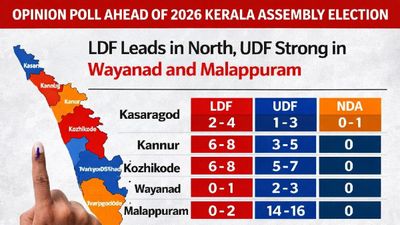 Opinion Poll For Kerala Assembly Election 2026: Ldf Strength In Kannur And Kasaragod
 -
 Tamil Nadu Polls 2026: Vijay Reveals Rs 645 Crore Assets, Rs 266 Crore in Banks; Know All His Declaration
 -
 Mumbai Metro Line 9 Set for April 3 Launch, Dahisar-Mira Bhayandar to Get Direct Boost
 -
 Hyderabad Gold Silver Rate Today, 31 March 2026: Gold And Silver See Fresh Movement, Check Latest City Rates
 -
 Gold Silver Rate Today, 31 March 2026: City-Wise Prices, MCX Trend As Gold Rises And Silver Slips
 -
 Rahul Arunoday Banerjee Autopsy Report: Actor Was Underwater For Over An Hour, Sand Found In Lungs
 -
 Thunderstorm Warning In Delhi NCR: IMD Issues Orange Alert Amid Sudden Weather Shift
 -
 Trump Hints At Breakthrough With Iran Amid War Escalation, Calls Recent Move A ‘Sign Of Respect’
 -
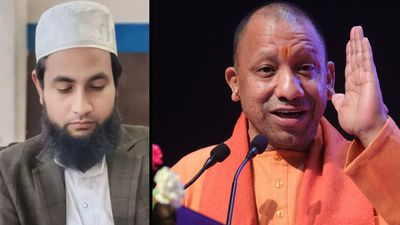 UP STF Nabs Maulana Abdullah Salim Over Controversial Comment On CM Yogi's Mother



 Click it and Unblock the Notifications
 Sign in with Google