


Haryana Assembly Election: How Congress Failed To Exploit Anti-Incumbency Wave Against BJP


According to early trends, Congress seems to have underperformed in the Haryana assembly elections, falling short of both expectations and predictions.
As of 11 am, the Bharatiya Janata Party (BJP) was leading in 47 seats in the 90-member Haryana assembly, compared to 36 seats for Congress.

However, the Congress held a higher vote share of 40.57%, as opposed to the BJP's 38.80%. The majority mark in the state stands at 46 seats.
Early indications suggest that the contest in Haryana is far closer than initially expected, with 25% of the votes counted.
It appears that Congress was overly reliant on former Chief Minister and senior leader Bhupinder Singh Hooda, a dependence that has not yielded the desired results. The party had banked on a combination of Jat, Dalit, and Muslim votes to secure victory.
However, the BJP seems to have more effectively consolidated its vote base among non-Jat and non-Muslim voters. The party's strategy to consolidate votes from non-Jat Other Backward Classes (OBC) appears to have worked in its favour.
The BJP has seemingly maintained its stronghold in the non-Jat regions of eastern and southern Haryana. Additionally, it has performed remarkably well in the Jat-dominated western regions, where non-Jat votes have come together in large numbers for the BJP.
Despite perceived anti-incumbency against the BJP, Congress has been unable to curb internal conflicts between Bhupinder Singh Hooda and Kumari Selja, tensions that seem to have undermined the party's chances. On the ground, Congress did not present a united front as the BJP did, with several rebels standing as independents.
Bhupinder Singh Hooda's potential return as Chief Minister, despite the party not formally announcing his candidacy, also worked against Congress.
Among the non-Jat voters in Haryana, the Hooda government from 2004 to 2014 was seen as corrupt and ineffective in governance. During his tenure, law and order in the state were also said to have deteriorated.
In contrast, the BJP is perceived to have outperformed Congress on these fronts during its decade in power.
"There was no major corruption charge against any BJP leader in these 10 years," said a political analyst who preferred to remain anonymous.
If these trends hold, the BJP's decision to replace sitting Chief Minister Manohar Lal Khattar with Nayab Singh Saini, an OBC leader, in March appears to have been successful.
This strategy mirrors their approach in Uttarakhand in 2022, when the BJP appointed Pushkar Singh Dhami six months before elections, while Congress relied on its veteran leader Harish Rawat, helping the BJP overcome anti-incumbency once again.
-
 Gold Silver Rate Today, 31 March 2026: City-Wise Prices, MCX Trend As Gold Rises And Silver Slips
 -
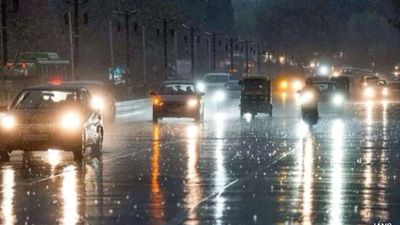 Thunderstorm Warning In Delhi NCR: IMD Issues Orange Alert Amid Sudden Weather Shift
 -
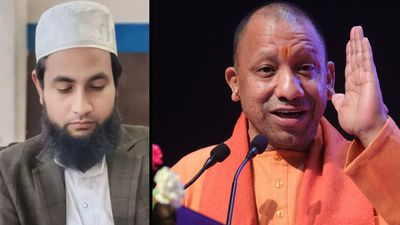 UP STF Nabs Maulana Abdullah Salim Over Controversial Comment On CM Yogi's Mother
 -
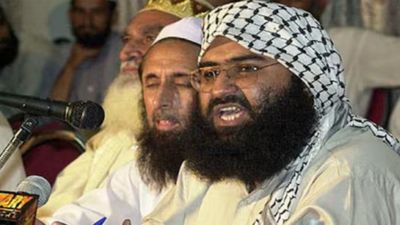 Masood Azhar’s Brother Mohammad Tahir Dies In Pakistan Under Mysterious Circumstances, Cause Yet To Be Known
 -
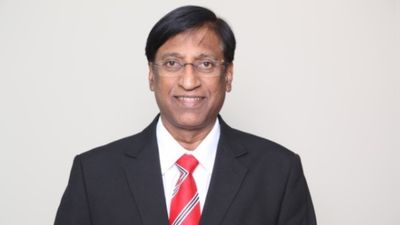 VerSe Innovation Appoints P.R. Ramesh as Independent Director and Chair of Audit Committee to Strengthen Governance Ahead of Next Phase of Growth
 -
 “Not Going To Be There Too Much Longer”: Trump Signals Endgame In Iran War
 -
 Iran Threatens To Hit US Companies in Region From April 1, Names Microsoft, Apple, Tesla, Boeing
 -
 ‘IPL Official’ Found Dead in Mumbai Hotel, Probe Underway
 -
 Leander Paes To Contest West Bengal Assembly Elections 2026? Tennis Star Joins BJP Ahead of Assembly Polls
 -
 April 1 Rule Changes: PAN, New Tax Law, ATM, FASTag, Cards to Impact Millions, What’s Changing?
 -
 China, Pakistan Call for Immediate Ceasefire in Iran War, Push Peace Talks ‘As Soon As Possible’
 -
 Iran’s New Hormuz Plan Targets Global Shipping with Tolls, What Does It Mean?



 Click it and Unblock the Notifications
 Sign in with Google