


BJP's 'CM Change Strategy' Before Elections Proves Successful As Saini Leads To Victory In Haryana


The practice of the BJP to replace chief ministers before their term ends has often been seen as a strategic move to ensure the stability of its governments across various states. This strategy has frequently been employed, with the party citing various reasons for these changes, tailored to the unique circumstances or challenges within each state.
And this strategy has once again worked for the BJP in Haryana as the party is set to emerge victory under the leadership of Nayab Singh Saini, who replaced Manoharlal Khattar just before the Lok Sabha elections earlier this year.

This decision by the BJP also ended its alliance with the Jannayak Janta Party (JJP) on March 12, owing to strong anti-incumbency, voter fatigue, disillusionment among the youth, and discontent among farmers.
Saini is the first individual from the Other Backward Classes (OBC), signalling a significant shift in the state's political landscape. This move, alongside breaking ties with the JJP, has been lauded as a game-changer, contradicting the predictions of many political analysts.
The BJP's tactic of changing chief ministers has been instrumental in addressing and manoeuvring through political challenges and voter sentiments. For instance, in Haryana, the growing support for the Congress among the Jat and Dalit communities posed a threat to the BJP.
However, the party effectively leveraged this situation by rallying non-Jat voters, thereby counterbalancing the increasing vocal support for the Congress among the Jats. This strategy was further bolstered by Saini's government implementing 126 decisions within his first 70 days in office, which played a crucial role in swaying public opinion.
BJP's CM Change Strategy
The BJP's approach to replacing chief ministers as a means to fortify its governance has been evident in several states. For example, in Gujarat, the party replaced Vijay Rupani with Bhupendrabhai Patel a year before the end of Rupani's term in 2021. Similarly, in Uttarakhand, the BJP made multiple chief ministerial changes before the terms' completion to retain popularity with the voters.
Despite initial setbacks, these moves proved effective, particularly in Uttarakhand, where Pushkar Singh Dhami's leadership led to the BJP's re-election in the subsequent Assembly elections.
Moreover, in Karnataka, the BJP replaced BS Yediyurappa with Basavaraj Bommai two years ahead of the state Assembly elections, citing Yediyurappa's crossing of the party's 75-year-old age limit criterion. This was seen as a strategy to usher in a new leadership era in the state. However, the decision backfired the party.
In Tripura, with the Assembly polls on the horizon, the BJP appointed Manik Saha to replace Biplab Kumar Deb as the Chief Minister in 2022.
This pattern of strategic leadership changes by the BJP reflects its proactive approach to political management and governance. By adjusting its leadership based on the evolving political landscape and voter sentiments, the BJP aims to reinforce its position and adapt to challenges, showcasing a flexible yet calculated approach to state governance.
Conclusively, the BJP's method of periodically refreshing its chief ministerial leadership has, more often than not, played a key role in sustaining and stabilizing its governments in various states. By carefully selecting replacements that align with the party's broader strategic goals and the specific needs of each state, the BJP continues to navigate the complex political terrains of India.
-
 BJP Unveils Assam Poll Manifesto Promising 2 Lakh Jobs, Flood-Free State And Boost To Education & Healthcare
 -
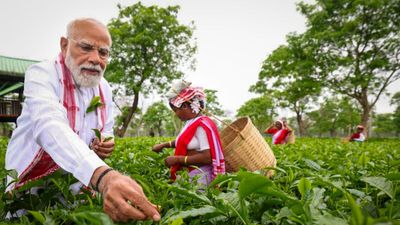 PM Modi Plucks Tea Leaves in Assam, Joins Workers Ahead of Poll Rallies
 -
 TVK Chief Vijay Booked For Alleged Election Code Violation, Accused Of Blocking Ambulance During Poll Campaign
 -
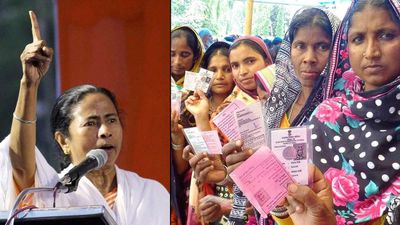 West Bengal’s Vote Share vs Seat Share Paradox: Reading 2021, Reframing 2026
 -
 Gold Rate Today 31 March 2026: Latest IBJA Benchmark And Tanishq, Kalyan, Malabar, Joyalukkas Rates
 -
 Hyderabad Gold Silver Rate Today, 31 March 2026: Gold And Silver See Fresh Movement, Check Latest City Rates
 -
 Gold Silver Rate Today, 31 March 2026: City-Wise Prices, MCX Trend As Gold Rises And Silver Slips
 -
 Thunderstorm Warning In Delhi NCR: IMD Issues Orange Alert Amid Sudden Weather Shift
 -
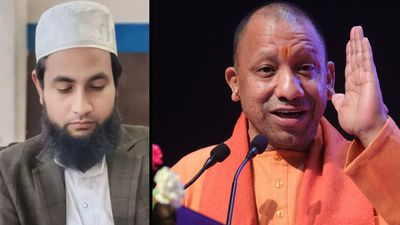 UP STF Nabs Maulana Abdullah Salim Over Controversial Comment On CM Yogi's Mother
 -
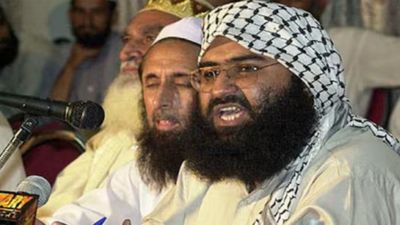 Masood Azhar’s Brother Mohammad Tahir Dies In Pakistan Under Mysterious Circumstances, Cause Yet To Be Known
 -
 VerSe Innovation Appoints P.R. Ramesh as Independent Director and Chair of Audit Committee to Strengthen Governance Ahead of Next Phase of Growth
 -
 “Not Going To Be There Too Much Longer”: Trump Signals Endgame In Iran War



 Click it and Unblock the Notifications
 Sign in with Google