


Bihar Elections: From Six Phases in 2010 to Just Two in 2025


The Election Commission of India has announced that the Bihar Assembly Elections 2025 will be held in two phases - on November 6 and 11 - to elect a new government. The results will be declared on November 14.
The election will determine the future of the ruling NDA government, led by Chief Minister Nitish Kumar, which faces a challenge from the INDIA bloc comprising RJD, Congress, and other parties.
AI-generated summary, reviewed by editors

Phase-wise Voting:
Phase 1 (November 6): 121 Assembly constituencies in central Bihar
Phase 2 (November 11): 122 constituencies in north, east, and south Bihar
Bihar Polls Over the Years
Three Phases in 2020:
The 2020 Assembly elections were held in three phases, despite political parties demanding one or two-phase polling.
Shorter Elections Over Time:
Bihar has gradually reduced the number of voting phases over the last three decades:
2005: February polls in three phases; October-November polls in four phases
2010: Six phases
2015: Five phases
2020: Three phases
Single-Phase Voting Before 2000:
Before the creation of Jharkhand in 2000, Bihar elections were held in a single phase. For example, the 1995 election was held on 2 March 1995 for all 324 constituencies (including present-day Jharkhand).
Nitish Kumar's Early Tenure
In March 2000, Nitish Kumar was elected Chief Minister for the first time, supported by the AB Vajpayee-led NDA. At that time, the NDA and allies had 151 MLAs, while Lalu Prasad Yadav had 159 MLAs in the 324-member house. Nitish resigned after seven days, and Rabri Devi was sworn in again as Chief Minister.
Why Two Phases in 2025
The term of the incumbent 243-seat Bihar Assembly ends on 22 November 2025. Voting will be conducted at 90,712 polling stations for 7.43 crore voters, including:
Men: 3.92 crore
Women: 3.50 crore
Third gender: 1,725
The Election Commission decided on two phases after reviewing factors such as voter awareness, availability of CAPFs, law and order assessment, and EC capacity. Political parties had also requested post-Chhath festival dates (25-28 October) and fewer phases.
CEC Gyanesh Kumar said: "Voter awareness, availability of CAPFs, assessment of law and order, and the enhancement in the capacity of the EC and its officials - looking at all these factors, it was felt appropriate to conduct the elections in two phases."
The decision also considered the prolonged 2024 Lok Sabha elections, held in seven phases, which saw a dip in voter turnout.
-
 Gold Silver Rate Today, 31 March 2026: City-Wise Prices, MCX Trend As Gold Rises And Silver Slips
 -
 Thunderstorm Warning In Delhi NCR: IMD Issues Orange Alert Amid Sudden Weather Shift
 -
 UP STF Nabs Maulana Abdullah Salim Over Controversial Comment On CM Yogi's Mother
 -
 Masood Azhar’s Brother Mohammad Tahir Dies In Pakistan Under Mysterious Circumstances, Cause Yet To Be Known
 -
 VerSe Innovation Appoints P.R. Ramesh as Independent Director and Chair of Audit Committee to Strengthen Governance Ahead of Next Phase of Growth
 -
 “Not Going To Be There Too Much Longer”: Trump Signals Endgame In Iran War
 -
 Iran Threatens To Hit US Companies in Region From April 1, Names Microsoft, Apple, Tesla, Boeing
 -
 ‘IPL Official’ Found Dead in Mumbai Hotel, Probe Underway
 -
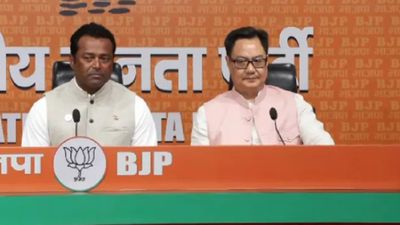 Leander Paes To Contest West Bengal Assembly Elections 2026? Tennis Star Joins BJP Ahead of Assembly Polls
 -
 April 1 Rule Changes: PAN, New Tax Law, ATM, FASTag, Cards to Impact Millions, What’s Changing?
 -
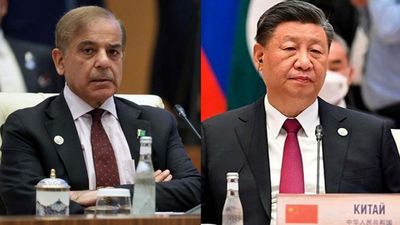 China, Pakistan Call for Immediate Ceasefire in Iran War, Push Peace Talks ‘As Soon As Possible’
 -
 Are Banks Closed or Open Today on Mahavir Jayanti? RBI Issues Special March 31 Instructions



 Click it and Unblock the Notifications
 Sign in with Google