


''Bandha Kala”: True Reflection of Odia Roots, Says Senior Bureaucrat-Researcher


The "Bandha Kala," or Ikat weaving tradition of Odisha, serves as a profound expression of Odia identity, also known as "Ashmita." Every Ikat saree is a narrative in itself, intricately woven to reflect the unique worldview and cultural essence captured within its patterns.
The "Bandha Kala", often draws its inspiration from the unique elements of Jagannath culture, the timeless sculptures from the walls of the Sun Temple at Konark and inspiring lines from the works of eminent Odia poet Gangadhar Meher, who has written extensively on Nature-based themes. Interestingly, Meher also belongs to the region, which has distinct types of Ikat sarees with their own creative patterns and motifs.

"The Ikat range thus being from classical tradition to architecture and literature. In preserving the patterns we will not only preserve an age-old traditional art form, but also that which is a repository of heritage expressed in a way different that architecture or literature. It's just like a poetry weaved through the meticulous designing by our traditional weavers,'' said Roopa Roshan Sahoo, a senior bureaucrat from Odisha, who is currently continuing her Ph.D work on understanding the "sociological relevance of motifs used in Ikat".

Saying about her observations and findings, she further added "while the process of weaving has been much documented and the socio-economic profile analysed, much is not available as to why motifs are chosen. The various factors that determine the choice of design are in the spatial or temporal sphere. The weaver ecosystem is a living tradition of faith and belief systems that is where the weaver draws the inspiration to cast a motif on the eleven-yard wonder."
Citing an example she mentioned weaving of "Dasavatara" (ten incarnations of Lord Vishnu) as a major motif used by Ikat weavers. But, why does a weaver weave Dasavatara?
Sahoo, currently posted as the RDC of Southern Region in Odisha, explains "the weaver is inspired from the scriptures, Upanishada, epics and myths. These together influence the construction of identity for the self. Ikat is an expression of who we are our identity and cultural roots."
DASAVATARA IN IKAT:
Dasavatara refers to the ten primary incarnations (avatars) of the Hindu God Vishnu, who is believed to descend to Earth in different forms to restore cosmic order and protect dharma (righteousness). Each avatar appears during a critical period in history to overcome evil and establish balance. The ten avatars of Vishnu are:
1. Matsya (The Fish): Vishnu's first incarnation as a fish who saves the sacred Vedas and the sage Manu from a great deluge.
2.Kurma (The Tortoise): In this form, Vishnu supports Mount Mandara on his back during the churning of the ocean to retrieve the nectar of immortality (amrita).
3.Varaha (The Boar): Vishnu assumes the form of a boar to rescue the Earth (personified as goddess Bhudevi) from the demon Hiranyaksha, who had submerged it in the cosmic ocean.
4.Narasimha (The Man-Lion): A half-man, half-lion incarnation who destroys the demon Hiranyakashipu, who was immune to attacks from humans or animals, neither indoors nor outdoors, during day or night.
5.Vamana (The Dwarf): In this form, Vishnu appears as a dwarf Brahmin and subdues the demon king Bali, who had gained control of the heavens, by asking for only three paces of land and then covering the universe with them.
6.Parashurama (The Warrior with an Axe): A Brahmin warrior who appears to rid the world of corrupt Kshatriya kings who were oppressing others.
7.Rama (The Prince of Ayodhya): The hero of the Ramayana, Vishnu incarnates as Rama to defeat the demon king Ravana and uphold dharma.
8.Krishna (The Divine Statesman): In the Mahabharata and Bhagavad Gita, Krishna plays a central role as a guide to Arjuna, offering wisdom about life, duty, and devotion, and also helps defeat the unrighteous Kauravas.
9.Buddha (The Enlightened One): In some traditions, Gautama Buddha is considered an avatar of Vishnu, who incarnated to teach compassion and non-violence and guide people away from ritualistic practices.
10. Kalki (The Future Warrior): Vishnu's final incarnation, yet to come, where he will appear as a warrior on a white horse to end the Kali Yuga (the current age of darkness and corruption) and restore righteousness.
A keen student of Sociology, the bureaucrat says a mention of Indian knowledge systems and how it has contributed to inspiring the age-old tradition of weaving, is an interesting area of study and it should be propagated so that more and more researchers will take interest in these areas. Also apart from the traditional research paper publication, photo or coffee table books, blogs and the new-age documentation techniques could also bring in a sea-change in igniting the young brains, who would be more interested exploring ideas to go deep into their domain of research.
-
 Gold Silver Rate Today, 31 March 2026: City-Wise Prices, MCX Trend As Gold Rises And Silver Slips
 -
 Thunderstorm Warning In Delhi NCR: IMD Issues Orange Alert Amid Sudden Weather Shift
 -
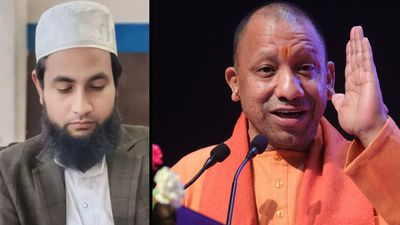 UP STF Nabs Maulana Abdullah Salim Over Controversial Comment On CM Yogi's Mother
 -
 Masood Azhar’s Brother Mohammad Tahir Dies In Pakistan Under Mysterious Circumstances, Cause Yet To Be Known
 -
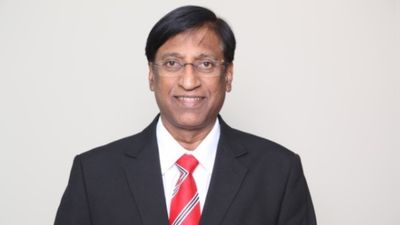 VerSe Innovation Appoints P.R. Ramesh as Independent Director and Chair of Audit Committee to Strengthen Governance Ahead of Next Phase of Growth
 -
 “Not Going To Be There Too Much Longer”: Trump Signals Endgame In Iran War
 -
 Iran Threatens To Hit US Companies in Region From April 1, Names Microsoft, Apple, Tesla, Boeing
 -
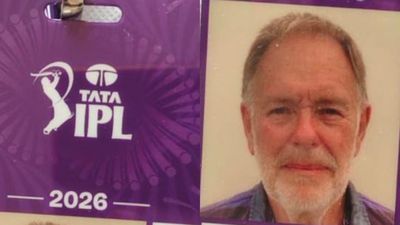 ‘IPL Official’ Found Dead in Mumbai Hotel, Probe Underway
 -
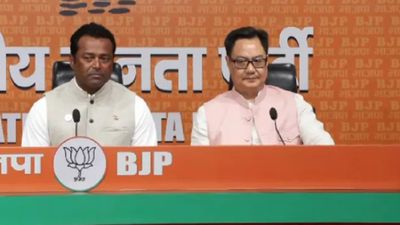 Leander Paes To Contest West Bengal Assembly Elections 2026? Tennis Star Joins BJP Ahead of Assembly Polls
 -
 April 1 Rule Changes: PAN, New Tax Law, ATM, FASTag, Cards to Impact Millions, What’s Changing?
 -
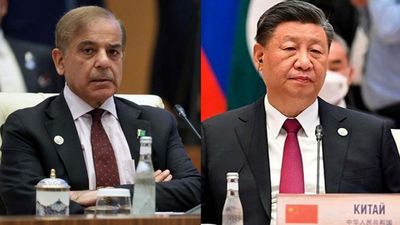 China, Pakistan Call for Immediate Ceasefire in Iran War, Push Peace Talks ‘As Soon As Possible’
 -
 Are Banks Closed or Open Today on Mahavir Jayanti? RBI Issues Special March 31 Instructions



 Click it and Unblock the Notifications
 Sign in with Google