


Amid LPG Cylinder Crisis, How Piped Natural Gas Connections Are Offering Relief To Households
The article explains India’s move to protect piped natural gas for homes and transport using the Essential Commodities Act, prioritising domestic PNG and CNG, while industries face cuts due to supply shocks from regional tensions.


India is moving to shield household piped natural gas as tensions in West Asia hit energy flows. A new government order gives kitchen pipelines and transport fuel priority, even if industries and petrochemical units must cut back. Officials want to avoid any crisis for homes, while global suppliers cite "force majeure" after attacks on regional energy assets.

AI-generated summary, reviewed by editors
Using powers under the Essential Commodities Act, 1955, the Centre can now override commercial gas contracts. Priority Sector I, which covers domestic PNG and CNG for vehicles, is assured 100% of its average use from the past six months. Whenever gas is available in the grid, it must first serve homes and transport before factories or power plants.
How the new rules secure piped natural gas supply for homes and transport
The Natural Gas (Supply Regulation) Order, 2026, allows gas to be diverted from refineries and petrochemical plants to city networks. The aim is to keep residential pipelines fully pressurised. This framework has been introduced as drone attacks damage key energy hubs, and shipping routes that bring more than half of India’s natural gas face disruption risks.
| Sector | Type of use | Allocation under new rules |
|---|---|---|
| Priority Sector I | Domestic PNG, CNG for transport | 100% of past six-month average |
| Industrial and tea units | Manufacturing, process use | 80% of past six-month average |
| Petrochemical facilities | Feedstock and process gas | Subject to deeper cuts if needed |
Industrial users of piped natural gas supply are already feeling the squeeze from import problems. Adani Total Gas Limited has told stock exchanges that some Middle East suppliers have reduced deliveries. The government framework limits many manufacturing units and tea industries to 80% of their earlier average gas use, with petrochemical plants facing the sharpest curbs to protect households and essential food services.
Gas distributors on the ground say domestic pipelines remain stable, despite higher sourcing costs. In Madhya Pradesh, Aavantika Gas Limited marketing head Manish Verma told TOI that the war has raised procurement prices, but "Domestic PNG supply will largely remain unaffected and continuity will be maintained." Verma said that households in Indore, Gwalior and Ujjain stay first in line, while industrial gas faces price and volume pressure.
In Uttar Pradesh, Green Gas Limited has given similar assurances about piped natural gas supply. DGM Marketing Praveen Singh told TOI that the company is "currently meeting 100% of PNG demand" in Lucknow and Agra. Singh asked consumers not to panic, stressing that current stocks and contracted volumes are adequate for present household needs, even as the global situation remains tense.
Officials say that for most homes, piped natural gas supply should continue without interruption, though billing rules will tighten. Aavantika Gas told TOI that if constraints worsen, supply will first be stopped for domestic and industrial users with long-pending dues. The government has also asked GAIL (India) Limited to run a "pooled price" system so diverted gas stays affordable for key sectors, especially household kitchens.
India’s current policy mix tries to balance secure piped natural gas supply for homes with reduced flows to factories and petrochemical units. Household cooking gas and transport CNG are ring-fenced through legal protections, while industries absorb cuts linked to import shocks near the Strait of Hormuz. Payment discipline and pooled pricing will shape how smoothly these protections work in the coming months.
-
 US Pilot Reportedly Ejects In Southwest Iran Amid Fresh Iranian Claims Of F-35, F-15E Downing
 -
 US-Sanctioned Iranian Tanker Diverts from India to China Mid-Voyage
 -
 Iran Shoots Down Second US F-35 Fighter Jet, Pilot Survival Unlikely
 -
 UK To Host 35-Nation Talks To Reopen Strait Of Hormuz Amid Oil Crisis
 -
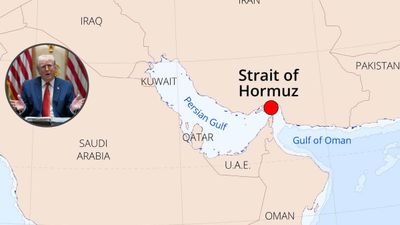 When Will Strait of Hormuz Reopen? Donald Trump’s Iran War Speech Suggests No Quick Relief
 -
 Donald Trump Offers To Buy Oil From The US, Says “We Have Plenty”; Claims Iran War Will “Finish Very Fast'
 -
 Centre Plans ₹2.5 Lakh Crore Credit Shield for Businesses Facing Iran Conflict Fallout
 -
 What Is The ‘Stone Age’ Warning Donald Trump Issued To Iran? Says ‘No Deal, No Mercy’
 -
 Starmer Warns Iran Conflict Will Impact UK, But Pledges to ‘Weather The Storm’
 -
 Iran Crisis: Over 5.98 Lakh Indians Have Returned Home, Confirms Govt
 -
 Stock Market Crashes As Sensex Falls Over 1,400 Points After Trump’s Iran War Warning, Oil Prices Surge
 -
 We're The Only Country To Lose Mariners At Strait of Hormuz: India At UK-led West Asia Meet On Iran Crisis



 Click it and Unblock the Notifications
 Sign in with Google