


Quality Assurance In Mixed Reality: Enhancing User Experience At Meta


The Quality Behind the Quest: How Rigorous QA Made Mixed Reality Experiences Seamless

AI-generated summary, reviewed by editors
From gaming and education to remote work and healthcare, mixed reality (MR) is revolutionizing how people engage with digital environments by fusing the virtual and real worlds to produce immersive experiences. The need for smooth, dependable, and bug-free interactions has never been higher as this cutting-edge technology gains traction. However, a strict system of quality assurance and a complex procedure that guarantees users can interact with these environments naturally and without interruption are hidden behind the scenes of every captivating MR experience. QA is now more than just a support role in this changing environment; it is a vital component of both innovation and user confidence.
Komal Jasani, QA Engineering Lead at Meta, is at the forefront of this crucial field. Jasani, who has led the Reality Labs QA Horizon OS team and ensured the integrity of Meta's mixed reality platforms, has a career characterized by technical proficiency and strategic vision. Her efforts have established Meta as a pioneer in providing top-notch MR experiences in addition to enhancing the technical stability of immersive applications.
Interestingly Jasani’s contributions have been instrumental in shaping how QA integrates with large-scale MR development. Under her leadership, Meta saw the successful deployment of a robust QA automation framework that reduced testing time by 30%, significantly accelerating product release cycles. Her initiative in streamlining QA processes also achieved a 20% reduction in operational costs. Most notably, her work led to a 40% decrease in post-release defects, directly improving the user experience and driving engagement across platforms.
Among the standout projects led by Jasani is the end-to-end quality assurance of a mixed reality collaboration platform now used by over 100,000 users worldwide. She played a key role in developing MR-specific QA protocols that have since been adopted by multiple departments within Meta. Her foresight in piloting automated testing programs brought remarkable stability to repetitive test cycles, ensuring reliability across various hardware and software integrations.
Reportedly the countable results of her efforts are compelling. Meta’s MR products maintained a release stability rate of 99.8% across six major updates. QA cycle times were slashed by 70% through the implementation of synthetic input testing and automated scenario generation. Over 500 critical bugs were identified and resolved prior to launch, averting potentially major failures post-release. This improvement in quality control contributed to a 40% increase in user engagement, attributed to the reduction in technical disruptions and a smoother immersive experience.
Jasani’s journey has also involved navigating significant challenges. One of the most complex tasks she tackled was the integration of multiple technologies into a unified MR ecosystem a feat not previously accomplished at this scale within Meta. She responded by developing a flexible, scalable QA framework that could adapt to the evolving requirements of MR platforms, solving key problems around integration and performance.
Her work extends beyond engineering floors and into the broader discourse around XR (Extended Reality) quality standards. Jasani authored a whitepaper titled “QA in XR: Frameworks for the Future”, published in the Journal of Immersive Technology in 2023. She also penned a widely-read blog series on test automation in MR for the XR Developer Medium publication. Her expertise has been sought on global platforms, including a 2024 IEEE Tech Talk panel on virtual world QA, a feature interview in TechCrunch XR Weekly, and as a contributor to the XR Association’s “Best Practices in XR QA.”
After considering her experiences, Jasani thinks that MR QA will develop in the future by utilizing adaptive automation and artificial intelligence to test ever-more-complex scenarios. She highlights the significance of ongoing feedback loops and user-centric design, particularly as MR applications become more ingrained in daily life. She asserts that in order to guarantee not only performance but also trust in virtual environments, the next generation of QA needs to be both predictive and resilient.
The work of Komal Jasani shows that quality assurance is not only a technical requirement but also a future enabler in the pursuit of seamless mixed reality. In addition to influencing Meta's standards, her leadership and innovations are also having an impact on the direction of the XR industry overall.
-
 Iran-US War: Donald Trump’s Missteps And The NATO Paradox
 -
 Gold Rate Today 31 March 2026: Latest IBJA Benchmark And Tanishq, Kalyan, Malabar, Joyalukkas Rates
 -
 Hyderabad Gold Silver Rate Today, 31 March 2026: Gold And Silver See Fresh Movement, Check Latest City Rates
 -
 Gold Silver Rate Today, 31 March 2026: City-Wise Prices, MCX Trend As Gold Rises And Silver Slips
 -
 Thunderstorm Warning In Delhi NCR: IMD Issues Orange Alert Amid Sudden Weather Shift
 -
 UP STF Nabs Maulana Abdullah Salim Over Controversial Comment On CM Yogi's Mother
 -
 Masood Azhar’s Brother Mohammad Tahir Dies In Pakistan Under Mysterious Circumstances, Cause Yet To Be Known
 -
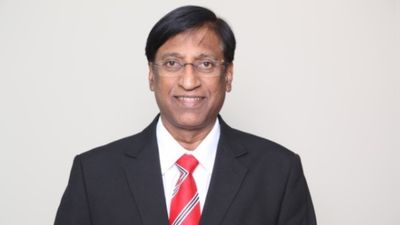 VerSe Innovation Appoints P.R. Ramesh as Independent Director and Chair of Audit Committee to Strengthen Governance Ahead of Next Phase of Growth
 -
 “Not Going To Be There Too Much Longer”: Trump Signals Endgame In Iran War
 -
 Iran Threatens To Hit US Companies in Region From April 1, Names Microsoft, Apple, Tesla, Boeing
 -
 ‘IPL Official’ Found Dead in Mumbai Hotel, Probe Underway
 -
 Leander Paes To Contest West Bengal Assembly Elections 2026? Tennis Star Joins BJP Ahead of Assembly Polls



 Click it and Unblock the Notifications
 Sign in with Google