


‘When Branding Met with Movies’: The Branding Alchemy That Turns Films into Cultural Outlet Beyond Screen


In an era where cinema is no longer confined to light, camera, action of the cinematographic magic just on screen, rather thrives as a multilayered cultural industry, the book When Branding Met with Movies by Chaitanya K. Prasad, Zoya Ahmad and Vaishnavi Srinivasan comes as an intellectually assured and strikingly relevant work. The book does not merely discuss films, it provides an insight into the machinery that transforms them into events, identities and long-lasting cultural outlets that bears a message for generations. With a confident analytical voice and an engaging narrative cadence, the authors succeed in positioning cinema branding as one of the defining conversations of contemporary media studies.

AI-generated summary, reviewed by editors
The opening chapters function as conceptual scaffolding, equipping readers with a foundational understanding of branding as both theory and practice. They create a perfect preface for the upcoming stuff by giving a glimpse of how branding and branding techniques entered cinema, how the portrayal of stories shaped as narrative imaging. It sets the tone for the book and prepares the reader to take the journey of changing paradigm in films.
The book achieves remarkable depth in chapters like Branding in Indian Cinema, Tunes style and Awards, Branding Strategies for Film Production and Production Houses and Like Share and Follow for More... and ultimately the four makes the core foundation that the book is based upon.
Under Branding in Indian Cinema, the authors craft a persuasive examination of how Indian cinema through star systems, studio legacies, and promotional rituals has historically operated as a branding powerhouse long before the term became fashionable. Through the wonderful glossary of yester-years' classical movies, the authors discover the facts how movies like Pyasa, Sri 420, Mera Naam Joker, Silsila, Kabhi-Kabhi gradually paged certain branding that initially went unnoticed.
Moving forward, the book also deals in to a section that reads like a cultural anthropology of cinematic recall in Tunes, Style and Awards. The authors softly demonstrate how music, costume aesthetics, and award ceremonies as mnemonic devices, ensuring that films remain embedded in public memory. This is particularly elegant in its articulation of how sensory and symbolic branding quietly constructs cinematic immortality.
As it progresses forward, the book doesn't remain a leisurely read only. It turns to be a textbook a guide for the management students - particularly those pursuing and practicing advertising and brand management. The analytical momentum of the trios continues in Branding Strategies for Film Productions and Production Houses, where the book enters its most industry-focused terrain. Here, the authors dissect the evolution of production houses into standalone brands whose logos, reputations, and marketing philosophies can predetermine audience expectations. It describes the branding strategy of various movie banners, its impact on the film industry, role of producers and directors in branding and all, en-route it brings plenty of enchanting examples from both the contemporary Indian cinema and the international film industry. The treatment given to the topic in this chapter and in the book too, is rigorous, offering both strategic insight and historical perspective, making this chapter invaluable for students of media management and entertainment marketing.
No contemporary discussion of branding would be complete without addressing the digital revolution, and the chapter named Like, Share and Follow for More... captures this transformation with admirable clarity. The authors map how social media ecosystems, influencer culture, and real-time audience engagement have redefined promotional dynamics, turning branding into a continuous, interactive conversation rather than a pre-release campaign. The chapter stands out for its sharp observations on virality, attention economics, and the precarious balance between hype and authenticity.
The book also underscores the historical realms of Personal branding in movies. How does an actor like Amitabh Bachchan evolve from a performer into an enduring institution? How do Salman-Katrina became the assurance of box-office success? How did SRK build reputations so influential that audiences are drawn to their films even before knowing the story? The book also examines icons such as Yash Chopra, Steven Spielberg, SS Rajamouli and Filmmakers of their stature whose names, over time, have grown to stand larger than their individual bodies of work.
The book culminates with authors' "Final Take," a concluding reflection that synthesizes the thematic threads into a forward-looking meditation on the future of cinema branding. Instead of making simple predictions, the authors offer a balanced perspective that recognizes challenges such as market saturation, ethical concerns, and changing audience habits, while also highlighting the industry's strong ability to reinvent itself, exclusively the ability to stay dipper and longer in people's memory, which is undoubtedly the objective of branding and brand management academically.
What distinguishes When Branding Met with Movies from others is its ability to combine scholarly insight with narrative vitality through a fine observation of echoing examples. The prose style writing is impeccable, the context is clear and the premise is touched upon frequently. The imagery of the captivating old movies' posters used in the book gives it a monumental height and make the reading experience as captivating as an interesting feature film could be, however the topics and sub-topics division could have been smoother and better-placed.
The tone is inviting yet authoritative, preparing the reader for an expedition that moves seamlessly between marketing scholarship, film history, and industry realities. As the author trilogy emphasizes, cinema today is not only storytelling but also a complex architecture of perception, emotion, and identity, probably an argument that resonates throughout the book's conceptual framework - presenting a brand statement through movies.
This volume stands as a sophisticated and timely contribution to film studies, brand-management and cultural criticism. Here is a point to note that this book doesn't decipher how the film is being marketed today, it rather explores how the films today are being used as a marketing or branding tool. Published by the National Book Trust and priced at INR 310 a copy, the book "When Branding Met With Movies" is not only an interesting read, but a tempting possession for critics, brand-managers, passionate movie-buffs and alike.
-
 Civil Defence Mock Drill in Delhi At 8 PM Today: Full Schedule of Locations and Timings Released
 -
 Hyderabad Gold Silver Rate Today, 2 April 2026: Know Latest Gold and Silver Prices In Nizam City
 -
 Purple Halcyon Aka Ashwani A: Who Is This Instagram Viral Girl Earning ₹70 Lakh via Subscriptions?
 -
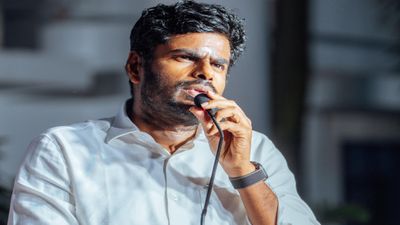 From Where Will Annamalai Contest TN Elections - Coimbatore North or Modakurichi?
 -
 Gold Rate In Bangalore Today, 2 April 2026: IBJA Benchmark Rates, Bhima, Abharan, Jos Alukkas, GRT Prices
 -
 Bengaluru Karaga 2026: 26-km Midnight Procession Draws Lakhs as Tradition, Devotion Light Up City
 -
 Ramayana Teaser Review: Epic Ambition Meets Work-in-Progress Visuals As Ranbir Silences Critics
 -
 April 3 Dry Day In Tamil Nadu Or Not? Status of Bars, TASMAC & Liquor Shops On Good Friday
 -
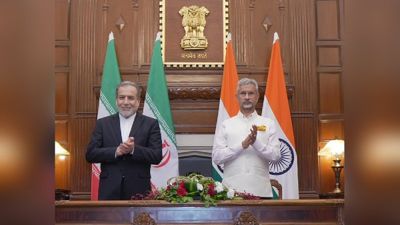 No Cause for Panic: Iran Reassures India on Hormuz Situation
 -
 Is April 15 Lockdown in India Announcement True Amid Iran-US War Fears? How to Spot Fake News Online
 -
 Gold Silver Rate Today, 2 April 2026: City-Wise Prices, MCX Tracks Sharp Rise In Gold And Silver Across India
 -
 Trump Sets Tough Terms For Ceasefire With Iran, Demands Strait Of Hormuz Be “Open, Free, Clear” Amid Conflict



 Click it and Unblock the Notifications
 Sign in with Google