


Vikram Gowda Encounter: Who Was The Karnataka Naxal Leader Shot Dead By ANF?


Karnataka's most wanted Naxal leader, Vikram Gowda (44), was killed in an encounter with the Anti-Naxal Force (ANF) in Seethabail, Hebri, Udupi district, on November 18, just past midnight.
The ANF had launched a combing operation in the Hebri region, specifically targeting the Kabbinale forests, after receiving intelligence about a five-member Maoist group in a nearby village buying daily essentials. When the Naxals encountered the ANF, they opened fire. During the exchange, Gowda was killed, while the other four Naxals managed to escape.

Gowda, a native of Nadpalu village in Hebri, joined the Naxal movement during the Kudremukh National Park protests and other labor agitations in the early 2000s. He had become the leader of the Netravati wing of the Karnataka-based Naxal group, operating in the Western Ghats. With around 20 criminal cases for subversive activities in Udupi and Chikmagalur districts, Gowda had managed to evade capture multiple times. He also opposed the Karnataka government's "surrender policy," but due to declining local support and intensified operations in neighboring Naxal-infested states such as Jharkhand, Chhattisgarh, Odisha, and Andhra-Telangana, many Karnataka-based Naxals were seeking refuge within their home state.
In the first week of November, the ANF stepped up operations in Malnad and coastal Karnataka districts after reports indicated Naxals had visited a house near Koppa in Chikmagalur. The Naxals had left behind three guns, and rumors circulated that some of them were starving and considering surrendering. This prompted the ANF to intensify its efforts.
Home Minister G. Parameshwara confirmed the death of Vikram Gowda, stating that the Naxal leader was shot in the exchange of gunfire, while four others had fled.
Gowda was married to Savitri, a fellow revolutionary from Kalasa in Chikmagalur, though the two later divorced. Savitri, also known as Rejitha, had been operating as the commander of the Kabini Dalam of the CPI(M) in the Wayanad-Kozhikode region and was arrested in November 2021 alongside senior Maoist leader B.G. Krishnamurthy, aka BGK, by the Kerala Anti-Terror Squad.
Gowda had succeeded BGK, who had replaced Nelagudi Padmanabha as the Naxal leader in Karnataka when BGK fell ill. The Naxal movement in Karnataka began with Saketh Rajan, a celebrated leader who was killed in an encounter by the police in 2005.
Who Was Saketh Rajan?
Saketh, born to a Tamil Brahmin family in Mysore, was an influential figure in Karnataka's Naxal movement. He pursued postgraduation in journalism from the Indian Institute of Mass Communication in Delhi and became one of the first-generation Naxals from Karnataka. He authored "Making History," a two-volume work on the Naxal movement. In 1995, he was chosen by the CPI(ML) leadership to lead the movement in Karnataka and became known as "Prem," the state secretary. After his wife, Rajeshwari, was killed in an encounter in 2001, Saketh moved to Malnad, where he focused on Adivasi protests against eviction for the Kudremukh National Park. His leadership caught the attention of local youth, and in 2004, journalist-activist Gauri Lankesh attempted to broker peace between the Naxals and the government. The following year, Saketh was killed in an encounter.
Karnataka's Rehabilitation Package for Surrendered Naxals
Since 2010, at least 14 Naxals have surrendered under Karnataka's rehabilitation package. The state was removed from the list of Naxal-infested regions in 2010, though sightings were still occasionally reported. By 2019, the police claimed that Naxal activities had significantly decreased, with no reports of pamphlets urging people to boycott elections. Key Naxal leaders, including BGK, his wife Hosagadde Prabha, Mumdgaru Lata, Vikram Gowda, and others, had reportedly relocated to Wayanad in Kerala.
Recently, however, police had gathered intelligence indicating Maoists observing February 5 as "Lal Salaam" (Red Salute) day to honor Rajan's memory. After two decades of relative silence, Naxal activities resurfaced in parts of Chikmagalur, Dakshina Kannada, Udupi, and Kodagu. With the death of Vikram Gowda, only seven underground Naxals remain in the state, according to police reports.
-
 Thunderstorm Warning In Delhi NCR: IMD Issues Orange Alert Amid Sudden Weather Shift
 -
 UP STF Nabs Maulana Abdullah Salim Over Controversial Comment On CM Yogi's Mother
 -
 Masood Azhar’s Brother Mohammad Tahir Dies In Pakistan Under Mysterious Circumstances, Cause Yet To Be Known
 -
 VerSe Innovation Appoints P.R. Ramesh as Independent Director and Chair of Audit Committee to Strengthen Governance Ahead of Next Phase of Growth
 -
 “Not Going To Be There Too Much Longer”: Trump Signals Endgame In Iran War
 -
 Iran Threatens To Hit US Companies in Region From April 1, Names Microsoft, Apple, Tesla, Boeing
 -
 ‘IPL Official’ Found Dead in Mumbai Hotel, Probe Underway
 -
 Leander Paes To Contest West Bengal Assembly Elections 2026? Tennis Star Joins BJP Ahead of Assembly Polls
 -
 April 1 Rule Changes: PAN, New Tax Law, ATM, FASTag, Cards to Impact Millions, What’s Changing?
 -
 China, Pakistan Call for Immediate Ceasefire in Iran War, Push Peace Talks ‘As Soon As Possible’
 -
 Are Banks Closed or Open Today on Mahavir Jayanti? RBI Issues Special March 31 Instructions
 -
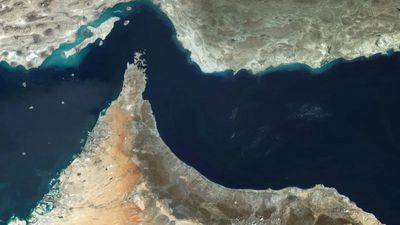 Iran’s New Hormuz Plan Targets Global Shipping with Tolls, What Does It Mean?



 Click it and Unblock the Notifications
 Sign in with Google