


AI Impersonation Of US Secretary Of State Marco Rubio Highlights Cybersecurity Threats


A miscreant pretending to be US Secretary of State Marco Rubio has been sending AI-generated voice and text messages to high-ranking officials and foreign ministers. This incident is the latest in a series of impersonations targeting American officials. According to a report, the impostor aimed to manipulate these officials to gain access to sensitive information or accounts.
Impersonation Tactics
The impostor reached out to at least three foreign ministers, a US state governor, and a member of Congress using text messages and the encrypted messaging app Signal. The cable from Rubio's office, dated July 3, revealed that the impostor began using a Signal account with the display name "[email protected]" in mid-June. Voicemails were left for two individuals, and one person received a text inviting them to communicate on Signal.

State Department's Response
The State Department confirmed awareness of the situation and is actively investigating it. A senior official stated, "The Department takes seriously its responsibility to safeguard its information and continuously takes steps to improve the department's cybersecurity posture to prevent future incidents." The FBI had previously warned about impersonators targeting contacts of senior US officials since April.
Previous Incidents
In May, President Donald Trump mentioned an impersonator breached White House Chief of Staff Susie Wiles' phone. The Wall Street Journal reported that US senators, governors, and business executives received communications from someone claiming to be Wiles. This breach led to investigations by both the White House and FBI, although Trump downplayed the threat.
Concerns Over AI Voice Cloning
AI voice cloning tools are becoming more accessible, raising concerns among disinformation researchers about their potential misuse. These tools can create audio deepfakes that are difficult to trace. Last year, a robocall impersonating then-President Joe Biden caused alarm by urging New Hampshire residents not to vote in a Democratic primary.
Senior Trump administration officials have faced criticism for using unofficial channels like Signal for government work. In March, then-national-security-adviser Michael Waltz accidentally added a journalist to a Signal chat discussing US strikes in Yemen, leading to his removal from the position.
The increasing use of AI-generated content poses significant challenges for security agencies worldwide. As technology advances, safeguarding sensitive information becomes more crucial than ever.
-
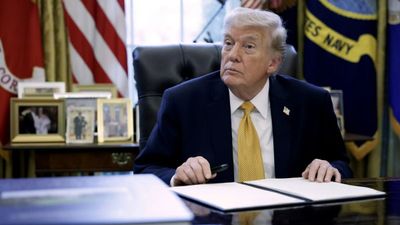 ‘Go Get Your Own Oil’: Trump Slams Nations Hit By Hormuz Fuel Crisis For Refusing To Back Iran Strikes
 -
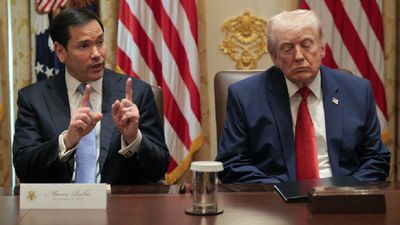 Iran-US War: Donald Trump’s Missteps And The NATO Paradox
 -
 Global Industry Experts Join RACCAI- 2026 Advisory Board at CGC University Mohali
 -
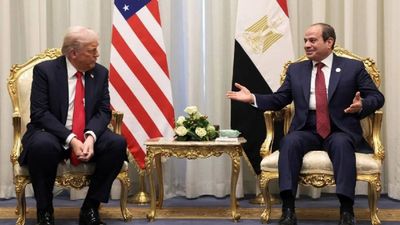 Egypt President Sisi To Trump: ‘Please, Help Us To Stop The War’ Amid Escalating Iran Conflict
 -
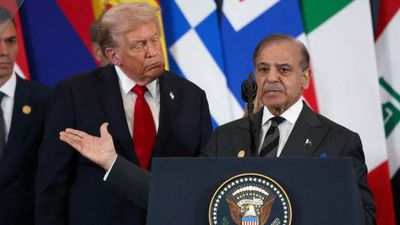 Trump Claims Iran Has Accepted Most of US 15-Point Peace Plan, Signals Possible Breakthrough
 -
 Trump Says US Could Seize Iran’s Oil, Hints At Targeting Kharg Island Amid Escalating Middle East Conflict
 -
 Trump Hints At Breakthrough With Iran Amid War Escalation, Calls Recent Move A ‘Sign Of Respect’
 -
 Rupee Falls to Fresh Record Low of 95.14 per Dollar Amid RBI FX Rule Changes
 -
 IPL 2026: Rohit Sharma’s Blazing 78 Powers Mumbai Indians to Big Win Over Kolkata Knight Riders
 -
 Gold Rate Today 31 March 2026: Latest IBJA Benchmark And Tanishq, Kalyan, Malabar, Joyalukkas Rates
 -
 Gold Rate Today 30 March 2026: IBJA Benchmark Rates, Tanishq, Kalyan, Malabar, Joyalukkas Prices
 -
 Gold Silver Rate Today, 30 March 2026: City-Wise Prices, MCX Update On 24K Gold, 22K Gold And Silver



 Click it and Unblock the Notifications
 Sign in with Google