


New finding holds hope for muscle movements in paralysed people


Washington, Apr 21 (ANI): Grasping a glass or throwing a baseball could be an arduous task for the arm with over 30 muscles working in tandem. But now, researchers have found that stimulating groups of muscles instead of individual muscles could make it easier to control the limbs.
The finding by researchers at Northwestern University could make it easier to restore muscle movements in people who have become paralysed.
For the study, the researchers used a model of the muscles in a frog's hind leg to perform a computational analysis.
The model, when run as a simulation, demonstrated that researchers can control the limb using muscle groups just about as well as if they controlled individual muscles.
"By controlling muscle groups instead of individual muscles, we're reducing the variables, but we're not losing efficiency," said Matthew Tresch, assistant professor of biomedical engineering at the McCormick School of Engineering and Applied Science.
For a long time, researchers have been debating the idea that the body's nervous system controls a limb using muscle groups, or "synergies."
If true, it would reduce the number of variables that the nervous system needs to control.
"We still don't know if that's how the central nervous system works, but what has been missing from the rhetoric is the question of whether this is a viable way to produce behaviour. That's what our experiment tried to do," said Tresch.
The researchers used both analytical approaches and techniques from control theory to chose the muscle combinations that let the frog's hind leg do what it wants to do most effectively.
The simulation showed that by choosing the most effective balance of muscle synergies, it was possible to control movement without degrading performance.
"Having all these muscle variables complicates control of behaviour, but it also makes certain behaviour easier. The complexity might be there to make certain kinds of movements more efficient than others," said Tresch.
With this framework, researchers could predict how muscle activation changes when a person loses a muscle or becomes paralysed.
"The end goal is to restore movement in people who are paralysed," he said.
The findings have been published by the Proceedings of the National Academy of Sciences. (ANI)
-
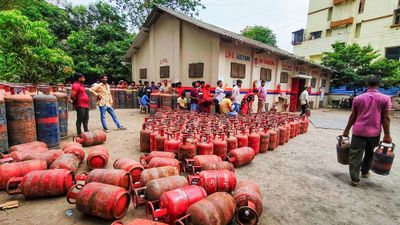 LPG Crunch: Karnataka Brings New SOPs, Makes PNG Registration Mandatory for Businesses
 -
 Hyderabad Gold Silver Rate Today, 30 March 2026: Check Fresh 24K, 22K, 18K Gold And Silver Prices In City
 -
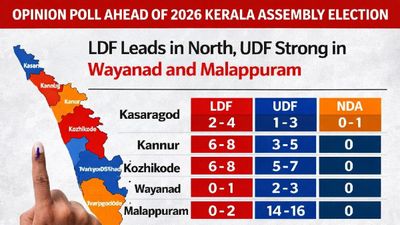 Opinion Poll For Kerala Assembly Election 2026: Ldf Strength In Kannur And Kasaragod
 -
 Tamil Nadu Polls 2026: Vijay Reveals Rs 645 Crore Assets, Rs 266 Crore in Banks; Know All His Declaration
 -
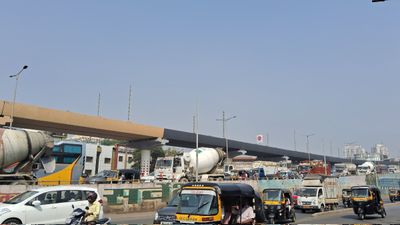 Mumbai Metro Line 9 Set for April 3 Launch, Dahisar-Mira Bhayandar to Get Direct Boost
 -
 Trump Hints At Breakthrough With Iran Amid War Escalation, Calls Recent Move A ‘Sign Of Respect’
 -
 Rahul Arunoday Banerjee Autopsy Report: Actor Was Underwater For Over An Hour, Sand Found In Lungs
 -
 West Bengal Assembly elections: Election Commission transfers heads of 173 police stations
 -
 Delhi Weather Brings Relief: IMD Issues Yellow Alert For Rain, Thunderstorms And Gusty Winds; Check Forecast
 -
 Tamil Nadu Elections 2026: Vijay Files Nomination Same Day as MK Stalin, Sets Up Symbolic Political Face-Off
 -
 Too Close To Call? 57 Key Seats Could Decide West Bengal Election 2026 As TMC And BJP Gear Up For Tight Battle
 -
 IPL 2026 RR vs CSK Live Streaming: How to Watch Rajasthan Royals vs Chennai Super Kings Match Today



 Click it and Unblock the Notifications
 Sign in with Google