


What Is Trump’s Ukraine Peace Plan? Explained In Simple Terms
Donald Trump's 28-point peace plan proposes a ceasefire and territorial adjustments in the Ukraine-Russia conflict. Critics raise concerns over its implications for Ukraine's sovereignty and security.


Amidst the ongoing Ukraine-Russia conflict, President Donald Trump has introduced a 28-point peace plan, sparking global debate. This plan, proposed as a solution to end the conflict within "24 hours" if both sides agree, suggests significant political, territorial, and security changes. However, critics argue it heavily favours Russian interests and imposes stringent obligations on Ukraine. US negotiators are currently revising the plan following objections from Ukraine and some European governments.
The plan prioritises an immediate ceasefire, requiring both sides to stop fighting once the agreement is signed. A monitoring mechanism would be established to ensure compliance and prevent violations. The plan also calls for the freezing of battle lines in regions like Kherson and Zaporizhzhia, effectively allowing Russia to retain its current territorial gains.
AI-generated summary, reviewed by editors

Ceasefire and Territorial Adjustments
Under the plan, Russia would maintain control over Crimea, which it annexed in 2014. Large portions of Donetsk and Luhansk, also known as Donbas, currently under Russian control, would be formally acknowledged as Russian territory. Any remaining Ukrainian-controlled areas in these regions would be vacated and transformed into a demilitarised buffer zone. The plan also requires Ukraine to forfeit its ambitions to join NATO, prohibiting any NATO or Western troops, bases, or missiles on Ukrainian soil.
Another controversial aspect is the limitation on Ukraine's military. The country's army would be capped at 600,000 troops, with restrictions on the types of weapons it can acquire. Oversight of the plan's implementation would be managed by a US-led "Peace Council," likely chaired by the US President, with the authority to impose sanctions on either side for any violations.
Rebuilding and Security Guarantees
The plan includes a significant reconstruction package for Ukraine, involving the use of frozen Russian assets and additional funds from the US and Europe. The focus would be on rebuilding cities, power networks, roads, and digital infrastructure. Additionally, the US and allied nations would offer security guarantees to Ukraine. If Russia invades again, coordinated sanctions and diplomatic consequences would be enacted.
One of the more contentious points is the provision of full legal amnesty for all wartime actions by individuals on both sides, meaning no new war crimes prosecutions would occur under the agreement. This has raised concerns among human rights groups, who argue that such blanket amnesty eliminates accountability for alleged war crimes.
Controversies and Concerns
The plan's intention is to end active warfare and stabilise the frontline while promoting massive funding to rebuild Ukraine’s infrastructure and economy. By blocking NATO expansion and limiting foreign military presence, it positions Ukraine as a neutral state. However, this has led to significant controversy, particularly due to the formalisation of Russia's control over territories acquired by force, which Kyiv finds unacceptable.
Critics are concerned that capping troop levels and restricting NATO support could weaken Ukraine's long-term defence capabilities. The plan also faces criticism for potentially setting a precedent that rewards aggression, possibly encouraging others to seize territory through conflict. European Union nations have expressed dissatisfaction, feeling sidelined and that their security concerns are ignored.
Despite these issues, the 28-point proposal is not yet a peace deal, but rather a framework under discussion. A ceasefire might be attainable if Ukraine accepts major compromises, which its leaders have resisted so far. While Russia has shown interest, it aligns with its strategic objectives. Ukraine and European countries have pushed for changes, leading US negotiators to trim the plan to 19 points.
Experts suggest the plan might halt fighting temporarily but may not achieve a just and lasting peace. Resolving core issues such as territory, sovereignty, accountability, and long-term security remains essential for any enduring resolution.
28-Point Plan In Simple Terms
Ceasefire and security guarantees
- An immediate ceasefire if both sides sign.
- Ukraine would receive "security guarantees" from the U.S. (and possibly its allies), even though it would not join NATO under this plan.
- A non-aggression pact would be signed by Russia, Ukraine, and European parties - effectively promising no further invasion or hostilities.
Ukraine gives up its NATO hopes - and reduces its military
- Ukraine must amend its constitution so it will never join NATO.
- NATO (and allied countries) must formally agree not to admit Ukraine in the future or station troops there.
- The Ukrainian armed forces would be capped at 600,000 personnel.
Territorial and political concessions
- The plan would "freeze" current lines of control: regions like Crimea, Donetsk, and Luhansk - which Russia already occupies (or claims) - would be recognized (at least de facto) as Russian.
- Other contested regions like Kherson and Zaporizhzhia would remain frozen along current contact lines.
- Where Ukrainian forces hold parts of Donetsk, they would withdraw - those areas would become a neutral, demilitarized buffer zone under international recognition (effectively under Russian control).
Reconstruction and economic plan for Ukraine - plus reintegration for Russia
- A big reconstruction package: a "Ukraine Development Fund" to invest in rebuilding cities, infrastructure, energy, natural resources, technology, and more.
- Around US$100 billion from frozen Russian assets (plus possibly another ~US$100 billion from European involvement) would go toward rebuilding Ukraine.
- Russia would be gradually reintegrated into global economy: sanctions lifted in stages, potential return to groups like G8, and long-term economic cooperation with the U.S. and others (energy, rare earths, infrastructure, etc.).
Other guarantees - humanitarian, legal, political
- Exchange of prisoners and hostages. All civilian detainees (including children) to be released. Family reunification programs, return of displaced persons.
- Ukraine would hold elections within 100 days of the deal.
- Both sides granted broad amnesty for wartime acts - meaning no war-crimes prosecutions for Russian (or Ukrainian) actions under the agreement.
- A permanent "Peace Council," chaired by Trump, to monitor and enforce the agreement. Any violations would trigger sanctions or "penalties."
- Russia agrees legally to non-aggression toward Ukraine and Europe; treaties on nuclear non-proliferation and arms control (like the old New START) would be renewed or extended.
In short: Russia keeps most of the territory it gained (or claims) since 2014 - Ukraine gives up NATO hopes, slashes its army, agrees to amnesty for Russia, and accepts foreign oversight and big control over parts of its country. In return: a ceasefire, massive reconstruction money for Ukraine, and a vague security guarantee from U.S./allies.
Will it end the war? - Realistic outlook
It's possible this plan could bring a temporary or frozen peace - especially if all parties sign, enforce a ceasefire, and deliver reconstruction and security guarantees. But whether it leads to a just and stable long-term peace is very uncertain. Here's why:
Short-term peace: Yes - a ceasefire and reduced fighting could come quickly if all agree. People would stop dying, cities might rebuild, and Western funds flow to reconstruction.
Long-term stability? Doubtful - because the core issues (territory, justice, sovereignty, war crimes) remain unresolved, or are effectively conceded. The plan rewards forceful conquest and grants amnesty - which may leave deep resentments, resentment inside Ukraine, and a sense of injustice.
Security risk remains - even with "guarantees," if Ukraine is disarmed and cannot join NATO, it remains vulnerable. Guarantees alone (without real deterrence) may not hold.
Political & alliance costs - Many Ukrainians, Europeans, and global watchers view the plan as a betrayal of international norms. If implemented, trust in international security architecture could erode.
-
 Gold Silver Rate Today, 30 March 2026: City-Wise Prices, MCX Update On 24K Gold, 22K Gold And Silver
 -
 LPG Crunch: Karnataka Brings New SOPs, Makes PNG Registration Mandatory for Businesses
 -
 Hyderabad Gold Silver Rate Today, 30 March 2026: Check Fresh 24K, 22K, 18K Gold And Silver Prices In City
 -
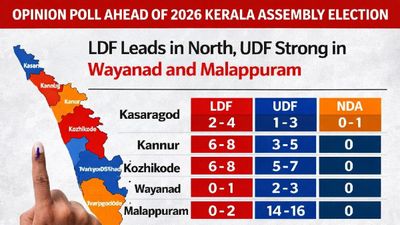 Opinion Poll For Kerala Assembly Election 2026: Ldf Strength In Kannur And Kasaragod
 -
 Tamil Nadu Polls 2026: Vijay Reveals Rs 645 Crore Assets, Rs 266 Crore in Banks; Know All His Declaration
 -
 Mumbai Metro Line 9 Set for April 3 Launch, Dahisar-Mira Bhayandar to Get Direct Boost
 -
 Hyderabad Gold Silver Rate Today, 31 March 2026: Gold And Silver See Fresh Movement, Check Latest City Rates
 -
 Gold Silver Rate Today, 31 March 2026: City-Wise Prices, MCX Trend As Gold Rises And Silver Slips
 -
 Rahul Arunoday Banerjee Autopsy Report: Actor Was Underwater For Over An Hour, Sand Found In Lungs
 -
 Thunderstorm Warning In Delhi NCR: IMD Issues Orange Alert Amid Sudden Weather Shift
 -
 Trump Hints At Breakthrough With Iran Amid War Escalation, Calls Recent Move A ‘Sign Of Respect’
 -
 UP STF Nabs Maulana Abdullah Salim Over Controversial Comment On CM Yogi's Mother



 Click it and Unblock the Notifications
 Sign in with Google