


What Intelligence Forced US And Israel To Change Plans And Strike Iran On Saturday Morning?


A last-minute intelligence alert about a high-level meeting involving Iran's supreme leader Ayatollah Ali Khamenei triggered the timing of the US-Israel military assault on Tehran, according to a Reuters report citing officials and sources familiar with the operation.

AI-generated summary, reviewed by editors
The coordinated air and naval attack, launched while it was still night in Washington but daytime in Iran, followed stalled negotiations in Geneva mediated by Oman and rapidly pushed the region toward open confrontation.
Intelligence Triggered A Rapid Change Of Plan
American officials indicated the opening blow had to focus on Khamenei himself to preserve the element of surprise. According to Reuters, planners feared the Iranian leader would disappear into hiding if given time.
Khamenei had initially been expected to hold discussions on Saturday evening in Tehran. However, Israeli intelligence detected that the meeting was moved to Saturday morning. The operational timeline was advanced within hours, turning a planned window into an immediate strike opportunity. The precise meeting location was not immediately disclosed.
The decision shows the degree to which the entire operation hinged on the presence of a single individual. Sources said confirmation that Khamenei was with senior advisers effectively set the military action in motion.
Strike On Tehran And Immediate Retaliation
The first wave of attacks targeted Khamenei's heavily protected compound in Tehran. Satellite imagery later confirmed the complex had been destroyed, marking a turning point for the Islamic Republic's 46-year Shia-theocratic system.
Within hours, Iran launched a large-scale counterattack. Drones and missiles were fired toward Israel and also toward US-aligned states across the region including Qatar, Bahrain, the United Arab Emirates, Jordan and Kuwait. The escalation quickly widened beyond a bilateral confrontation into a regional security crisis.
US President Donald Trump authorised the assault shortly after midnight in Washington. The operation came only two days after negotiations in Geneva failed to produce a breakthrough.
Iran Promises Retaliation And Confirms Death
Iran's Islamic Revolutionary Guard Corps issued a furious warning, pledging revenge for the killing of the country's supreme leader. In a statement posted on its official Telegram channel, the IRGC declared, "The hand of revenge of the Iranian nation for a severe, decisive and regrettable punishment for the murderers of the Imam of the Ummah will not let go of them." It also described the coming response as the "most ferocious offensive operation in history" against the United States and Israel.
Israel said Khamenei was killed alongside key security figures including former National Security Council secretary Ali Shamkhani and IRGC commander Mohammad Pakpour. Two Iranian sources told Reuters he had met Shamkhani and Supreme National Security Council Secretary Ali Larijani shortly before the attack began. Larijani survived and responded defiantly, saying, "The brave soldiers and the great nation of Iran will teach an unforgettable lesson to the international oppressors."
Iranian state television confirmed Khamenei's death early Sunday by broadcasting archival footage under a black banner. Iranian media also reported the deaths of his daughter, son-in-law and granddaughter.
Earlier, Trump posted online, "Khamenei, one of the most evil people in History, is dead."
A Leader's Legacy And What Comes Next
Ayatollah Khamenei succeeded revolution founder Ruhollah Khomeini in 1989 and spent more than three decades positioning Iran in opposition to Western influence. State media framed his killing as martyrdom rather than defeat, calling it a sacrifice for national sovereignty.
An official Farsi account acknowledged his death by posting a Quranic verse on social media, while Tasnim News reported he was killed at his workplace in the early hours of Sunday.
The killing comes at a volatile moment inside Iran. Only weeks earlier, nationwide protests driven by inflation shook the country and were suppressed by authorities with heavy casualties reported. Now, with its top leadership decapitated and a vow of revenge issued, the region faces the prospect of a prolonged and unpredictable conflict.
-
 Iran Hits Back at Trump, Threatens Prolonged War
 -
 US Pilot Reportedly Ejects In Southwest Iran Amid Fresh Iranian Claims Of F-35, F-15E Downing
 -
 Iran Names 8 Gulf, Jordan Bridges as Possible Targets After Deadly Karaj Strike
 -
 US-Sanctioned Iranian Tanker Diverts from India to China Mid-Voyage
 -
 Trump Sets Tough Terms For Ceasefire With Iran, Demands Strait Of Hormuz Be “Open, Free, Clear” Amid Conflict
 -
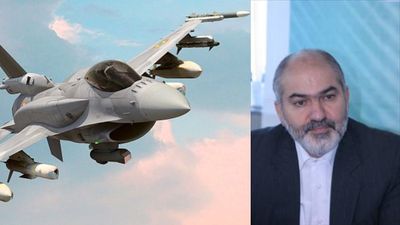 US Confirms Fighter Jet Downed Over Iran, Tehran Announces Reward For Those Who Find Crew
 -
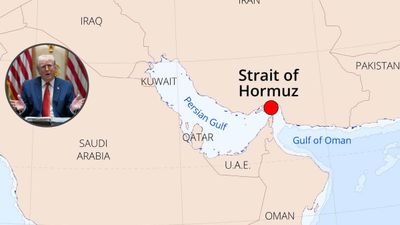 When Will Strait of Hormuz Reopen? Donald Trump’s Iran War Speech Suggests No Quick Relief
 -
 Donald Trump Offers To Buy Oil From The US, Says “We Have Plenty”; Claims Iran War Will “Finish Very Fast'
 -
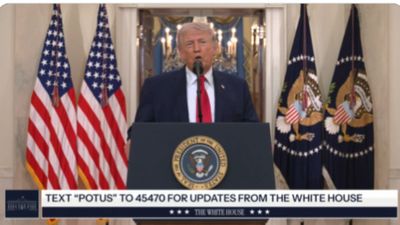 Trump Addresses Nation Amid Iran War, Targets Obama Nuclear Deal, Justifies ‘Operation Epic Fury' , Watch
 -
 School Assembly News Headlines Today April 03: Top National, International, Sports, Business News
 -
 Will Donald Trump Quit NATO After Iran War Rift? Europe Unites As Alliance Faces Its Biggest Crisis In Decades
 -
 Stock Market Crashes As Sensex Falls Over 1,400 Points After Trump’s Iran War Warning, Oil Prices Surge



 Click it and Unblock the Notifications
 Sign in with Google