


Venezuela, The Country That Gave 6 Miss World, Is Under Attack; Here's Why


Once celebrated globally for its beauty and culture, Venezuela has produced six Miss World winners, earning a reputation as a powerhouse in international pageantry. Yet, behind the glitz and glamour, the country now faces one of the most serious crises in its modern history. On Saturday, United States forces carried out what President Donald Trump described as a "large-scale strike" on Venezuela, claiming that Venezuelan President Nicolás Maduro and his wife were captured and flown out of the country in coordination with US law enforcement.
The operation, announced on Truth Social, followed months of US pressure on Caracas, a government Washington has long labelled illegitimate. Trump framed the strike as part of a wider campaign against drugs, migration, and regional instability. He tied the operation directly to allegations that Maduro leads the notorious Cartel de los Soles, a powerful organized crime group accused of trafficking cocaine and facilitating the fentanyl crisis affecting the United States. Caracas has rejected these accusations, calling them politically motivated and insisting that prior offers of cooperation on drug enforcement and migration had been ignored by Washington.
AI-generated summary, reviewed by editors

Residents of Caracas were shaken by explosions, low-flying aircraft, and power outages near military sites. Verified videos circulated on social media showing smoke rising over the capital and tracer rounds cutting across the skyline. Venezuelan authorities condemned the strikes as an "imperialist attack," declaring a state of "external disturbance" and urging citizens to mobilize in defense of the nation. Defence Minister Vladimir Padrino López ordered troops nationwide to prepare for contingencies, emphasizing loyalty to Maduro despite the president's reported capture.
The US justification for the operation is twofold. First, migration: Since 2013, an estimated eight million Venezuelans have fled economic collapse and political repression, largely to neighboring Latin American countries. Washington claims that some of this exodus directly affects the United States, alleging that Maduro has "emptied prisons and asylums," forcibly sending people north-a charge Caracas strongly denies. Second, drugs: Trump and US officials have labeled Venezuela a key transit route for cocaine and have linked the government to the fentanyl crisis. By designating the Cartel de los Soles and Tren de Aragua as Foreign Terrorist Organizations, the US has sought to justify military action as part of a campaign against "narco-terrorism."
Even before the strike, the United States had demonstrated its military reach. A substantial naval and air deployment, including the aircraft carrier USS Gerald R Ford, positioned in the Caribbean, signaled mounting pressure on Caracas. US forces had previously seized oil tankers and conducted strikes on small boats accused of trafficking drugs, reportedly killing more than 100 people. Trump highlighted the destruction of docking sites used by alleged drug vessels as the first openly acknowledged attack on Venezuelan soil in this campaign.
International reactions have been swift and varied. Spain offered to mediate, advocating a peaceful resolution and emphasizing respect for international law. Russia insisted that Venezuelans must decide their own future without foreign military interference and called for Latin America to remain a "zone of peace." Meanwhile, regional tensions remain high as neighboring Colombia and other Latin American countries watch developments with concern, wary of the potential for further instability.
For a nation once defined by beauty, culture, and international acclaim, the streets of Venezuela now bear the weight of political uncertainty and armed conflict. Its global image has shifted dramatically-from the glamour of Miss World crowns to smoke-filled skylines, power cuts, and military mobilization. With Maduro reportedly in US custody, Venezuela faces a pivotal moment: the struggle over governance, sovereignty, and regional stability is now playing out in real time, watched closely by the world.
The contrast is stark. The country that once dominated international beauty stages is now grappling with warships in its waters, airstrikes over its cities, and a global debate over legitimacy and law. Whether Venezuela can navigate this crisis while preserving its institutions, protect its people, and maintain its cultural pride remains one of the most pressing questions in the hemisphere today.
-
 “Not Going To Be There Too Much Longer”: Trump Signals Endgame In Iran War
 -
 Trump Signals US Exit from Iran Within Weeks, Shifts Focus from Diplomacy to Military Goals
 -
 Trump Sets Tough Terms For Ceasefire With Iran, Demands Strait Of Hormuz Be “Open, Free, Clear” Amid Conflict
 -
 Will Donald Trump Quit NATO After Iran War Rift? Europe Unites As Alliance Faces Its Biggest Crisis In Decades
 -
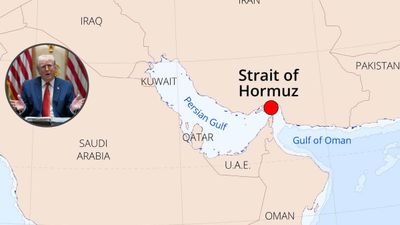 When Will Strait of Hormuz Reopen? Donald Trump’s Iran War Speech Suggests No Quick Relief
 -
 What Is The ‘Stone Age’ Warning Donald Trump Issued To Iran? Says ‘No Deal, No Mercy’
 -
 Donald Trump Offers To Buy Oil From The US, Says “We Have Plenty”; Claims Iran War Will “Finish Very Fast'
 -
 Trump Addresses Nation Amid Iran War, Targets Obama Nuclear Deal, Justifies ‘Operation Epic Fury' , Watch
 -
 NASA Successfully Launches Artemis II: Know All About First Crewed Moon Mission In 50 Years
 -
 ‘Iran Wants Ceasefire’: Donald Trump Threatens To Send Tehran ‘Back To The Stone Age’
 -
 ‘Go Get Your Own Oil’: Trump Slams Nations Hit By Hormuz Fuel Crisis For Refusing To Back Iran Strikes
 -
 Trump Warns Iran Of Possible Attacks On Energy Sites Amid Israel-Hezbollah Conflict



 Click it and Unblock the Notifications
 Sign in with Google