


US-Iran War: The End of Invisibility? How Iran May Be Seeing the 'Unseeable' F-35


If Iran's claim of downing a second American F-35 over its airspace holds even partial truth, it marks more than a tactical incident- it signals a potential inflection point in modern air warfare. For decades, stealth has been the backbone of U.S. air superiority. The F-35, often described as the "ghost of the skies," was engineered to evade radar, penetrate contested airspace and strike with near impunity. Yet, the current claims emerging from Tehran raise an uncomfortable question: is stealth losing its edge?

AI-generated summary, reviewed by editors
The first principle to understand is this: stealth does not mean invisibility. It means reduced detectability, primarily against radar systems. The F-35's design minimises its radar cross-section through angular shaping and radar-absorbing materials, effectively deflecting electromagnetic waves. In ideal conditions, its radar signature is often compared to that of a small object. But this invisibility cloak works predominantly in the radio frequency spectrum. It does not eliminate other signatures, most critically, heat.
This is where the Iranian narrative becomes technically plausible. Reports suggest the use of passive infrared search and track (IRST) systems- sensors that detect thermal emissions rather than reflected radar waves. Unlike radar, these systems do not emit signals, making them difficult to detect or jam. They simply observe. A jet engine operating at extreme temperatures, even with advanced cooling mechanisms, inevitably leaves a thermal footprint.
At closer ranges or under specific operational conditions- such as low-altitude flight, high-thrust manoeuvre, or weapons deployment- the F-35's infrared signature can become more pronounced. Electro-optical systems can track these emissions, creating a lock without ever relying on radar. This fundamentally alters the detection game: the aircraft may evade radar, but it cannot escape physics.
The second layer lies in interception. Iran's short-range air defense systems, including platforms reportedly equipped with imaging infrared seekers, are designed precisely for such scenarios. These missiles do not require radar guidance once launched. They lock onto heat signatures and autonomously track targets. In such a framework, stealth becomes less decisive, especially in layered air defense environments.
Iran's evolving air defense doctrine appears to reflect this shift. Instead of relying solely on high-end radar systems, it has increasingly invested in a networked architecture- combining radar, passive sensors, and mobile missile units. This creates overlapping detection zones, where even if one system fails, another compensates. The emphasis is no longer on singular detection but on cumulative tracking.

However, the strategic implications extend beyond the battlefield. If Iran has indeed captured valuable electromagnetic or thermal signature data of the F-35, the consequences could ripple globally. Sharing such data with Russia or China would provide adversaries with critical insights into Western stealth capabilities-potentially accelerating the development of counter-stealth technologies.
That said, caution is warranted. There is, as of now, no independent confirmation from U.S. Central Command. Wartime claims often serve psychological and informational objectives as much as military ones. But even as a possibility, the scenario begets a deeper reality.
Stealth dominance is no longer absolute. The battlefield is evolving from a radar-centric paradigm to a multi-spectrum contest- where heat, optics and data fusion play an equally decisive role. The question is no longer whether stealth aircraft can be detected- but how, and at what cost.
-
 Petrol Price India Vs Pakistan: Why Fuel Is Cheaper In India Than Pak Despite Global Crisis
 -
 New OTT Release This Week In Telugu, Hindi, Tamil, Marathi, Malayalam: 40 Movies & K Dramas To Watch
 -
 Gold Silver Rate Today, 3 April 2026: City-Wise Prices, MCX Gold Down, Silver Slides Amid Global Pullback
 -
 Gold Rate Today 3 April 2026: Latest IBJA Rates, Tanishq, Kalyan Jewellers, Malabar, Joyalukkas 22K Prices
 -
 Earthquake Tremors Felt In Delhi-NCR, Parts Of North India After 5.9-Magnitude Afghanistan Quake
 -
 Baba Vanga Prediction 2026: World War 3, UFOs, Cash Crash, Truth About Nostradamus of the Balkans Claims
 -
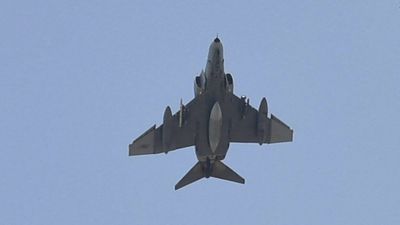 Iran Shoots Down Second US F-35 Fighter Jet, Pilot Survival Unlikely
 -
 Biker Movie Review: What's Good, What's Bad In Sharwanand's Telugu Film?
 -
 Kerala Pre-Poll Survey: Can LDF Retain Power In Keralam? Check This Opinion Poll
 -
 Annamalai Missing from BJP’s List for Candidates For Tamil Nadu Polls - See 27 Names
 -
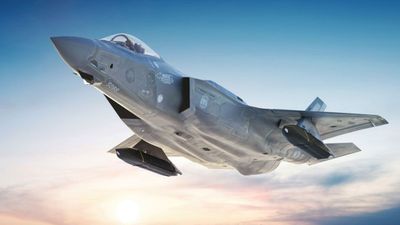 US Pilot Reportedly Ejects In Southwest Iran Amid Fresh Iranian Claims Of F-35, F-15E Downing
 -
 Iran Names 8 Gulf, Jordan Bridges as Possible Targets After Deadly Karaj Strike



 Click it and Unblock the Notifications
 Sign in with Google