


Trump Slams Supreme Court Over Tariff Setback: 7 Key Takeaways


US President Donald Trump launched an extraordinary and deeply personal attack on the Supreme Court of the United States after it struck down his administration's global tariffs imposed under emergency powers. In a lengthy statement posted on his Truth platform, Trump called the ruling "deeply disappointing" and accused the majority of justices of lacking the courage to stand up for the country.
The court's decision blocked Trump's use of tariffs under the International Emergency Economic Powers Act (IEEPA), handing him one of the biggest judicial setbacks of his second term. But rather than retreat, the President framed the ruling as both politically motivated and strategically flawed - and signalled an immediate escalation using alternative trade laws.
AI-generated summary, reviewed by editors

A Rare Direct Rebuke of the Court
Trump did not mince words. He said certain members of the court should be "absolutely ashamed" and accused them of failing to "do what is right for our Country." In unusually sharp language directed at a co-equal branch of government, he suggested the justices were influenced by partisan politics and even foreign interests.
He claimed foreign nations that had allegedly "been ripping us off for years" were "ecstatic" over the ruling - though he warned "they won't be dancing for long."
Praise for Conservative Dissenters
At the same time, Trump publicly thanked Justices Clarence Thomas, Samuel Alito, and Brett Kavanaugh for dissenting from the majority opinion. He described them as strong, wise, and patriotic.
Trump specifically highlighted Justice Kavanaugh's dissent, which argued that the ruling may not significantly limit a president's broader tariff authority because other federal statutes still provide expansive powers to impose trade restrictions.
Economic and National Security Framing
In his statement, Trump emphasized that the case was not merely about tariffs but about economic sovereignty and national security. He defended his use of tariffs over the past year, claiming they had helped strengthen the US economy and protect domestic industries.
The President cited stock market milestones - including the Dow crossing 50,000 and the S&P reaching 7,000 - as evidence that his trade policies had delivered results. He also asserted that tariffs played a role in reducing fentanyl inflows by 30% when used as penalties against countries accused of enabling illegal drug shipments.
Disputing the Court's Logic
Trump sharply criticized what he called the "nonsensical" reasoning behind the ruling. According to him, the court concluded that while a president may block or embargo trade entirely under IEEPA, he cannot impose even a nominal tariff under the same authority.
"What license has ever been issued without the right to charge a fee?" Trump asked rhetorically, arguing that the decision contradicted basic logic.
Turning to Alternative Laws
Far from backing down, Trump announced that he would pivot to other statutory authorities to continue his tariff strategy. Citing Justice Kavanaugh's dissent, he pointed to:
- The Trade Expansion Act of 1962 (Section 232)
- The Trade Act of 1974 (Sections 122, 201, and 301)
- The Tariff Act of 1930 (Section 338)
He said these provisions offer powers that are "even stronger" than IEEPA-based tariffs.
Immediate Action: 10% Global Tariff
Trump declared that all existing Section 232 and Section 301 tariffs would remain in full force. He further announced that he would sign an executive order imposing a 10% global tariff under Section 122, in addition to existing duties. Several new Section 301 investigations into unfair trade practices would also be launched.
Political and Legal Implications
The ruling marks a significant judicial check on Trump's trade agenda. However, his reaction underscores that the battle over executive trade authority is far from over. By aggressively pivoting to alternative statutes, Trump is setting up what could become a prolonged confrontation between the White House and the judiciary.
Rather than weakening his hand, Trump insisted the decision had made presidential tariff powers "more powerful and crystal clear." Whether that claim holds up under future legal scrutiny remains to be seen - but one thing is certain: the trade war is entering a new phase.
-
 Trump's Address To Nation: Key Pointers From US President's Speech
 -
 When Will Strait of Hormuz Reopen? Donald Trump’s Iran War Speech Suggests No Quick Relief
 -
 West Bengal Elections: 7 SIR Judicial Officers Held Hostage in Malda, CBI Begins Probe; 18 Arrested
 -
 Trump Addresses Nation Amid Iran War, Targets Obama Nuclear Deal, Justifies ‘Operation Epic Fury' , Watch
 -
 Donald Trump Offers To Buy Oil From The US, Says “We Have Plenty”; Claims Iran War Will “Finish Very Fast'
 -
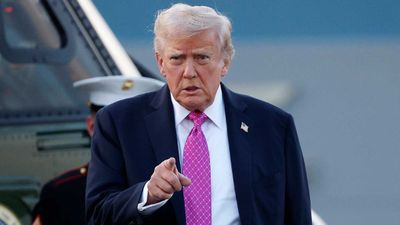 What Is The ‘Stone Age’ Warning Donald Trump Issued To Iran? Says ‘No Deal, No Mercy’
 -
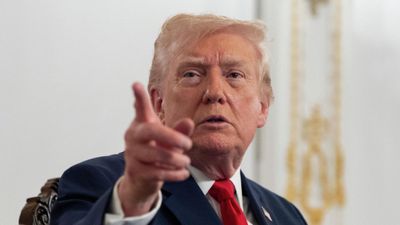 Will Donald Trump Quit NATO After Iran War Rift? Europe Unites As Alliance Faces Its Biggest Crisis In Decades
 -
 Stock Market Crashes As Sensex Falls Over 1,400 Points After Trump’s Iran War Warning, Oil Prices Surge
 -
 Gold Rate Today 2 April 2026: Latest IBJA Gold Rates, Tanishq, Kalyan, Malabar, Joyalukkas 22K Prices
 -
 Can Raghav Chadha Be The PM? How His Parliament Speeches On Real Issues Won Public Attention
 -
 Who Is Ashok Mittal? The Man Replacing Raghav Chadha In Rajya Sabha, From Sweet Shop Roots to Parliament
 -
 Civil Defence Mock Drill in Delhi At 8 PM Today: Full Schedule of Locations and Timings Released



 Click it and Unblock the Notifications
 Sign in with Google