


Trump Issues 48-Hour Ultimatum to Iran Over Strait of Hormuz, Warns of Power Plant Strikes


In a major escalation of tensions, US President Donald Trump on Sunday issued a 48-hour ultimatum to Iran, warning that the United States would launch strikes on Iranian power plants if Tehran does not fully reopen the Strait of Hormuz without threat. Posting on Truth Social, Trump made it clear that Washington is prepared to take military action, stating that the strikes would begin with Iran's largest power facility if the crucial global oil route remains restricted.
The warning comes amid rising concerns over Iran's reported actions to block or threaten movement through the Strait of Hormuz, a strategically vital waterway between Iran and Oman through which nearly 20% of the world's oil supply passes. The disruption has already triggered global alarm, with energy markets reacting sharply and several nations calling for immediate restoration of safe maritime passage.
AI-generated summary, reviewed by editors

Trump's statement marks one of the strongest public threats in the ongoing standoff, signaling a potential shift from military targeting of defence assets to critical infrastructure. Analysts say that targeting power plants would represent a significant escalation, as it could impact civilian life across Iran while intensifying the risk of a broader regional conflict.
The latest warning comes in the wake of a significant escalation by Tehran, which reportedly launched two ballistic missiles targeting the US-UK joint military base at Diego Garcia, according to Sky News. While the missiles failed to hit their intended target, officials believe they travelled nearly 4,000 kilometres-far exceeding previous estimates of Iran's strike capability. The development has raised fresh concerns over the expanding range of Iran's missile programme.
Reacting to the incident, Israel's Chief of Staff Lieutenant General Eyal Zamir stated that such missiles are not necessarily aimed at Israel alone, warning that their extended range puts major European capitals including Berlin, Paris and Rome within direct threat reach, underscoring the broader global security implications.
The United States has already increased its military presence in the region, with reports of continued operations aimed at weakening Iran's naval and missile capabilities. At the same time, Iran has shown no clear indication of backing down, raising fears that the situation could spiral further if the deadline passes without resolution.
The Strait of Hormuz remains central to global energy security, and any prolonged disruption is expected to have far-reaching consequences, particularly for oil-importing countries like India. Rising crude prices could translate into higher fuel costs and inflationary pressure, making the unfolding situation critical for economies worldwide.
As the 48-hour deadline begins, all eyes are on Iran's response. Whether this results in de-escalation or a fresh round of military action could shape the next phase of an already volatile geopolitical crisis.
-
 How Iran Brought Down US Military A-10 ‘Warthog’: IRGC Releases Video
 -
 Iran Snubs Pakistan’s Peacemaker Pretensions, Refuses To Meet US Officials In Islamabad
 -
 What Is The ‘Stone Age’ Warning Donald Trump Issued To Iran? Says ‘No Deal, No Mercy’
 -
 UK To Host 35-Nation Talks To Reopen Strait Of Hormuz Amid Oil Crisis
 -
 Will Donald Trump Quit NATO After Iran War Rift? Europe Unites As Alliance Faces Its Biggest Crisis In Decades
 -
 US-Sanctioned Iranian Tanker Diverts from India to China Mid-Voyage
 -
 Iran Shoots Down Second US F-35 Fighter Jet, Pilot Survival Unlikely
 -
 'Behind Enemy Lines' For Real: F15 US Pilot Rescue Unfolds Deep Inside Iran
 -
 US Pilot Reportedly Ejects In Southwest Iran Amid Fresh Iranian Claims Of F-35, F-15E Downing
 -
 School Assembly News Headlines Today April 03: Top National, International, Sports, Business News
 -
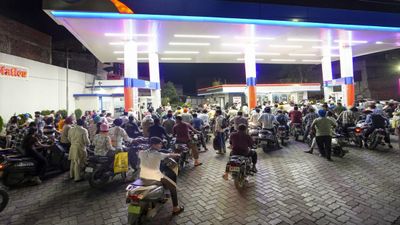 Centre Plans ₹2.5 Lakh Crore Credit Shield for Businesses Facing Iran Conflict Fallout
 -
 Stock Market Crashes As Sensex Falls Over 1,400 Points After Trump’s Iran War Warning, Oil Prices Surge



 Click it and Unblock the Notifications
 Sign in with Google