


Strait Of Hormuz Traffic Plunges After Wave Of Missile And Drone Attacks, Watch


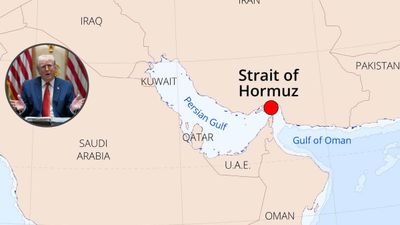
The Strait of Hormuz is facing one of its most serious security crises in recent years. A sudden wave of missile and drone attacks on commercial ships has sharply increased tensions across the Gulf region.

AI-generated summary, reviewed by editors
As a result, shipping traffic through this key waterway has dropped dramatically, raising concerns about global energy supplies and trade stability.
Maritime security authorities have now raised the regional threat level to "critical," meaning that further attacks are considered highly likely.
Wave of Attacks Targets Commercial Vessels
Within just 24 hours, five commercial vessels were either struck or narrowly targeted in waters across the Gulf of Oman and near the UAE coast. Security analysts describe this as one of the most intense periods of maritime attacks in the region in recent years.
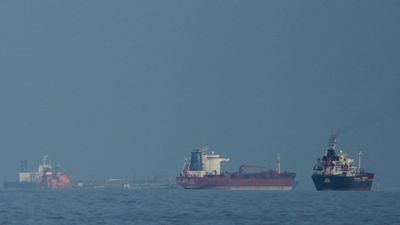
The most serious incident occurred about 44 nautical miles northwest of Muscat, Oman. A crude oil tanker was hit above the waterline, causing an explosion and a fire in the engine room. One crew member lost his life. By the following day, the fire was brought under control, and the vessel remained afloat while arrangements were made to tow it to a safe port.
In another case, a tanker anchored near Khasab, Oman, caught fire after being attacked. Four crew members were injured, and the entire crew was later evacuated safely.
A US-flagged chemical tanker was also struck while docked at an industrial port in Bahrain. Debris from the impact killed one worker and seriously injured two others.
Meanwhile, an oil tanker off the UAE coast caught fire after being hit but managed to continue its journey after the blaze was extinguished. A bulk carrier reported a near-miss incident but suffered no damage.
Authorities have stated that there is no clear connection between the vessels targeted. All merchant ships, regardless of their country of origin, are considered at risk.
Ports and Energy Sites Also Affected
The crisis has not been limited to ships at sea. Several ports and energy facilities across the Gulf have also faced disruptions.
A major port in the UAE briefly suspended operations after intercepting an aerial threat that caused a fire. Although services later resumed on a limited basis, the incident added to fears about port security.
In Oman, a port remained operational despite drone strikes that injured a worker. Reports also indicated that a major refinery in Saudi Arabia was temporarily shut down after a drone-related fire. In Bahrain, port operations and pilotage services were suspended for a short period as a precaution.
In addition, ships navigating the area have reported serious GPS and satellite signal interference. This makes navigation more difficult and dangerous, especially in already congested waters.
Shipping Traffic Falls Dramatically
Automatic Identification System (AIS) tracking data shows a steep decline in ship movements through the Strait of Hormuz. In a 24-hour period, only around 28 vessels reportedly passed through the strait - far below the usual daily average of about 138 vessels.
Cargo traffic saw a sharp drop, and tanker movements fell even more significantly. Analysts say this may partly reflect a temporary pause as ship operators assess the risks. However, if tensions continue, the decline could become more serious and long-lasting.
Insurance Emerges as a Key Challenge
Beyond physical threats, insurance has become a major issue. Several marine insurance providers are reportedly reviewing or cancelling war-risk coverage for ships operating in Gulf waters.
Without proper insurance, many shipping companies cannot legally or financially risk entering the region. Even without an official closure of the Strait of Hormuz, the combination of missile threats, port suspensions, navigation interference, and insurance withdrawals is effectively limiting commercial movement.
For many ship operators, insurance availability is now the deciding factor when choosing whether to transit the strait.
Global Oil Market Feels the Pressure
The Strait of Hormuz is one of the most important energy chokepoints in the world. It handles around 15 million barrels of crude oil per day - nearly one-third of global seaborne crude trade.
With shipping movements falling and vessels avoiding the area, millions of barrels per day of oil supply are at risk of disruption. Oil prices have already reacted. Brent crude futures climbed sharply within days as markets responded to rising tensions and uncertainty.
If the disruption continues, energy prices could increase further, adding pressure to inflation and economic growth worldwide.
Few Alternatives to the Strait
The situation is especially serious because there are limited alternative routes. Major oil exporters in the region including Saudi Arabia, Iran, the UAE, Kuwait, and Iraq - rely heavily on the Strait of Hormuz for exports.
While some countries operate pipelines that allow partial overland exports, spare capacity is limited. These alternatives cannot fully replace the volume of oil that normally passes through the strait.
A prolonged blockage or sustained reduction in traffic would have deep consequences for global energy security.
Tanker Rates Expected to Rise
The crisis is also expected to impact the tanker shipping market. If Middle Eastern crude exports fall, oil importers may need to source supplies from more distant regions such as the United States or West Africa.
Longer shipping routes increase demand for vessels and raise freight costs. Analysts warn that tanker freight rates, especially for very large crude carriers (VLCCs), could rise sharply if disruptions continue.
Higher shipping costs would add further pressure to global oil prices and trade flows.
Asia Most Exposed to Supply Risks
Asian economies are particularly vulnerable. Nearly 88% of crude oil passing through the Strait of Hormuz is destined for Asian markets, including China, India, and Japan.
If supplies tighten, competition for alternative cargoes could intensify. This would affect fuel prices, industrial costs, and economic growth across the region.
A Critical Moment for Global Trade
The Strait of Hormuz remains open, but the situation is extremely fragile. The combination of missile and drone threats, falling ship traffic, port disruptions, and insurance uncertainty has created a high-risk environment for global trade.
While some of the current slowdown may be temporary, continued escalation could trigger deeper disruptions in energy markets and international shipping.
For now, the world's most important oil corridor stands at a dangerous crossroads, with global markets watching closely.
-
 We’re In War: Donald Trump Says US Aircraft Loss Won’t Derail Iran Talks
 -
 When Will Strait of Hormuz Reopen? Donald Trump’s Iran War Speech Suggests No Quick Relief
 -
 Has Pakistan Lifted The Ban on Dhurandhar 2? Find Out The Truth
 -
 US-Sanctioned Iranian Tanker Diverts from India to China Mid-Voyage
 -
 Donald Trump Offers To Buy Oil From The US, Says “We Have Plenty”; Claims Iran War Will “Finish Very Fast'
 -
 Trump Addresses Nation Amid Iran War, Targets Obama Nuclear Deal, Justifies ‘Operation Epic Fury' , Watch
 -
 Iran Hits Back at Trump, Threatens Prolonged War
 -
 Iran Snubs Pakistan’s Peacemaker Pretensions, Refuses To Meet US Officials In Islamabad
 -
 Centre Plans ₹2.5 Lakh Crore Credit Shield for Businesses Facing Iran Conflict Fallout
 -
 We're The Only Country To Lose Mariners At Strait of Hormuz: India At UK-led West Asia Meet On Iran Crisis
 -
 INS Taragiri To Join Indian Navy Fleet, Boosting Maritime Power
 -
 Stock Market Crashes As Sensex Falls Over 1,400 Points After Trump’s Iran War Warning, Oil Prices Surge



 Click it and Unblock the Notifications
 Sign in with Google