


Saudi Crown Prince Privately Urged Donald Trump To Strike Iran: Report
The article reports on the Saudi Iran conflict following a joint US-Israel strike on Iran, the death of Ayatollah Khamenei, and subsequent retaliatory strikes across Gulf capitals, examining regional responses, Saudi strategic posture, and leadership dynamics shaping Gulf security.


The latest confrontation between Washington, Tehran and key Gulf states escalated sharply after a joint US-Israel strike in Iran reportedly killed Ayatollah Ali Khamenei, while reports also indicated that Saudi Crown Prince Mohammed bin Salman had privately urged US President Donald Trump to attack Iran.

AI-generated summary, reviewed by editors
The killing of the 86-year-old Supreme Leader, announced by Iranian state television and the IRNA agency, created uncertainty around Iran's future direction, since Khamenei had held decisive power for decades and there was no clear successor, increasing concern about regional instability and internal power struggles.
Saudi Iran conflict: US-Israel strike, Trump comments and Iranian threats
The joint operation by the United States and Israel targeted Iranian military and government locations after nuclear talks stalled and Western officials said Tehran had restarted nuclear activities, with Trump calling the "heavy and pinpoint bombing" a campaign that would continue through the week or longer if required.
Before Iranian media confirmed Khamenei's death, Trump had already announced it, describing the development as Iran's "greatest chance" to "take back" their country, while Iran's Revolutionary Guard warned on Sunday that it would launch its "most intense offensive operation" ever, focused on Israel and US bases in the region.
Saudi Iran conflict: Retaliatory strikes across Gulf cities
Following the US-Israel strikes, Iran responded with missiles and drones against several Arab capitals, targeting Abu Dhabi and Dubai in the UAE, Doha in Qatar and Riyadh in Saudi Arabia, widening the conflict front and drawing multiple Gulf monarchies more directly into the confrontation.
| Target state | City hit |
|---|---|
| United Arab Emirates | Abu Dhabi, Dubai |
| Qatar | Doha |
| Saudi Arabia | Riyadh |
Saudi Iran conflict: Riyadh’s reaction and regional coordination
Saudi Arabia's Foreign Ministry issued a strong formal response, stating, "The Kingdom of Saudi Arabia expresses its rejection and condemnation in the strongest terms of the blatant and cowardly Iranian attacks," and arguing that the strikes threatened the wider Middle East's security at a time of already tense relations.
The statement also said the attacks "cannot be justified under any pretext or in any way, and which came despite the knowledge of the Iranian authorities that the Kingdom has affirmed that will not allow its airspace or territory to be used to target Iran."
Arab News reported that, after the Iranian attacks on Gulf cities, Crown Prince Mohammed bin Salman spoke with UAE president Sheikh Mohammed bin Zayed Al-Nahyan, Bahraini King Hamad bin Isa Al-Khalifa, Qatari Emir Sheikh Tamim bin Hamad Al-Thani, Kuwaiti Emir Sheikh Mishal Al-Ahmad Al-Jaber Al-Sabah and Jordan's King Abdullah II about their security needs.
During these calls, the crown prince stressed alliance ties and confirmed "Saudi Arabia's readiness to mobilise all its resources to assist them in responding to the brutal Iranian attacks they suffered, which undermine the region's security and stability," indicating Riyadh’s willingness to provide support despite its earlier stated limits on direct involvement.
Saudi Iran conflict: Private lobbying of Trump versus public restraint
The Washington Post reported that, in the month before the latest escalation, Mohammed bin Salman had made several private phone calls to Trump, encouraging a strike on Iran, while, in public, the crown prince had taken a more cautious tone and emphasised diplomatic solutions.
In January, Mohammed bin Salman stated that Saudi Arabia would not permit its territory or airspace to be used to launch attacks on Iran, said Riyadh would respect Iranian sovereignty and urged both Washington and Tehran to settle disputes through dialogue rather than military confrontation, highlighting the gap between public messaging and reported private lobbying.
The attack on Iran, which analysts noted was the second US operation against the country within eight months during nuclear negotiations, deepened questions about the fate of those talks and the implications of Khamenei's death, since the Supreme Leader had held ultimate authority over Iran's nuclear, military and foreign policy decisions.
-
 Petrol Price India Vs Pakistan: Why Fuel Is Cheaper In India Than Pak Despite Global Crisis
 -
 New OTT Release This Week In Telugu, Hindi, Tamil, Marathi, Malayalam: 40 Movies & K Dramas To Watch
 -
 Gold Silver Rate Today, 3 April 2026: City-Wise Prices, MCX Gold Down, Silver Slides Amid Global Pullback
 -
 Gold Rate Today 3 April 2026: Latest IBJA Rates, Tanishq, Kalyan Jewellers, Malabar, Joyalukkas 22K Prices
 -
 Earthquake Tremors Felt In Delhi-NCR, Parts Of North India After 5.9-Magnitude Afghanistan Quake
 -
 Baba Vanga Prediction 2026: World War 3, UFOs, Cash Crash, Truth About Nostradamus of the Balkans Claims
 -
 Iran Shoots Down Second US F-35 Fighter Jet, Pilot Survival Unlikely
 -
 Biker Movie Review: What's Good, What's Bad In Sharwanand's Telugu Film?
 -
 Kerala Pre-Poll Survey: Can LDF Retain Power In Keralam? Check This Opinion Poll
 -
 Annamalai Missing from BJP’s List for Candidates For Tamil Nadu Polls - See 27 Names
 -
 US-Iran War: The End of Invisibility? How Iran May Be Seeing the 'Unseeable' F-35
 -
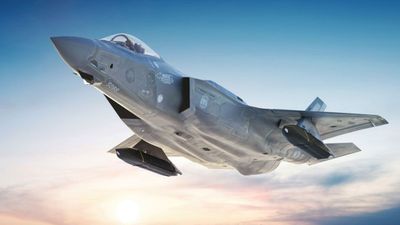 US Pilot Reportedly Ejects In Southwest Iran Amid Fresh Iranian Claims Of F-35, F-15E Downing



 Click it and Unblock the Notifications
 Sign in with Google