


Satellite Photos Show Strike Damage at Base Linked to Venezuela's Maduro Seizure


US forces carried out a night-time raid in Caracas that led to the capture of Venezuelan president Nicolas Maduro and Cilia Flores from inside the Fuerte Tiuna military complex. At a briefing, Donald Trump described the mission and said, "It was dark and it was deadly."
According to Trump, the US military conducted the operation under blackout conditions in the Venezuelan capital. Trump claimed the United States switched off "almost all of the lights in Caracas," adding that the city’s lights "were largely turned off due to a certain expertise that we have."
AI-generated summary, reviewed by editors

Nicolas Maduro capture and US operation details
Maduro and Flores were reportedly at their residence within Fuerte Tiuna, the country’s largest military facility, when US troops arrived. The pair were detained, moved to the Navy ship Iwo Jima from the surrounding armada, and then flown to a US air base to face narco-terrorism conspiracy charges.
The raid formed the peak of a long-running pressure drive by the Trump administration against Venezuela’s leadership. Officials had engaged in months of secret planning, making this the most forceful American effort for regime change since the 2003 Iraq invasion, according to US descriptions of the campaign.
Nicolas Maduro capture and military tactics in Caracas
Trump praised the planning behind the assault and said, "This thing was so organized," stressing the risks for the forces involved. He added, "And they go into a dark space with machine guns facing them all over the place." At least seven explosions were heard across Caracas during the strikes.
Defense Secretary Pete Hegseth labelled the attack part of a "massive joint military and law enforcement raid," and said it lasted under 30 minutes. The top US military officer, General Dan Caine, stated that 150 aircraft supported troops who arrived by helicopter to seize Maduro after extensive surveillance of daily routines.
| Event detail | Information |
|---|---|
| Location of capture | Fuerte Tiuna military installation, Caracas |
| Key dates | Satellite images from 22 December 2025 and 3 January 2026 |
| Operation duration | Less than 30 minutes |
| Aircraft involved | 150, according to General Dan Caine |
| Explosions reported in Caracas | At least seven |
Nicolas Maduro capture and visual evidence from Fuerte Tiuna
Vantor satellite images dated 22 December 2025 showed an intact overview of Fuerte Tiuna before the US action. A second set, taken on 3 January 2026, displayed the same site after the military operation that resulted in the capture of Nicolas Maduro, revealing clear changes on the ground.
Additional handout images released by Vantor on 3 January 2026 again highlighted Fuerte Tiuna following the raid. Trump later posted a picture on Truth Social showing Maduro in a grey tracksuit, wearing protective headphones and a blindfold, with the caption: "Nicolas Maduro on board the USS Iwo Jima."
Nicolas Maduro capture, intelligence, and political fallout
General Dan Caine said US forces relied on months of intelligence, which even covered "what he ate" and the pets kept by Maduro. Caine added that Maduro and Flores "gave up" during the operation and confirmed there was "no loss of US life," underlining the outcome for US personnel.
Maduro, aged 63, had controlled Venezuela for more than ten years, with elections widely regarded as rigged. Maduro rose after the death of former president Hugo Chavez, who was considered a mentor. During that period, Venezuela’s political system drew strong criticism from Western governments and several rights organisations.
The raid provoked strong reactions abroad. China, Russia, and Iran, all long-standing partners of Maduro’s government, denounced the operation. France and the European Union, usually aligned with Washington on many issues, also voiced concern. Venezuela’s ally China went further and called for Maduro to be "immediately released".
Inside Venezuela, political succession moved quickly. Delcy Rodriguez, vice president since 2018 and a key figure in the oil economy and intelligence services, was ordered by the country’s high court on Saturday to become interim president. Trump dismissed opposition leader Maria Corina Machado, last year’s Nobel Peace Prize winner, saying she lacked support to govern.
-
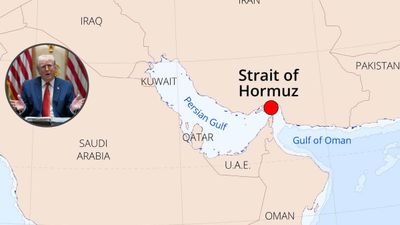 When Will Strait of Hormuz Reopen? Donald Trump’s Iran War Speech Suggests No Quick Relief
 -
 Trump's Address To Nation: Key Pointers From US President's Speech
 -
 “Not Going To Be There Too Much Longer”: Trump Signals Endgame In Iran War
 -
 Trump Signals US Exit from Iran Within Weeks, Shifts Focus from Diplomacy to Military Goals
 -
 Trump Sets Tough Terms For Ceasefire With Iran, Demands Strait Of Hormuz Be “Open, Free, Clear” Amid Conflict
 -
 Donald Trump Offers To Buy Oil From The US, Says “We Have Plenty”; Claims Iran War Will “Finish Very Fast'
 -
 ‘Go Get Your Own Oil’: Trump Slams Nations Hit By Hormuz Fuel Crisis For Refusing To Back Iran Strikes
 -
 Will Donald Trump Quit NATO After Iran War Rift? Europe Unites As Alliance Faces Its Biggest Crisis In Decades
 -
 ‘Iran Wants Ceasefire’: Donald Trump Threatens To Send Tehran ‘Back To The Stone Age’
 -
 Trump Warns Iran Of Possible Attacks On Energy Sites Amid Israel-Hezbollah Conflict
 -
 Stock Market Crashes As Sensex Falls Over 1,400 Points After Trump’s Iran War Warning, Oil Prices Surge
 -
 Trump Addresses Nation Amid Iran War, Targets Obama Nuclear Deal, Justifies ‘Operation Epic Fury' , Watch



 Click it and Unblock the Notifications
 Sign in with Google