


Over 20 Countries Back Joint Effort To Keep Strait Of Hormuz Open, Denounce Iran’s Move
A coalition of governments condemns attacks and supports freedom of navigation through the Strait of Hormuz, emphasising measures to protect shipping and stabilise energy markets amid disruption and rising fuel costs.


More than 20 countries have issued a joint warning over Iran’s effective closure of the Strait of Hormuz, pledging support for safe navigation through the waterway and condemning attacks on commercial shipping and energy sites that they say threaten global security and raise pressure on already tight energy markets.

AI-generated summary, reviewed by editors
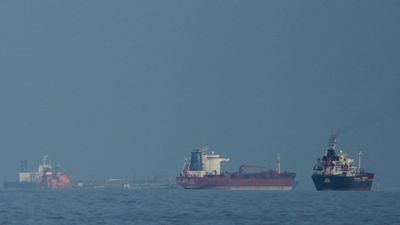
The Strait of Hormuz usually carries about 20 percent of global oil and gas shipments, but traffic has collapsed since late February, with data from analytics firm Kpler showing only 116 commodity transits between 1 and 19 March, a reduction of roughly 95 percent from normal levels, contributing to sharp increases in energy prices worldwide.
Strait of Hormuz joint statement highlights Iran attacks and freedom of navigation
The UAE ministry of foreign affairs released the coordinated statement, signed by leaders of the UAE, the UK, France, Germany, Italy, the Netherlands, Japan, Canada, the Republic of Korea, New Zealand, Denmark, Latvia, Slovenia, Estonia, Norway, Sweden, Finland, Czechia, Romania, Bahrain, Lithuania and Australia, focusing on the worsening situation in the Strait of Hormuz and its impact on international trade.
The governments stressed the legal basis for their stance, saying that freedom of navigation is a core rule of international law, including under the United Nations Convention on the Law of the Sea, and linked this principle to the safety of commercial shipping and the stability of energy flows from the Gulf to the rest of the world. "We condemn in the strongest terms recent attacks by Iran on unarmed commercial vessels in the Gulf, attacks on civilian infrastructure including oil and gas installations, and the de facto closure of the Strait of Hormuz by Iranian forces," the statement read.
Strait of Hormuz shipping disruption tied to UNSC Resolution 2817
The signatories argued that Iran’s recent actions have worldwide consequences, warning that poorer communities are likely to feel the greatest strain from higher fuel costs and disrupted supply chains, and they framed the closure of the Strait of Hormuz and the targeting of infrastructure as an issue squarely within the remit of the United Nations Security Council. "Consistent with UNSC Resolution 2817, we emphasise that such interference with international shipping and the disruption of global energy supply chains constitute a threat to international peace and security. In this regard, we call for an immediate comprehensive moratorium on attacks on civilian infrastructure, including oil and gas installations," the statement read.
The countries said they stand ready to back measures that keep commercial traffic flowing through the Strait of Hormuz, welcoming operational planning under way by other nations to protect shipping and limit disruption, and they also backed the International Energy Agency’s decision to authorise a coordinated drawdown of strategic petroleum reserves, while noting that they plan further efforts with selected producing states to raise output and help calm markets.
Strait of Hormuz crisis response and support for affected nations
The joint declaration added that economic assistance would be directed towards states hardest hit by the supply shock, using channels such as the United Nations and international financial institutions, and it presented maritime security as a shared global interest. "We will also work to provide support for the most affected nations, including through the United Nations and the IFis. Maritime security and freedom of navigation benefit all countries. We call on all states to respect international law and uphold the fundamental principles of international prosperity and security," the statement read.
Regional tensions escalated after the United States and Israel carried out strikes on Iran on 28 February, followed by Iranian attacks on Gulf neighbours and on vessels using the Strait of Hormuz, actions that have been linked to the current near-blockade of a waterway that normally carries about a fifth of the world’s oil and gas, leaving many governments focused on safeguarding navigation routes and stabilising energy supplies.
-
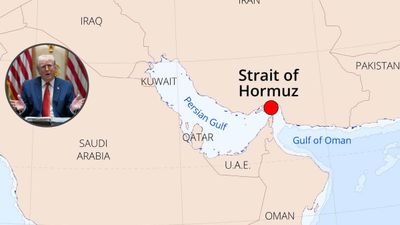 When Will Strait of Hormuz Reopen? Donald Trump’s Iran War Speech Suggests No Quick Relief
 -
 Trump Addresses Nation Amid Iran War, Targets Obama Nuclear Deal, Justifies ‘Operation Epic Fury' , Watch
 -
 UK To Host 35-Nation Talks To Reopen Strait Of Hormuz Amid Oil Crisis
 -
 What Is The ‘Stone Age’ Warning Donald Trump Issued To Iran? Says ‘No Deal, No Mercy’
 -
 NASA Successfully Launches Artemis II: Know All About First Crewed Moon Mission In 50 Years
 -
 Gold Rate Today in Bangalore, April 4, 2026: IBJA Rates, 22K Gold Prices at Bhima, Abharan, Jos Alukkas, GRT
 -
 US-Sanctioned Iranian Tanker Diverts from India to China Mid-Voyage
 -
 US Confirms Fighter Jet Downed Over Iran, Tehran Announces Reward For Those Who Find Crew
 -
 Will Donald Trump Quit NATO After Iran War Rift? Europe Unites As Alliance Faces Its Biggest Crisis In Decades
 -
 School Assembly News Headlines Today April 03: Top National, International, Sports, Business News
 -
 We're The Only Country To Lose Mariners At Strait of Hormuz: India At UK-led West Asia Meet On Iran Crisis
 -
 Petrol Price India Vs Pakistan: Why Fuel Is Cheaper In India Than Pak Despite Global Crisis



 Click it and Unblock the Notifications
 Sign in with Google