


Opinion | Can One Country Arrest Another’s President? The Legal Line the US May Have Crossed


The image of Venezuelan President Nicolas Maduro handcuffed and blindfolded aboard a US warship is not just a political shock - it is a challenge to the foundations of international law. When one state arrests the sitting head of another through military force, the question is not only whether the leader deserves it, but whether the global legal order can survive such actions.
International law is explicit on several core points. The UN Charter, under Article 2(4), prohibits the use of force against the territorial integrity or political independence of any state. The only widely recognised exceptions are self-defence after an armed attack (Article 51) or authorisation by the UN Security Council. Neither condition appears to have been met in Venezuela's case, which immediately places the legality of the operation in doubt.
AI-generated summary, reviewed by editors

There is also the principle of head-of-state immunity, a long-standing rule of customary international law. Sitting presidents are generally immune from arrest by foreign governments, even when accused of serious crimes. This immunity exists not to protect individuals, but to preserve stable relations between states. Only international courts - such as the International Criminal Court (ICC) - can override this immunity, and only under strict legal procedures. Venezuela is not currently under an ICC arrest warrant for Maduro.
Supporters of the US action argue that Maduro forfeited his protections by leading what Washington calls a criminal regime. The US also invokes concepts like universal jurisdiction and the global fight against narco-terrorism. However, these doctrines remain controversial and are not universally accepted as grounds for unilateral military action, especially against a sitting head of state inside their own country.
The danger of ignoring these legal limits is profound. If powerful states can unilaterally redefine law enforcement as warfare, international rules lose their meaning. Smaller nations, in particular, depend on legal norms to protect them from coercion. When those norms are bent or broken, power becomes the ultimate judge.
History offers warnings. The US capture of Panama's Manuel Noriega in 1989 followed similar legal arguments and remains debated today. Each time such an exception is made, it weakens the idea that law, not force, governs international relations.
This does not mean Maduro should be shielded from accountability. Allegations of corruption, repression and drug trafficking demand scrutiny. But the method of accountability matters. International law provides mechanisms - investigations, sanctions, diplomatic pressure and international tribunals - precisely to avoid the chaos that unilateral military arrests invite.
In bypassing these structures, the United States may have achieved a dramatic tactical victory, but at the cost of undermining the very legal system it often claims to defend. Justice pursued without legal legitimacy risks becoming indistinguishable from coercion.
Ultimately, the question is not whether Maduro is guilty, but whether the world is prepared to accept a future where presidents are arrested by foreign armies rather than judged by international law. That precedent, once set, will not remain limited to Venezuela.
-
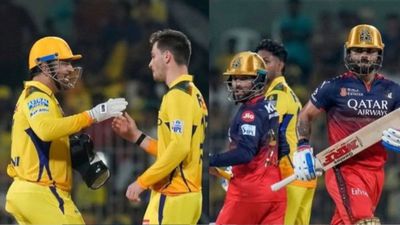 RCB Vs CSK IPL 2026 Tickets At Chinnaswamy: Official Sale, Metro Perks, And Entry Guidelines
 -
 Hyderabad Gold Silver Rate Today, 1 April 2026: Check 18K, 22K, 24K Gold And Silver Prices In Nizam City
 -
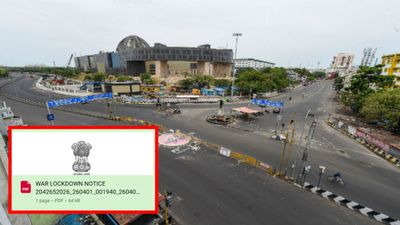 War Lockdown Notice Goes Viral Over Iran Claims, Sparks Panic Online
 -
 Hyderabad Gold Silver Rate Today, 31 March 2026: Gold And Silver See Fresh Movement, Check Latest City Rates
 -
 Gold Silver Rate Today, 1 April 2026: City-Wise Prices Rise Sharply, MCX Gold And Silver Surge
 -
 Laid Off After 20 Years Via Email: Oracle Faces Criticism As Viral Post Highlights Cancer Patient’s Job Loss
 -
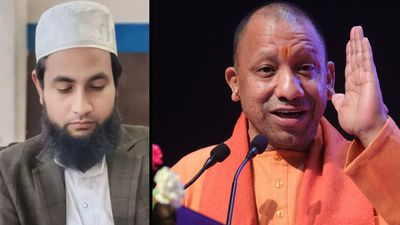 UP STF Nabs Maulana Abdullah Salim Over Controversial Comment On CM Yogi's Mother
 -
 Iran-US War: Donald Trump’s Missteps And The NATO Paradox
 -
 Iran Threatens To Hit US Companies in Region From April 1, Names Microsoft, Apple, Tesla, Boeing
 -
 Trump Says Iran Is ‘Incapable’ Of Building Nuclear Weapon, US Will Be Out ‘Pretty Quickly’
 -
 Thunderstorm Warning In Delhi NCR: IMD Issues Orange Alert Amid Sudden Weather Shift
 -
 Tamil Nadu Election Predictions: AIADMK Fails To Unseat Stalin's DMK, Says Pre Poll Survey



 Click it and Unblock the Notifications
 Sign in with Google