


Oman Rejects Iran’s Hormuz Toll Proposal, Says No Transit Fees Can Be Imposed On Global Shipping Route


Oman has firmly pushed back against Iran's proposal to impose a transit fee on ships crossing the Strait of Hormuz, rejecting a key clause included in Tehran's reported 10-point ceasefire framework. The issue has quickly drawn attention because the strategic waterway remains one of the world's most critical energy routes, carrying a significant share of global oil shipments.

AI-generated summary, reviewed by editors
Iran's proposal had suggested that both Tehran and Muscat could levy charges on vessels using the narrow maritime corridor, with the revenue intended to support post-war reconstruction. But Oman has now made it clear that such a move is not on the table.
Oman Rejects Iran's Demand On Hormuz Transit Fees
In a direct contradiction to Iran's position, Oman stated that no tolls can be charged on vessels moving through the Strait of Hormuz.
Oman's Transport Minister said, "No tolls can be imposed for crossing Hormuz."
The minister also underlined that the Sultanate remains bound by existing agreements that ensure ships can pass through the strait without any transit fees. According to Oman, these agreements are designed to preserve uninterrupted and secure movement through one of the world's most sensitive maritime passages.
Strategic Waterway Remains Toll-Free
The Strait of Hormuz, a 34-kilometre-wide stretch of water between Iran and Oman, has long been treated as an international waterway. Historically, neither Tehran nor Muscat has imposed tolls on commercial shipping passing through the channel.
Its global importance goes far beyond regional politics. The narrow sea passage acts as the gateway to the Persian Gulf and handles roughly one-fifth of the world's oil trade, making any policy shift there a matter of international concern.
Because of that, even a proposed transit charge has the potential to trigger strong reactions from global shipping operators, energy markets, and major importing nations.
Iran Says Fees Were Meant For Post-War Reconstruction
Iran had included the toll provision as part of its broader 10-point ceasefire proposal, arguing that the collected money would be directed towards rebuilding the country after extensive wartime damage.
According to Tehran, the conflict has left major destruction across its defence systems, government administration, and civilian infrastructure. In that context, Iran presented the proposed transit fee as a reconstruction mechanism tied to the post-war recovery effort.
However, Oman's public rejection now weakens the viability of that proposal, at least in its current form, since the strait is jointly bordered by both countries and governed by international maritime understandings.
Hormuz Proposal Could Face Wider Global Pushback
Oman's response signals that any attempt to monetise passage through the Strait of Hormuz would likely face immediate legal, diplomatic, and economic scrutiny.
Given the waterway's role in global energy security, the Sultanate's insistence on free navigation reinforces the broader international expectation that the strait must remain open, accessible, and free of unilateral transit charges.
With Muscat now publicly dismissing the idea, Iran's ceasefire-linked toll demand appears unlikely to gain practical traction unless the proposal is significantly revised.
-
 Iran War: US To Host Israel, Lebanon Peace Talks
 -
 Gold Rate Today Bangalore: April 8 IBJA Benchmark vs. 22k Gold Prices at Tanishq, GRT, Jos Alukkas
 -
 Iran-US Talks Head For Cancel? Tehran Officials Yet To Arrive In Islamabad As Pakistan Picks Fight With Israel
 -
 Crude Oil Price Today - April 10: Brent Crude Slips; Track WTI, Urals, OPEC Basket, Dubai Crude Oil Rates
 -
 Crude Oil Price Today - April 9: Check Prices of Brent Crude, WTI, Urals, Gasoline & Others
 -
 Trump Rules Out Uranium Enrichment In Iran, Says US Open To Tariff And Sanctions Relief
 -
 US-Iran Ceasefire: Did Tehran Climb Down From Its Earlier Position? Check 10-Point Proposal
 -
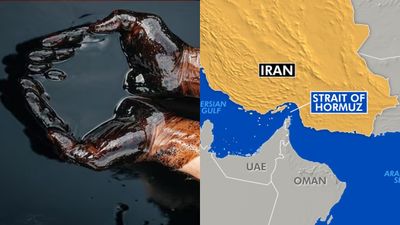 How Much Will Iran Charge Shipping Firms To Let Oil Tankers Cross The Strait Of Hormuz?
 -
 Inside The Iran-Russia-China Weapons Axis That Trump's 50% Tariffs or Sanctions Can't Break
 -
 Iran-U.S Ceasefire: It Is Alive, But Very Shaky; Will It Hold?
 -
 How US Pushed Pakistan For a Deal With Iran Over Oil Price Concerns
 -
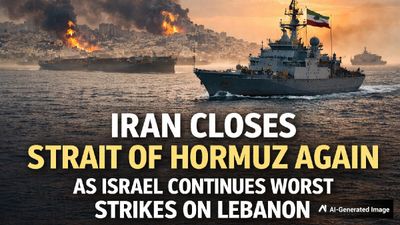 Iran Closes Strait of Hormuz After Israel’s Largest Lebanon Strikes



 Click it and Unblock the Notifications
 Sign in with Google