


No Attack Unless Attacked First: Iran Apolgises For Strikes On Gulf States


In a major diplomatic move aimed at de-escalating soaring regional tensions, Iran's President Masoud Pezeshkian issued a formal apology to neighboring nations on Saturday and announced a key policy shift.
According to reports from Reuters and AFP, Tehran's interim leadership council has decided that it will refrain from launching missile strikes or attacks against neighboring states unless an attack on Iran originates from their territory.
AI-generated summary, reviewed by editors

The announcement comes amid a volatile and deadly conflict sparked by joint US-Israel strikes on Iran last weekend. Those strikes reportedly killed Iranian Supreme Leader Ayatollah Ali Khamenei and hundreds of others, triggering a spiral of retaliation. President Pezeshkian conveyed the new defensive posture on Saturday, stating the temporary leadership council had approved the suspension of offensive actions against neighbors. "I must apologise on my own behalf and on behalf of Iran to the neighbouring countries that were attacked by Iran," he said, in remarks carried by AFP.
However, Pezeshkian struck a defiant tone regarding the broader conflict, insisting that Iran will not surrender to its adversaries. "The enemies must take their wish for the surrender of the Iranian people to their graves," he stated in a televised speech.
The president's overture coincides with ongoing military exchanges that have brought the conflict to the doorstep of Gulf states. Glittering cities like Dubai and Abu Dhabi in the United Arab Emirates have experienced explosions and air raid sirens as they intercept drones and missiles. The disruptions have been severe; operations at Dubai International Airport were temporarily suspended on Saturday following what officials vaguely described as a "minor incident," though passengers reported hearing a loud boom while sheltering. The Dubai Media Office stated the suspension was a precaution for the safety of staff and passengers.
The wider conflict, which began with US-Israel strikes on February 28, has resulted in hundreds of fatalities and paralyzed regional travel. Airspaces across the Gulf have been closed, and missiles and drones have targeted US bases and facilities in Qatar, Bahrain, Saudi Arabia, and Kuwait, in addition to the UAE. Israeli warplanes have concurrently pounded targets in Tehran and its ally, Lebanon.
The human toll is mounting. According to an Associated Press report citing officials, at least 1,230 people have been killed in Iran, with over 200 dead in Lebanon and approximately a dozen in Israel. Six US troops have also been reported killed. President Pezeshkian's apology and the announced policy shift appear to be a calculated effort to prevent Iran's neighbors from being further drawn into the widening war, even as the core conflict with Israel and the US shows no sign of abating.
-
 What Happened Last Time Iran Held US Personnel: The 2016 Detention That Still Haunts Washington
 -
 US Pilot Reportedly Ejects In Southwest Iran Amid Fresh Iranian Claims Of F-35, F-15E Downing
 -
 We’re In War: Donald Trump Says US Aircraft Loss Won’t Derail Iran Talks
 -
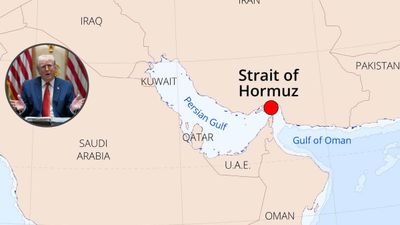 When Will Strait of Hormuz Reopen? Donald Trump’s Iran War Speech Suggests No Quick Relief
 -
 ‘Habitual Liars’: PM Targets Congress and Left in Fiery Speech Over Kerala Story, Dhurandhar False Claims
 -
 US-Sanctioned Iranian Tanker Diverts from India to China Mid-Voyage
 -
 Trump Addresses Nation Amid Iran War, Targets Obama Nuclear Deal, Justifies ‘Operation Epic Fury' , Watch
 -
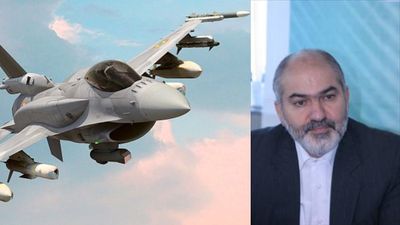 US Confirms Fighter Jet Downed Over Iran, Tehran Announces Reward For Those Who Find Crew
 -
 Iran Snubs Pakistan’s Peacemaker Pretensions, Refuses To Meet US Officials In Islamabad
 -
 INS Taragiri To Join Indian Navy Fleet, Boosting Maritime Power
 -
 We're The Only Country To Lose Mariners At Strait of Hormuz: India At UK-led West Asia Meet On Iran Crisis
 -
 Stock Market Crashes As Sensex Falls Over 1,400 Points After Trump’s Iran War Warning, Oil Prices Surge



 Click it and Unblock the Notifications
 Sign in with Google