


Iran's Mohammad Bagher Ghalibaf Uses Math to Warn US: ‘f(f(O)) > f(O)’ Over Strait of Hormuz Crisis


Iran has sharpened its rhetoric against the United States as tensions rise over the planned maritime restrictions near the Strait of Hormuz, with Mohammad Bagher Ghalibaf warning that American consumers could soon feel the impact at fuel pumps.
In a pointed message aimed at Donald Trump, Ghalibaf suggested that current petrol prices in the US may not last, arguing that the proposed blockade targeting Iranian ports could trigger a sharp and potentially compounding rise in global oil costs. Sharing images of fuel prices near Washington, he told Americans to "enjoy" current rates while they last.
AI-generated summary, reviewed by editors
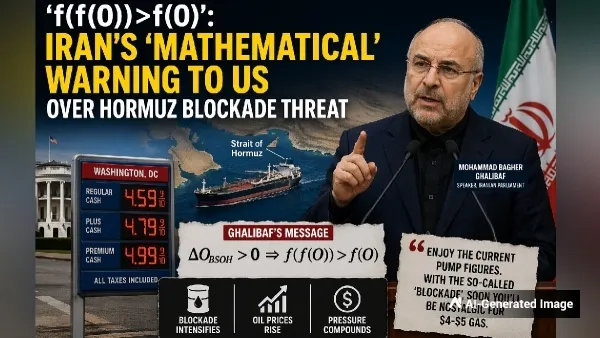
The remarks come as the US military prepares to implement a blockade on vessels entering and leaving Iranian ports, following the collapse of recent negotiations between Washington and Tehran. While US officials have clarified that transit through the Strait of Hormuz for non-Iranian trade will remain open, the move has heightened concerns over supply disruptions in one of the world's most critical oil corridors.
Ghalibaf reinforced his warning with a cryptic mathematical expression, interpreted by observers as a signal that any tightening of restrictions could lead to a non-linear spike in oil prices-where initial increases are amplified by market reactions and supply constraints.
Markets have already begun responding to the growing uncertainty. Oil prices surged sharply after the announcement, with benchmark crude rates climbing amid fears of constrained supply. Asian stock indices also showed volatility, reflecting broader investor concern over escalating geopolitical risks.
The standoff follows failed talks in Pakistan, where both sides were unable to bridge key differences, particularly over Iran's nuclear programme and regional security issues. With diplomacy stalled, the focus has now shifted to economic and strategic pressure, raising the stakes for global energy markets.
As both Washington and Tehran dig in, the confrontation is increasingly being framed not just in military or political terms, but in its potential to directly impact everyday costs-especially fuel prices-for consumers far beyond the region.
-
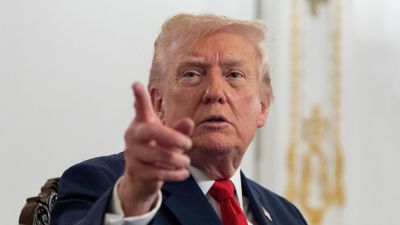 ‘We Win Regardless’: Trump Downplays Collapse of Iran Peace Negotiations
 -
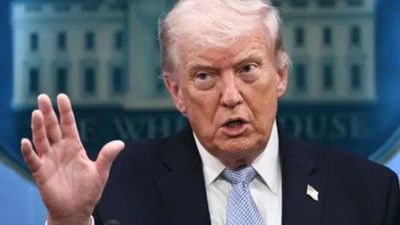 Why Did Trump Announce a Strait of Hormuz Blockade After Failed Iran Talks?
 -
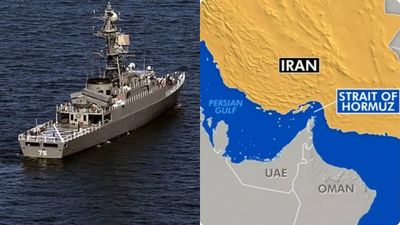 Strait of Hormuz Tensions Rise as US Says 2 Warships Began Mine-Clearing Mission, Iran Rejects Claim
 -
 '50% Tariff on China If I Catch Them...': Trump Issues Fresh Warning Over Iran Aid
 -
 US Will Not Allow Iran To Impose Tolls On Strait of Hormuz: Donald Trump
 -
 Iran Struggles To Reopen Strait Of Hormuz As It Lost Track Of Sea Mines; Threaten Global Shipping Routes
 -
 ‘Oil Will Flow, With or Without Iran’: Trump Warns Tehran Over Strait of Hormuz Toll Report
 -
 Empty Seats, 168 Lives: Iran’s Stark Reminder Ahead of Islamabad Talks
 -
 Trump Warns Of Strike On Iran Ahead Of Crucial Islamabad Talks, Says US Warships Ready
 -
 Pope Leo XIV remarks prompt US Catholic and evangelical criticism of Trump statements
 -
 Dhurandhar 2 Box Office Collection Day 24: 92% Spike in Earnings Week 4, OTT Release Talks Draws Attention
 -
 Putin Steps In as Peacemaker Following Failed United States–Iran Negotiations



 Click it and Unblock the Notifications
 Sign in with Google