


Iranian Frigate Sunk Near Sri Lanka, Expanding Conflict Into Indian Ocean Waters


A dramatic naval strike in the Indian Ocean has pushed West Asian tensions into South Asia's maritime backyard. Iran's frigate IRIS Dena was sunk by a United States submarine roughly 40 kilometres south of Galle, close to vital shipping lanes off Sri Lanka's southern coast.
Though the attack occurred in international waters, it fell within Sri Lanka's search and rescue zone - immediately drawing Colombo into the aftermath of a confrontation far from the Persian Gulf.
AI-generated summary, reviewed by editors

Sri Lankan authorities reported recovering 87 bodies and rescuing 32 sailors. Search operations for missing crew members continued amid rough seas.
A Conflict Moves East
Recent hostilities involving Iran have largely centred on the Gulf region. This strike, however, unfolded deep in the Indian Ocean - a region critical to global trade and energy flows.
The United States confirmed that a submarine torpedo destroyed the Iranian vessel. US Defence Secretary Pete Hegseth described the strike as part of a broader campaign aimed at weakening Iran's naval capacity.
The incident's location - near one of the world's busiest maritime corridors - has raised concerns across South Asia about the widening footprint of great-power confrontation.
Sri Lanka's Immediate Role
Despite not being a party to the conflict, Sri Lanka was thrust into action after receiving a distress signal. Naval ships and aircraft were deployed to retrieve survivors and bodies from the water.
The strike's proximity - around 40 nautical miles from Sri Lanka's coast - has triggered domestic political debate about preparedness, communication and sovereignty.
Political Pressure in Colombo
Sri Lankan MP Namal Rajapaksa publicly questioned whether the government had advance warning of US naval operations in nearby waters.
He warned that the Indian Ocean could no longer be viewed as insulated from distant conflicts. According to Rajapaksa, regional powers - especially India - must treat the episode as a signal to reassess maritime coordination and security planning.
He also stressed the importance of transparency, arguing that governments must clarify what they knew and when.
Why the Region Is Watching Closely
The Indian Ocean handles a significant share of global shipping, including oil and cargo destined for India, Bangladesh and other South Asian economies. Any escalation near these sea lanes carries implications for:
Trade stability
- Maritime insurance costs
- Naval deployments
- Regional diplomatic balance
Smaller coastal states, analysts note, often face heightened risks when rival powers clash close to shared waterways.
Strategic and Legal Questions
While the strike took place in international waters, its occurrence within Sri Lanka's search and rescue zone placed humanitarian responsibility on Colombo. That duality - military action by one state and rescue obligations by another - underscores the complexity of maritime law in conflict situations.
The incident also raises broader questions about whether the Indian Ocean is emerging as a more contested strategic theatre.
A Turning Point for Indian Ocean Security?
For decades, the Indian Ocean has been central to global commerce yet comparatively stable in military terms. The sinking of the IRIS Dena suggests that assumption may no longer hold.
With casualties confirmed and investigations continuing, the humanitarian response remains the immediate priority. But diplomatically, the event may prompt renewed regional discussions on maritime transparency, communication protocols and crisis management - particularly among South Asian nations navigating the pressures of global rivalry.
-
 US Confirms Fighter Jet Downed Over Iran, Tehran Announces Reward For Those Who Find Crew
 -
 US Pilot Reportedly Ejects In Southwest Iran Amid Fresh Iranian Claims Of F-35, F-15E Downing
 -
 School Assembly News Headlines Today April 03: Top National, International, Sports, Business News
 -
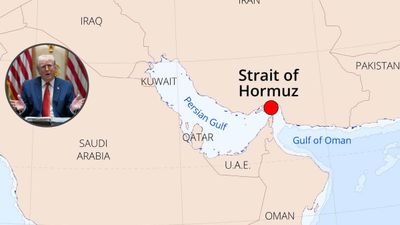 When Will Strait of Hormuz Reopen? Donald Trump’s Iran War Speech Suggests No Quick Relief
 -
 Donald Trump Offers To Buy Oil From The US, Says “We Have Plenty”; Claims Iran War Will “Finish Very Fast'
 -
 Centre Plans ₹2.5 Lakh Crore Credit Shield for Businesses Facing Iran Conflict Fallout
 -
 We're The Only Country To Lose Mariners At Strait of Hormuz: India At UK-led West Asia Meet On Iran Crisis
 -
 UK To Host 35-Nation Talks To Reopen Strait Of Hormuz Amid Oil Crisis
 -
 Petrol Price India Vs Pakistan: Why Fuel Is Cheaper In India Than Pak Despite Global Crisis
 -
 Will Donald Trump Quit NATO After Iran War Rift? Europe Unites As Alliance Faces Its Biggest Crisis In Decades
 -
 Iran Names 8 Gulf, Jordan Bridges as Possible Targets After Deadly Karaj Strike
 -
 US-Sanctioned Iranian Tanker Diverts from India to China Mid-Voyage



 Click it and Unblock the Notifications
 Sign in with Google