


Iran-US Standoff Escalates as Trump Sets 10-Day Window for Action


Rising Iran-US tensions are fuelling fears of a fresh conflict in West Asia, with reports that the American military could strike Iran as early as the coming weekend. President Donald Trump has not yet approved any operation, but Washington is moving extra air and naval power into the Middle East while nuclear talks with Tehran continue in Geneva.
Trump has issued a stark warning that Iran must reach a nuclear agreement with the United States or face consequences. At the inaugural meeting of his Board of Peace, Trump said it had been difficult "over the years" to reach a "meaningful deal" with Tehran and added that if such a deal does not happen, "bad things happen".
AI-generated summary, reviewed by editors

Iran-US tensions: Trump’s public warnings and nuclear 'meaningful deal'
Speaking at the Board of Peace event, Trump insisted that Iran "cannot continue to threaten the stabilty" of the Middle East and declared that Tehran cannot be allowed to obtain nuclear weapons. Trump said, "They can't have nuclear weapons. They can't have peace in the Middle East if they have nuclear weapons. They have been told that very strongly."
Trump urged Tehran to enter his proposed diplomatic track, while stressing that Washington could live with either outcome. "..Now is the time for Iran to join us on a path that will complete what we're doing. And if they join us, that'll be great. If they don't join us, that'll be great, too. But it'll be a very different path," Trump said.
Iran-US tensions: Military options, Diego Garcia and possible weekend strike
Trump has also hinted more openly at possible force. In a Truth Social post, Trump warned that the Diego Garcia airbase on the Chagos Islands might be required if talks fail, saying it could be needed "in order to eradicate a potential attack by a highly unstable and dangerous regime". US media say military planners have told the White House they could be ready to strike by this weekend.
Sources quoted by CNN described Trump as still weighing his choices on Iran, sounding out advisers and allies on whether to approve strikes on Tehran. One source said Trump had privately argued both for and against an attack and added, "He is spending a lot of time thinking about this." Officials say the latest US deployment is the biggest in the region since 2003.
Iran-US tensions: Geneva nuclear talks and US diplomatic pressure
White House press secretary Karoline Leavitt said discussions in Geneva had produced limited headway but many disputes remained unresolved. "There was a little bit of progress made, but we are still far apart on some issues. We expect the Iranians to come back with the details in the next couple of weeks. The president will continue to watch how this plays out," Leavitt said.
Leavitt argued that Tehran should take the current offer seriously. Iran would be "very wise to make a deal with President Trump and with his administration", she told reporters, echoing Trump’s view that the window for diplomacy cannot stay open indefinitely. A senior US official told Reuters that Washington is waiting for Tehran’s promised written proposal responding to concerns raised in Geneva.
Iran-US tensions: Positions of Tehran’s leaders and nuclear rights
Iranian President Masoud Pezeshkian stressed that Tehran prefers diplomacy but will not accept unilateral demands from Washington. Pezeshkian said, "we do not want war" and added, "From the day I took office, I have believed that war must be set aside. But if they are going to try to impose their will on us, humiliate us and demand that we bow our heads at any cost, should we accept that?"
Iran’s atomic energy chief Mohammad Eslami defended the country’s nuclear activities, insisting they remain within international rules. "The basis of the nuclear industry is enrichment. Whatever you want to do in the nuclear process, you need nuclear fuel," Eslami said. "Iran's nuclear programme is proceeding according to the rules of the International Atomic Energy Agency, and no country can deprive Iran of the right to peacefully benefit from this technology," Eslami added.
Iran-US tensions: Statements from Khamenei and internal political voices
Iran’s Supreme Leader Ayatollah Ali Khamenei has issued pointed warnings about American military power. Khamenei said, "The US president said in one of his recent remarks that for 47 years America has been unable to eliminate the Islamic Republic; he complained about it to his own people. For 47 years, America has not been able to eliminate the Islamic Republic. That is a good admission." "I say: You, too, will not be able to do this," he added.
Khamenei also referenced US carrier deployments near Iran. "They keep saying we have sent an aircraft carrier toward Iran. Very well, an aircraft carrier is a dangerous device, but more dangerous than the carrier is the weapon that can send it to the bottom of the sea," he was quoted as saying by Iran International. An Iranian lawmaker, Ahmad Bakhshayesh Ardestani, praised negotiators for delaying confrontation, saying talks were worthwhile if they could prevent or at least postpone war.
Iran-US tensions: International nuclear watchdog and diplomatic outreach
Tehran’s foreign minister Abbas Araghchi spoke with Rafael Grossi, who leads the International Atomic Energy Agency, about creating a roadmap for further negotiations. Araghchi emphasised a shared interest in "drafting an initial and coherent framework to advance future talks". Grossi, speaking separately to Bloomberg, cautioned that time to reach a diplomatic settlement over Iran’s atomic activities is shrinking amid the US build-up.
The IAEA chief said regional governments are uneasy about the current trajectory and the risk of miscalculation. "There is not much time but we are working on something concrete," Director General Rafael Mariano Grossi told Bloomberg. Russia’s foreign minister Sergei Lavrov meanwhile warned on Saudi Arabia’s Al-Arabiya television that any new American strike on Iran could have severe consequences and risk a nuclear incident.
Iran-US tensions: US military build-up, Iranian drills and satellite imagery
The US has surged additional air power into the Middle East, including jet fighters and support aircraft, while positioning more naval assets closer to Iran. Washington has reportedly ordered a second aircraft carrier to the region, joining the USS Abraham Lincoln and its roughly 80 aircraft, which were located about 700 kilometres from Iran’s coast on Sunday. Officials say the moves are meant to pressure Tehran during nuclear talks.
Iran has responded by showcasing its own military capabilities. The Islamic Revolutionary Guard Corps launched war games earlier this week in the Strait of Hormuz, a vital route for global oil exports. Satellite images published by Reuters and other outlets show Iran reinforcing key sites, including a new structure at the Parchin military complex that is covered by a concrete shield and soil, and buried tunnel entrances at the Isfahan nuclear site.
Iran-US tensions: Regional alerts, NOTAMs, earthquakes and civil warnings
Iran has issued a Notice to Air Missions signalling planned rocket launches across parts of southern Iran on 19 February, according to Iran International. Separately, the German Research Centre for Geosciences reported a magnitude 5.5 earthquake at a depth of 10 kilometres in southern Iran on the same day, adding another layer of tension in the region already on alert for possible military action.
Concerned about a potential conflict, Poland has urged its citizens to leave Iran. "Please leave Iran immediately... and do not go to this country under any circumstances," Polish Prime Minister Donald Tusk said, warning that an evacuation might become impossible "in a matter of hours" if fighting erupts. Earlier, Warsaw formally asked its nationals in Iran to depart without delay.
Iran-US tensions: US sanctions, protests and political rhetoric
The United States has tightened visa restrictions on Iranian officials as part of its broader pressure campaign. The State Department announced curbs on 18 Iranian officials and telecommunications leaders, as well as their immediate family members, accusing them of repressing anti-government protests and blocking internet access. Principal Deputy Spokesperson Tommy Pigott said the total number sanctioned under this policy has now reached 58.
US Senator Ted Cruz argued that Iran’s Supreme Leader faces a narrowing set of choices. "His regime is in tatters. He wants time to rebuild. I don't think President Trump is going to fall for that. I think the only deal the ayatollah can make is to say, I'm out of here. Let me leave. Let me go to Russia. Let me go to somewhere else other than here," Cruz said on Fox News. "I believe there is no deal to be had in terms of the nuclear program," Cruz said.
Iran-US tensions: Energy markets, oil prices and regional risk
Oil traders are closely watching the Iran-US standoff, with prices rising on fears of supply disruption from the Gulf. Brent and US crude futures rallied after markets weighed the chance of a clash affecting exports from the key producing corridor that includes the Strait of Hormuz. Both benchmarks had already settled more than 4% higher on 18 February, their strongest close since 30 January.
| Benchmark | Price (USD/barrel) | Change |
|---|---|---|
| Brent | 70.58 | +0.23 (0.3%) |
| WTI | 65.44 | +0.25 (0.4%) |
Analysts say traders are pricing in the risk of US military action against Iran. "Oil prices are rallying as the market becomes increasingly concerned over the potential for imminent U.S. action against Iran," ING analysts said in a note cited by Reuters. Any clash near shipping lanes could have swift effects on supplies, which global markets are already treating as a serious threat.
Iran-US tensions: US allies, Rubio visit and historic Trump social posts
US Secretary of State Marco Rubio is expected to visit Israel on 28 February to brief Prime Minister Benjamin Netanyahu on the Geneva talks, according to Associated Press reports citing Trump administration officials. The trip underlines Israel’s stake in the nuclear dispute and its close coordination with Washington over any future Iran policy or potential strikes.
Old social media posts by Trump have also resurfaced amid the current stand-off. In one past X post, Trump claimed "In order to get elected, @BarackObama will start a war with Iran." Commentators note the contrast between that remark and the present build-up under Trump’s own administration, which now includes the largest US regional military presence since the 2003 Iraq invasion.
Iran-US tensions: US red lines on nukes and outlook for talks
Senior US officials continue to stress that Iran will not be allowed to develop nuclear weapons. US Energy Secretary Chris Wright said Washington would stop Tehran acquiring such arms "one way or the other". He told reporters, "They've been very clear about what they would do with nuclear weapons. It's entirely unacceptable." The message matches Trump’s view that there can be no peace in the Middle East if Iran becomes a nuclear-armed state.
With Iran preparing a written proposal, the IAEA keeping up diplomatic efforts and both sides signalling they prefer to avoid open war, attention now turns to whether Geneva talks can narrow differences. For now, US and Iranian leaders are using sharper language while moving forces and strengthening sites, leaving the region, global markets and allied governments waiting on Trump’s final decision.
-
 NASA Successfully Launches Artemis II: Know All About First Crewed Moon Mission In 50 Years
 -
 Iran Snubs Pakistan’s Peacemaker Pretensions, Refuses To Meet US Officials In Islamabad
 -
 We’re In War: Donald Trump Says US Aircraft Loss Won’t Derail Iran Talks
 -
 US Confirms Fighter Jet Downed Over Iran, Tehran Announces Reward For Those Who Find Crew
 -
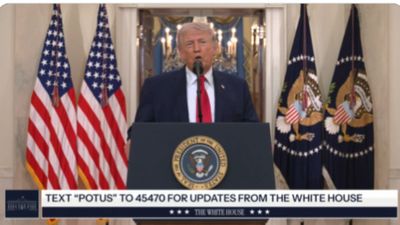 Trump Addresses Nation Amid Iran War, Targets Obama Nuclear Deal, Justifies ‘Operation Epic Fury' , Watch
 -
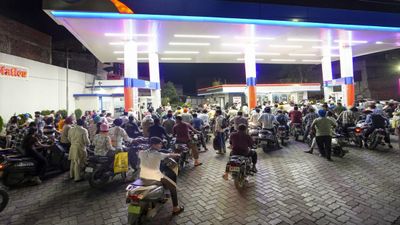 Centre Plans ₹2.5 Lakh Crore Credit Shield for Businesses Facing Iran Conflict Fallout
 -
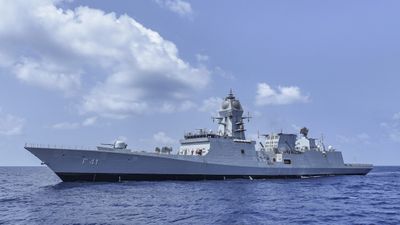 INS Taragiri To Join Indian Navy Fleet, Boosting Maritime Power
 -
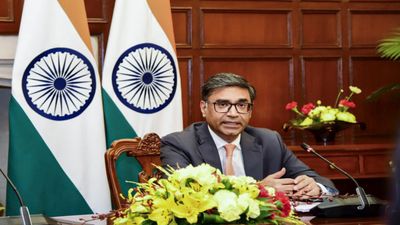 We're The Only Country To Lose Mariners At Strait of Hormuz: India At UK-led West Asia Meet On Iran Crisis
 -
 UK To Host 35-Nation Talks To Reopen Strait Of Hormuz Amid Oil Crisis
 -
 What Is The ‘Stone Age’ Warning Donald Trump Issued To Iran? Says ‘No Deal, No Mercy’
 -
 US Pilot Reportedly Ejects In Southwest Iran Amid Fresh Iranian Claims Of F-35, F-15E Downing
 -
 US-Sanctioned Iranian Tanker Diverts from India to China Mid-Voyage



 Click it and Unblock the Notifications
 Sign in with Google