


Iran’s President Says Avenging Khamenei’s Killing Is A ‘Legitimate Duty And Right’ Of The Islamic Republic


Tensions in the Middle East rose sharply after Iran's President Masoud Pezeshkian declared that avenging the killing of Supreme Leader Ayatollah Ali Khamenei was both a "right" and an "obligation" of the Islamic Republic.

AI-generated summary, reviewed by editors
His statement came after U.S. and Israeli strikes that reportedly led to Khamenei's death, triggering strong reactions from Tehran and widespread disruption across the region.
At the same time, major airports across the Middle East were forced to suspend operations as airspace closures and missile exchanges created safety concerns for civilian flights.
Iran Calls the Killing a "Historic Crime"
In a statement carried by Iranian state television, President Masoud Pezeshkian said the country considers it its "legitimate duty" to avenge those responsible for what he described as a historic crime.
According to Pezeshkian, the killing of Ayatollah Ali Khamenei was not only an attack on Iran's political leadership but also an assault on the broader Muslim community. He described the strike as a "declaration of war against Muslims," especially against Shiites around the world.
Khamenei was not only the Supreme Leader of Iran but also one of the most influential religious authorities in Shiite Islam. His position made the event deeply symbolic as well as political.
A Sharp Warning to the United States and Israel
Pezeshkian's remarks made it clear that Tehran views the strikes as an act of aggression that demands a response. By framing the assassination as an attack on Muslims globally, the Iranian leadership signaled that the consequences could extend beyond national borders.
While no detailed military response was immediately outlined in the statement, the language used suggested that Iran may consider retaliatory action against both the United States and Israel.
The statement has added to fears that the conflict could expand into a wider regional war.
Airspace Closures Across the Middle East
As military strikes and retaliatory missile launches continued, aviation authorities across the Middle East began shutting down airspace for safety reasons.
According to reports, major transit hubs were affected as countries moved quickly to prevent civilian aircraft from flying through potentially dangerous zones.
Flight tracking maps showed large empty areas over Iran, Iraq, Kuwait, Israel, and Bahrain as airlines diverted or canceled routes.
Dubai International Airport Halts Operations
Dubai International Airport, known as the world's busiest hub for international travel, suspended operations after sustaining damage during overnight Iranian retaliatory attacks.
Authorities announced that all flights at both Dubai International and Al Maktoum International airports were halted until further notice. Passengers were advised not to travel to the airport and to check with airlines for updates.
The shutdown caused widespread delays and cancellations, affecting thousands of travelers worldwide. Dubai serves as a key global connection point between Europe, Asia, Africa, and the Americas, so the impact was felt far beyond the region.
Doha and Abu Dhabi Also Affected
Doha, another major global transit center, was also disrupted as regional tensions escalated. Several Gulf countries closed their airspace temporarily as a precaution.
Airports in Abu Dhabi and other key cities followed similar safety measures. The closures left one of the world's busiest aviation corridors largely inactive.
For international airlines, the conflict has created complex logistical challenges. Flights are being rerouted over longer distances, increasing travel time and fuel costs.
-
 Trump Sets Tough Terms For Ceasefire With Iran, Demands Strait Of Hormuz Be “Open, Free, Clear” Amid Conflict
 -
 'Behind Enemy Lines' For Real: F15 US Pilot Rescue Unfolds Deep Inside Iran
 -
 ‘Habitual Liars’: PM Targets Congress and Left in Fiery Speech Over Kerala Story, Dhurandhar False Claims
 -
 Has Pakistan Lifted The Ban on Dhurandhar 2? Find Out The Truth
 -
 Donald Trump Offers To Buy Oil From The US, Says “We Have Plenty”; Claims Iran War Will “Finish Very Fast'
 -
 Trump Addresses Nation Amid Iran War, Targets Obama Nuclear Deal, Justifies ‘Operation Epic Fury' , Watch
 -
 What Is The ‘Stone Age’ Warning Donald Trump Issued To Iran? Says ‘No Deal, No Mercy’
 -
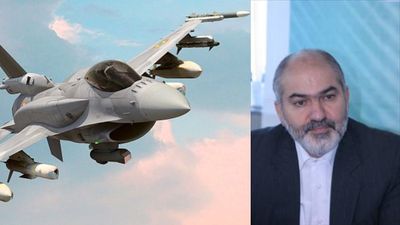 US Confirms Fighter Jet Downed Over Iran, Tehran Announces Reward For Those Who Find Crew
 -
 Will Donald Trump Quit NATO After Iran War Rift? Europe Unites As Alliance Faces Its Biggest Crisis In Decades
 -
 UK To Host 35-Nation Talks To Reopen Strait Of Hormuz Amid Oil Crisis
 -
 School Assembly News Headlines Today April 03: Top National, International, Sports, Business News
 -
 Stock Market Crashes As Sensex Falls Over 1,400 Points After Trump’s Iran War Warning, Oil Prices Surge



 Click it and Unblock the Notifications
 Sign in with Google