


Global South Urges Climate Justice And Debt Reform At South Africa’s G20 Meeting


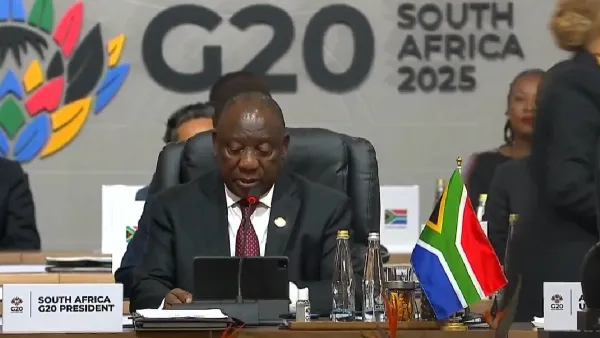
Developing nations at the G20 Summit in South Africa used the platform to intensify calls for stronger climate action and meaningful debt relief, while also showcasing themselves as emerging economic partners in critical sectors such as mining, technology, and artificial intelligence. South Africa, which is handing over the rotating G20 presidency to the United States, was widely praised for driving an agenda centred on inclusion and the needs of poorer nations.
The summit, held in Johannesburg, saw participation from G20 members, the African Union, the European Union, and several invited developing countries, including Zimbabwe, Namibia, Jamaica, and Malaysia. The United States boycotted the meeting, citing President Donald Trump's allegations that South Africa is violently persecuting its Afrikaner white minority.
AI-generated summary, reviewed by editors
Ethiopian Prime Minister Abiy Ahmed emphasised that developing nations were at the summit not to express despair but to highlight "possibilities and shared responsibilities." He insisted that debt relief must be channelled into investments that directly benefit people, noting that Ethiopia has learned that "inclusivity is not charity, it is efficiency."
Namibian President Netumbo Nandi-Ndaitwah urged global financial institutions to offer fairer terms to developing nations. She pointed out that Namibia had recently repaid its USD 750 million bond on schedule, yet continues to be labelled high-risk by major decision-makers.
Jamaica's Prime Minister Andrew Michael Holness spoke of the devastating impact of climate-driven disasters, referencing Hurricane Melissa's destruction and warning that a single external shock can reverse years of national progress.
World Trade Organisation Director General Ngozi Okonjo-Iweala encouraged African leaders to rethink their trade strategies, stressing that as long as 60 per cent of exports remain raw materials, structural change will be limited. She highlighted the potential of developing regional value chains to move from exporting raw materials to producing finished goods.
Nabil Ahmed of Oxfam noted that inequality had, for the first time, become a central pillar of a G20 agenda. He said the world acknowledges the climate emergency and must now equally recognise the "inequality emergency." He added that South Africa, as the first African host of a G20 meeting, successfully prioritised the interests of African and broader Global South nations.
-
 Gold Silver Rate Today, 30 March 2026: City-Wise Prices, MCX Update On 24K Gold, 22K Gold And Silver
 -
 LPG Crunch: Karnataka Brings New SOPs, Makes PNG Registration Mandatory for Businesses
 -
 Hyderabad Gold Silver Rate Today, 30 March 2026: Check Fresh 24K, 22K, 18K Gold And Silver Prices In City
 -
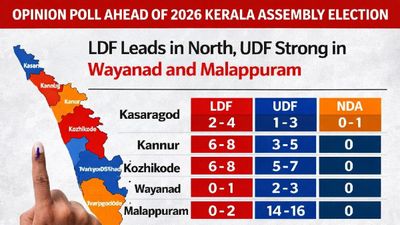 Opinion Poll For Kerala Assembly Election 2026: Ldf Strength In Kannur And Kasaragod
 -
 Tamil Nadu Polls 2026: Vijay Reveals Rs 645 Crore Assets, Rs 266 Crore in Banks; Know All His Declaration
 -
 Mumbai Metro Line 9 Set for April 3 Launch, Dahisar-Mira Bhayandar to Get Direct Boost
 -
 Hyderabad Gold Silver Rate Today, 31 March 2026: Gold And Silver See Fresh Movement, Check Latest City Rates
 -
 Gold Silver Rate Today, 31 March 2026: City-Wise Prices, MCX Trend As Gold Rises And Silver Slips
 -
 Rahul Arunoday Banerjee Autopsy Report: Actor Was Underwater For Over An Hour, Sand Found In Lungs
 -
 Thunderstorm Warning In Delhi NCR: IMD Issues Orange Alert Amid Sudden Weather Shift
 -
 Trump Hints At Breakthrough With Iran Amid War Escalation, Calls Recent Move A ‘Sign Of Respect’
 -
 UP STF Nabs Maulana Abdullah Salim Over Controversial Comment On CM Yogi's Mother



 Click it and Unblock the Notifications
 Sign in with Google