


Dramatic US Operation In Iran: Two Airmen Rescued After F-15E Crash, Military Blows Up Its Own Planes


In a dramatic and high-risk military operation, the United States successfully rescued two of its airmen who were stranded deep inside Iran after their fighter jet was shot down.

AI-generated summary, reviewed by editors
However, the mission came at a significant cost, as the US military had to destroy some of its own advanced aircraft to prevent sensitive technology from falling into enemy hands.
What Happened: A Dangerous Rescue Operation
The incident began when an American F-15E Strike Eagle was brought down by Iranian forces, leaving two US airmen trapped in hostile territory. One of them, a senior officer, was reportedly injured and stranded in a remote mountainous area.
To rescue them, the US launched a complex special operations mission. Multiple transport aircraft were deployed to a temporary desert airstrip inside Iran to extract the stranded personnel.
While the first airman was rescued successfully, the operation to retrieve the second became far more challenging. Some of the rescue aircraft faced unexpected issues after landing - reports suggest they either suffered technical failures or became stuck in soft desert sand.
With Iranian forces reportedly moving closer to the location, the situation quickly turned critical.
Why the US Destroyed Its Own Aircraft
Faced with the risk of their advanced military equipment being captured, US forces made a tough decision - to destroy their own aircraft.
This is a standard military protocol during sensitive missions. These aircraft carry highly classified systems, including:
- Advanced communication equipment
- Navigation systems
- Special operations technology
Allowing such technology to fall into enemy hands could compromise national security and future missions.
A similar strategy was used during the Osama bin Laden raid in Abbottabad, where a damaged US helicopter was destroyed on-site to protect classified technology.
Which Aircraft Were Involved
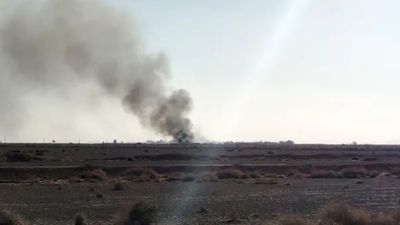
Images released by Iranian state media showed the wreckage of destroyed aircraft in Iran's Isfahan province.
Reports suggest the aircraft included:
Lockheed Martin C-130 / MC-130J Commando II
These are advanced military transport aircraft used for special operations missions, including troop insertion and extraction in hostile environments. Each aircraft is valued at over $100 million.
Boeing MH-6 Little Bird Helicopters
Small, highly maneuverable helicopters often used in special operations. These can be deployed from larger aircraft like the MC-130J to extend their operational reach.
The presence of both types of aircraft indicates the mission was carefully planned and involved multiple layers of coordination.
Iran's Response
Iranian authorities claimed that US forces destroyed their own aircraft to avoid embarrassment. The Iranian Revolutionary Guard Corps (IRGC) described the incident as a defeat for the United States and stated that the "enemy's flying objects were destroyed."
State media also released visuals of burnt aircraft remains, aiming to highlight the damage suffered during the operation.
How the Rescue Was Completed
Despite the complications, the US military managed to successfully rescue both airmen.
According to US officials:
- The first airman, who was seriously injured, was rescued from a mountainous region.
- The second was located and extracted within hours in a daylight operation.
To support the mission, US intelligence agencies reportedly used deception tactics. The CIA is said to have spread misleading information inside Iran about the rescue, creating confusion and buying time for the operation to proceed.
A Mission That Shows Both Success and Cost
While the mission achieved its primary objective - bringing both airmen back safely - it also highlighted the risks involved in modern warfare.
The loss of high-value aircraft underscores the difficult decisions military forces must make during operations in enemy territory. In such situations, protecting sensitive technology and ensuring personnel safety often takes priority over equipment and financial cost.
The operation stands as a reminder of how complex and dangerous rescue missions can be, especially when carried out deep inside hostile regions.
-
 Donald Trump's Address On Iran War: Trump Threatens To Wipe Out Iran In One Day, Briefs On Rescue Operation
 -
 High-Risk Operation: US Airman Rescued After F-15E Crash in Iran
 -
 Iran-US War To End Soon? 45-day Ceasefire Proposal Pushed By Mediators
 -
 Iran Refuses To Reopen Strait Of Hormuz Under Temporary Ceasefire As US Tensions Rise
 -
 8 OPEC Plus Countries Raise Oil Production Output Target For May As Iran War Continues To Fuel Volatility
 -
 Who Is Majid Khademi, Iran's Revolutionary Guards' Intel Chief, Killed By US?
 -
 Artemis II: Astronauts To Face 40-Minute Communication Blackout Behind The Moon
 -
 Trump Claims Iranian Military Leaders Killed In Tehran Strike, Issues Final Warning Before Deadline
 -
 “We Got Him”: US Rescues Downed Pilot In Iran As War Escalates And Global Tensions Rise
 -
 Iran Warns Repeated Strikes On Bushehr Nuclear Plant Could Trigger Radioactive Disaster Across Gulf
 -
 From WFH To AC Curbs: How India’s Neighbours Are Tackling Fuel Crisis Amid West Asia Conflict
 -
 Gold Rate Today 5 April 2026: Check IBJA 24K, 22K Gold Rates, Tanishq, Kalyan, Malabar, Joyalukkas Prices



 Click it and Unblock the Notifications
 Sign in with Google