


Donald Trump Imposes CompleteTravel Ban On 7 More Countries, Restrictions Announced For 15; Check List


US President Donald Trump has issued a fresh proclamation that expands America’s travel ban and entry restrictions to 20 more countries and Palestinians, taking the total number of affected nations to 39. The order blocks travel from seven additional countries, tightens partial entry rules for 15 others, and cites national security, poor vetting, and high visa overstay levels as the main reasons.
The new measures are scheduled to come into force on January 1. The White House fact-sheet states that the proclamation introduces a complete travel ban on Burkina Faso, Mali, Niger, South Sudan, Syria, Laos and Sierra Leone, and also covers holders of Palestinian Authority-issued travel documents. Laos and Sierra Leone were earlier under limited curbs but now shift to a full ban.
AI-generated summary, reviewed by editors

US travel ban: countries facing full restrictions
The United States already has an existing travel ban on 12 countries: Afghanistan, Burma, Chad, Republic of the Congo, Equatorial Guinea, Eritrea, Haiti, Iran, Libya, Somalia, Sudan and Yemen. With the latest move, seven more nations and Palestinians join this list, which means 19 countries plus Palestinians now face complete bans, while the rest fall under partial entry restrictions of varying intensity.
The expanded map of curbs follows a signal from Homeland Security Secretary Kristi Noem, who said two weeks earlier that the Trump administration intended to increase its travel ban coverage from 19 to more than 30 countries. At that point, Kristi Noem did not provide a precise figure or name the governments that might be affected, leaving room for speculation among diplomats and migration experts.
US travel ban: nations under partial entry curbs
The proclamation also introduces fresh partial entry restrictions on 15 countries: Angola, Antigua and Barbuda, Benin, Cte d'Ivoire, Dominica, Gabon, The Gambia, Malawi, Mauritania, Nigeria, Senegal, Tanzania, Tonga, Zambia and Zimbabwe. Citizens of these states will continue to be able to travel in some categories, but specific visa types or immigration paths will now face tighter screening or limits.
Some nations already under partial measures are not removed from the list. Partial entry restrictions remain in place for Burundi, Cuba, Togo and Venezuela. Turkmenistan is the single exception to the general tightening trend. The new proclamation removes restrictions on non-immigrant visas for Turkmenistan nationals, offering a modest easing while keeping other countries under firm controls.
| Category | Countries / Groups |
|---|---|
| Existing full travel ban (before proclamation) | Afghanistan, Burma, Chad, Republic of the Congo, Equatorial Guinea, Eritrea, Haiti, Iran, Libya, Somalia, Sudan, Yemen |
| New full travel ban | Burkina Faso, Mali, Niger, South Sudan, Syria, Laos, Sierra Leone, Palestinians with Palestinian Authority travel documents |
| New partial entry restrictions | Angola, Antigua and Barbuda, Benin, Cte d'Ivoire, Dominica, Gabon, The Gambia, Malawi, Mauritania, Nigeria, Senegal, Tanzania, Tonga, Zambia, Zimbabwe |
| Continuing partial restrictions | Burundi, Cuba, Togo, Venezuela |
| Partial easing | Turkmenistan (non-immigrant visa restrictions lifted) |
US travel ban: security triggers and official reasoning
The timing of the proclamation links closely with two deadly incidents involving US personnel. On November 26, two National Guard members were killed in Washington DC. Officials say the attacker was an Afghan national who once worked with a CIA-linked unit, entered the country after the 2021 US withdrawal from Afghanistan, and obtained asylum earlier this year following security vetting.
The Trump administration has repeatedly highlighted this case when arguing for tighter immigration screening. The new travel ban also comes after an Islamic State ambush in Syria on December 13, in which two US soldiers and an American civilian interpreter died. Together, these events have been used in Washington to push for stronger controls on foreign nationals entering the United States.
US travel ban: rationale, quotes and exemptions
The White House attributes the fresh restrictions to a mix of security concerns and immigration management problems. Burkina Faso, Mali, Niger and Nigeria are identified as facing active terrorist threats. Other nations on the list are criticised for high rates of B-1/B-2 visitor and student visa overstays, based on Department of Homeland Security assessments. Syria is described as lacking "an adequate central authority for issuing passports or civil documents" after years of conflict.
The fact-sheet explains the broader logic behind the order, stating: "The restrictions and limitations imposed by the Proclamation are necessary to prevent the entry of foreign nationals about whom the United States lacks sufficient information to assess the risks they pose, garner cooperation from foreign governments, enforce our immigration laws, and advance other important foreign policy, national security, and counterterrorism objectives," according to the White House document.
-
 “Not Going To Be There Too Much Longer”: Trump Signals Endgame In Iran War
 -
 Trump Signals US Exit from Iran Within Weeks, Shifts Focus from Diplomacy to Military Goals
 -
 Trump Sets Tough Terms For Ceasefire With Iran, Demands Strait Of Hormuz Be “Open, Free, Clear” Amid Conflict
 -
 Will Donald Trump Quit NATO After Iran War Rift? Europe Unites As Alliance Faces Its Biggest Crisis In Decades
 -
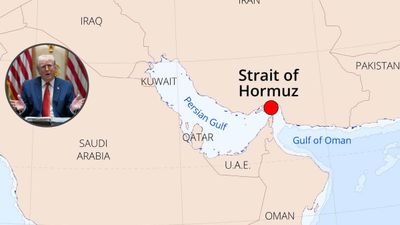 When Will Strait of Hormuz Reopen? Donald Trump’s Iran War Speech Suggests No Quick Relief
 -
 Trump's Address To Nation: Key Pointers From US President's Speech
 -
 Donald Trump Offers To Buy Oil From The US, Says “We Have Plenty”; Claims Iran War Will “Finish Very Fast'
 -
 Trump Addresses Nation Amid Iran War, Targets Obama Nuclear Deal, Justifies ‘Operation Epic Fury' , Watch
 -
 UK To Host 35-Nation Talks To Reopen Strait Of Hormuz Amid Oil Crisis
 -
 ‘Iran Wants Ceasefire’: Donald Trump Threatens To Send Tehran ‘Back To The Stone Age’
 -
 ‘Go Get Your Own Oil’: Trump Slams Nations Hit By Hormuz Fuel Crisis For Refusing To Back Iran Strikes
 -
 Trump Warns Iran Of Possible Attacks On Energy Sites Amid Israel-Hezbollah Conflict



 Click it and Unblock the Notifications
 Sign in with Google